





Twentieth Century Maritime Artwork
Twentieth century maritime artwork captures the enduring movement of coastal life, ocean liners and working vessels across canvas and paper.
Twentieth Century Maritime Artwork
Twentieth century maritime artwork encompasses paintings, watercolours, prints and etchings produced across several decades of the past century. Buyers seek these pieces to bring coastal scenes, historical vessels and dramatic seascapes into domestic interiors.
The selections on this page draw from periods including the Edwardian era, the 1910s, 1920s, 1930s, 1950s and 1960s. Formats range from large oil paintings on canvas and board to delicate watercolours, gouache and aquatint etchings.
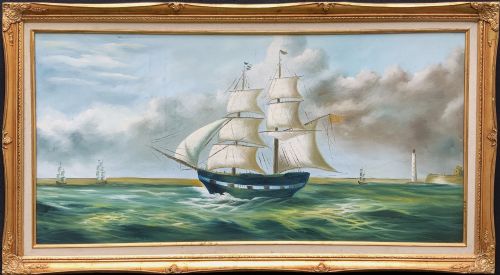
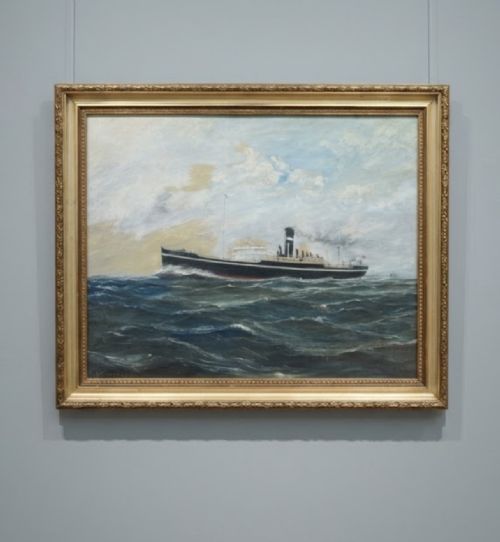
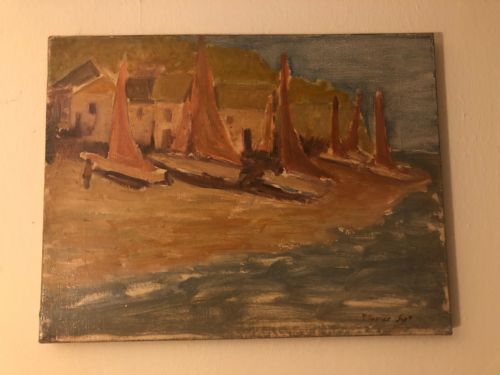
Subject matter spans primitive tall ships, steamships, naval carriers, fishing boats and Cornish harbours like Mevagissey and Mousehole. Works by named artists such as Vincenzo D’Esposito, Charles Fouqueray and Frank H. Mason frequently appear.
Materials and technique
Artists employed oil paint on canvas and board to achieve depth in depictions of sea battles and heavy swells. Watercolours on paper capture the softer light of coastal bays and fishing harbours.
Gouache adds opacity and highlights to watercolour compositions, while etching with aquatint provides tonal gradations for printed works. Wood frames frequently house these paintings and prints.
Twentieth Century Maritime Artwork Retail Price Guide 2026
Typical asking prices for twentieth century maritime artwork among the pieces listed under this phrase on Sellingantiques today, from the lower quarter to the upper quarter. They describe what is for sale here now, not the wider market.
Materials recorded across current works include paper, canvas, wood, glass, and gilt framing.
Quality variations
Quality rests upon the artist's handling of light, atmosphere and maritime perspective within the medium. Works by established painters exhibit confident brushwork and precise draughtsmanship when depicting rigging, hulls and coastal topography.
The condition of the paper, canvas and original framing influences the overall integrity of the piece. Strong provenance and documented signatures by known practitioners elevate the standing of an individual work.
Vincenzo D’Esposito·Donald McIntyre·Frank H. Mason·Ernest F. Hill·William Lambert Bell·Frank Wood·Owen Bowen·Fred Mayor·Norman Janes·Maurice Sijs·Rowland Henry Hill·Harry John Pearson
The Twentieth Century Maritime Artwork Glossary
- Aquatint
- A printmaking technique that produces tonal areas resembling watercolour washes. It is often combined with line etching to create detailed maritime prints.
- Gouache
- An opaque water-based paint used alongside watercolour. It provides bright highlights on breaking waves and vessel superstructures.
- Coble
- A traditional type of open fishing boat with a flat bottom, common on the northeast coast of England. These boats frequently feature in regional marine watercolours.
- Primitive maritime
- A style characterised by direct, unpretentious perspective and bold application of paint. It often depicts tall ships and coastal scenes without strict adherence to academic proportions.
Twentieth Century Maritime Artwork: Frequently Asked Questions
What subjects appear in these works?
The pieces depict a wide range of maritime subjects, including tall ships, steamships, naval carriers and working fishing boats. Coastal views of harbours, beaches and sea battles also feature prominently.
Artists recorded specific locations such as Runswick Bay, Mevagissey, Mousehole and Brittany. These scenes document both commercial maritime activity and recreational coastal life across the decades.
How should I display a watercolour?
Watercolours and works on paper require protection from direct sunlight to prevent fading of the pigments. Framing with acid-free mounts preserves the paper and keeps the artwork away from the glass.
Hanging these pieces in stable indoor environments away from excessive moisture ensures the longevity of both the paper and the original frame.
How do I identify the period?
Dating relies on signatures, recorded artist lifespans, stylistic movements such as British Impressionism, and the depicted vessels themselves. Edwardian and 1920s works often show traditional steam or sail vessels.
Later pieces from the 1950s and 1960s frequently adopt more modernist interpretations of coastal forms. Supporting documentation or labels on the reverse of the canvas also help confirm the date.
Are these works signed by the artist?
Many of the paintings and watercolours bear the original signature or monogram of the artist, sometimes accompanied by a dated year. Unsigned pieces are attributed through style, technique and subject matter.
Examination of the canvas reverse, stretcher bars or framing notes often reveals additional inscriptions regarding the title and creator.