



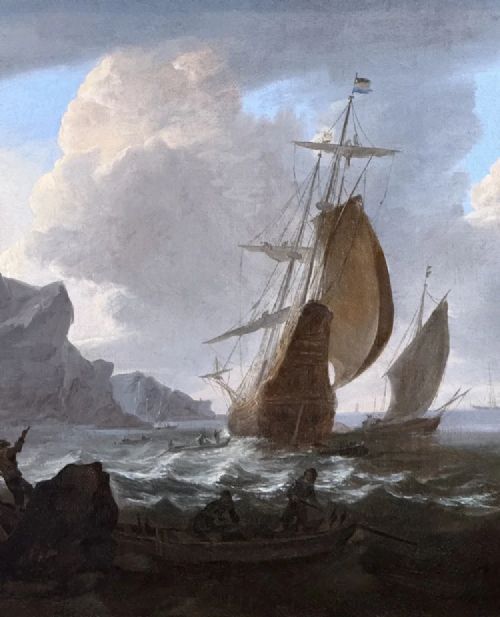
Nautical Oil Painting Canvas
A nautical oil painting canvas captures the power of the open sea, historic vessels and coastal trade through enduring pigment and woven support.
Nautical Oil Painting Canvas
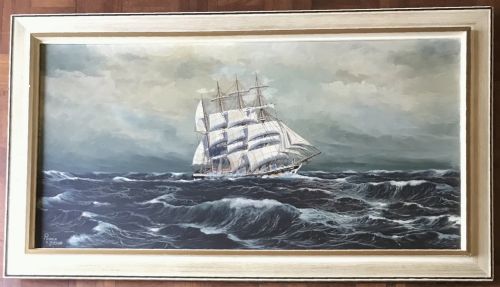
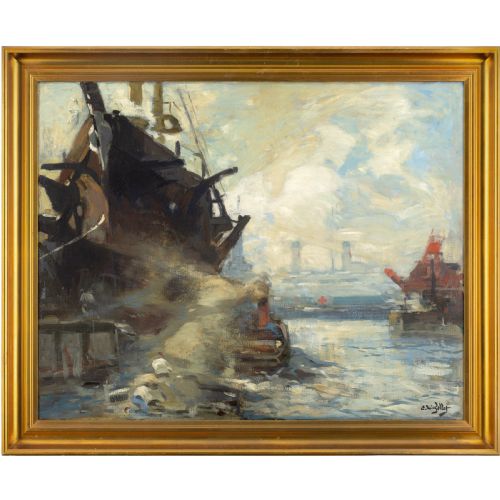
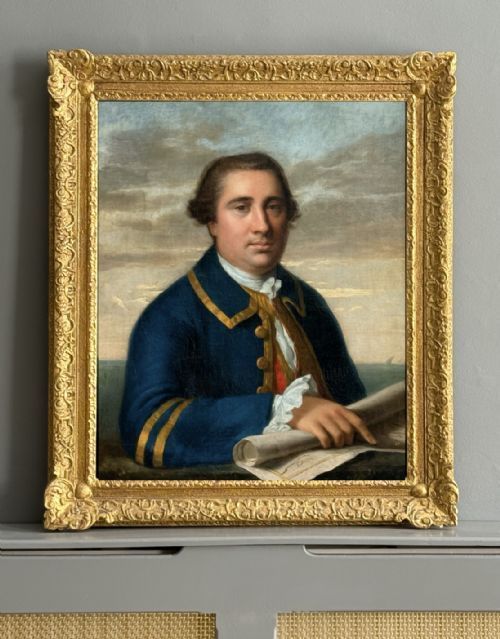
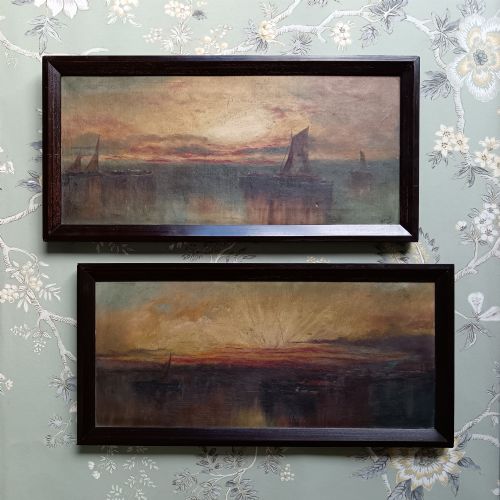
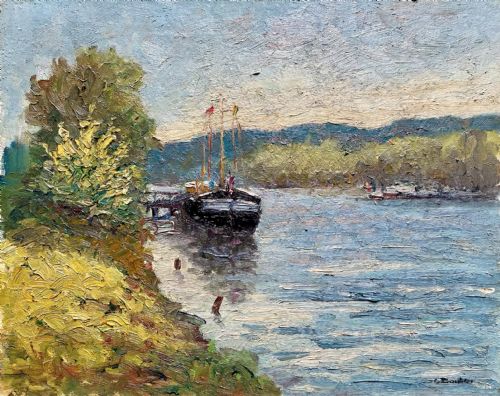
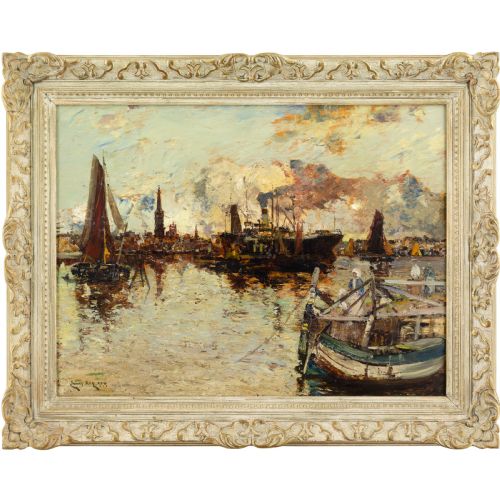
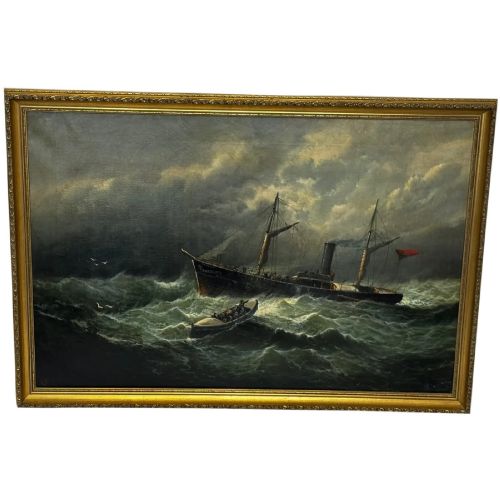
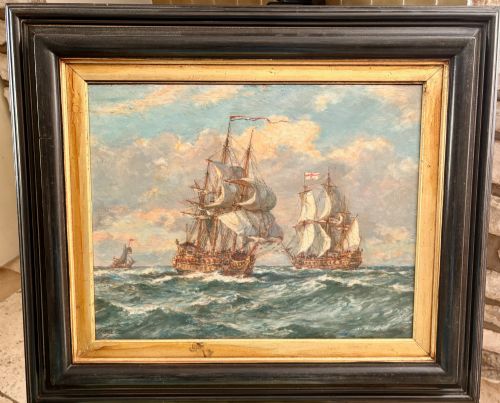
A nautical oil painting canvas represents a visual record of maritime history, capturing everything from towering three-masted schooners and merchant barques to quiet river barges and dramatic coastal rescues. Buyers seeking these works will find a wide variety of domestic and continental depictions spanning the eighteenth, nineteenth and twentieth centuries.
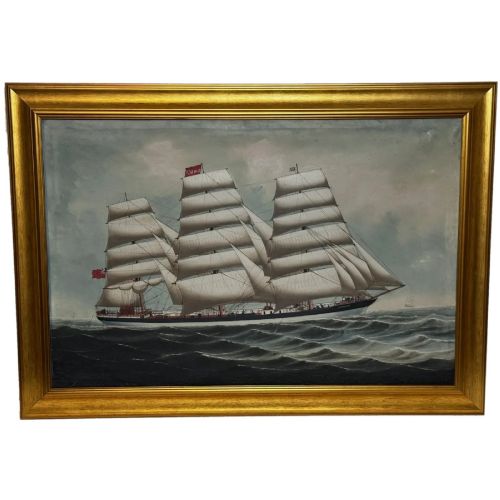
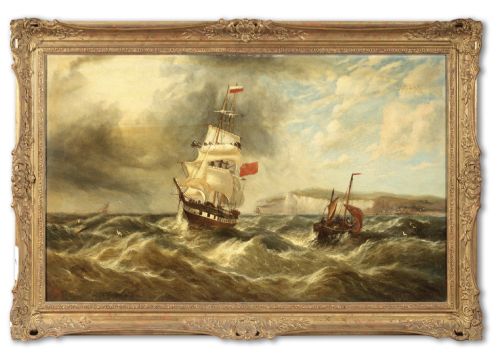
The most common examples on this page date from the Victorian and Edwardian eras, executed within the traditions of maritime realism and impressionism. These pieces frequently portray named vessels, rough seas, and harbour scenes framed in period giltwood.
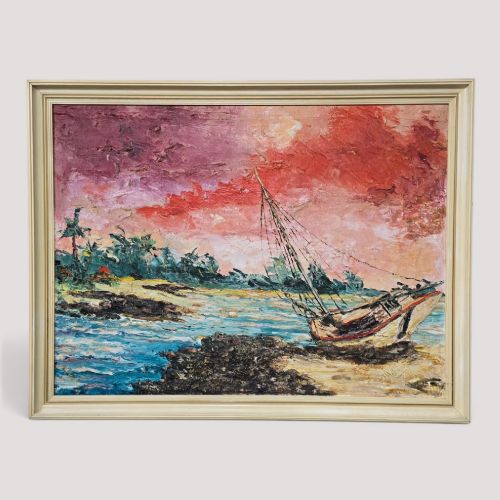
Alongside nineteenth-century British and Dutch marine art, the selection includes mid-twentieth-century interpretations, offering buyers a choice between precise documentary ship portraits and looser post-impressionist coastal landscapes.
Materials and construction
These works rely on oil paint applied to woven canvas stretched over wooden frames, occasionally mounted upon wooden boards. Artists built up their compositions using ground pigments suspended in drying oils, allowing for rich impasto textures in rendering churning waves and billowing sails.
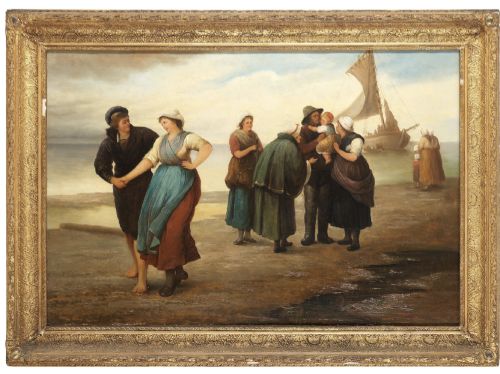
Frames play a crucial role in the physical structure of these pieces, with many historical works housed in heavily moulded gilt or giltwood frames that reflect the aesthetic tastes of their respective periods.
The listings span from the eighteenth century through to the mid-twentieth century, featuring materials such as oil paint, canvas, wood, and gilt.
Evaluating the standard
Quality in a nautical oil painting canvas rests upon the artist's command of maritime anatomy, atmospheric perspective and the natural movement of water. Superior examples demonstrate a precise understanding of rigging, hull construction and wind direction, paired with confident brushwork that conveys the weight of heavy seas.
The relationship between the canvas and its original frame, the clarity of the provenance, and the condition of the paint surface without excessive overpainting further distinguish premier works from simpler decorative pieces.
Lemuel Francis Abbott·Abraham Hulk I·John Wilson Carmichael·Charles Napier Hemy·Bonaventura Peeters
The Nautical Oil Painting Canvas Glossary
- Impasto
- Paint applied thickly to a canvas, standing out in relief from the surface. This technique is frequently utilised in marine art to give physical depth and texture to crashing waves and turbulent skies.
- Barque
- A sailing vessel with three or more masts, having the fore- and main-masts square-rigged and the mizzen-mast fore-and-aft rigged. This ship type appears frequently in nineteenth-century maritime art.
- Pierhead painting
- A specialised portrait of a specific ship, often commissioned by its captain or owner and painted when the vessel arrived at a particular port. These works prioritise accurate rendering of the vessel over artistic expression.
- Giltwood
- Wood carved and covered with a thin layer of gold leaf or gold paint. It is the standard framing material for fine nineteenth-century paintings.
Nautical Oil Painting Canvas: Frequently Asked Questions
How do I date a maritime painting?
Dating relies on stylistic evidence, rigging details of the depicted vessels, and stretcher construction. Canvas types and framing styles also provide reliable clues for narrow windows.
Signatures, exhibition labels on the reverse, and biographical dates of the artist help narrow the period further when documentation survives.
Were these paintings made by sailors?
Some marine artists possessed genuine seafaring experience, which informed the technical accuracy of their rigging and vessel handling. Others were professional studio painters who specialised entirely in coastal and naval subjects.
Both groups produced sought-after records of maritime heritage, though works by experienced mariners often display superior nautical precision.
How should I hang an oil painting?
Paintings on canvas require stable environmental conditions away from direct sunlight, damp walls, and rapid temperature fluctuations. Proper picture hooks secured directly into wall studs support the weight of heavy gilt frames safely.
Avoid placing works above active fireplaces where rising heat and soot can damage the oil pigment and canvas over time.
What is a pierhead painting?
Pierhead paintings were produced at busy ports to record specific commercial vessels for their captains or owners. They generally show the ship under full sail entering or leaving a familiar harbour.
These works function as historical documents of merchant shipping rather than purely imaginative seascapes.