



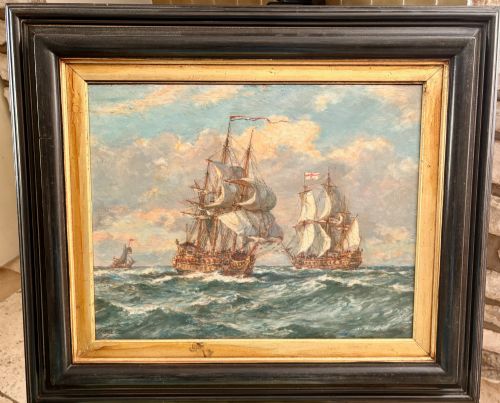
Nautical Oil Painting Artwork
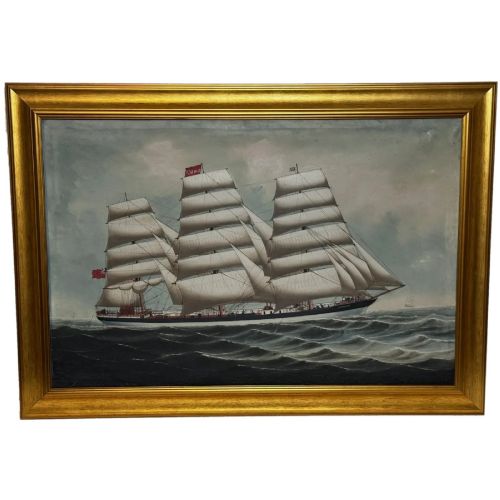
When you search for a nautical oil painting artwork, you are looking at centuries of marine subjects captured on canvas, panel, and board.
Nautical Oil Painting Artwork
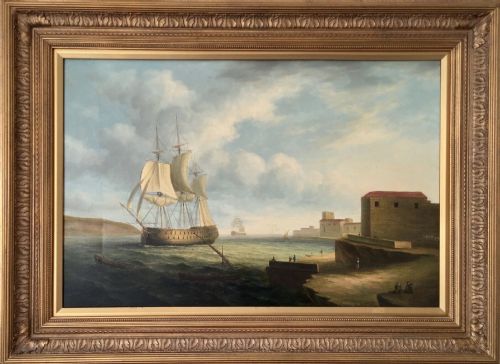
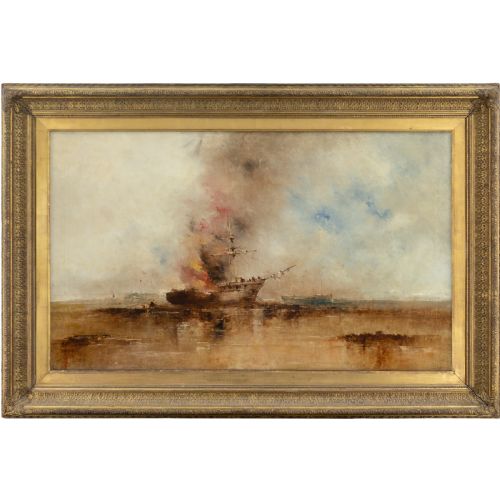
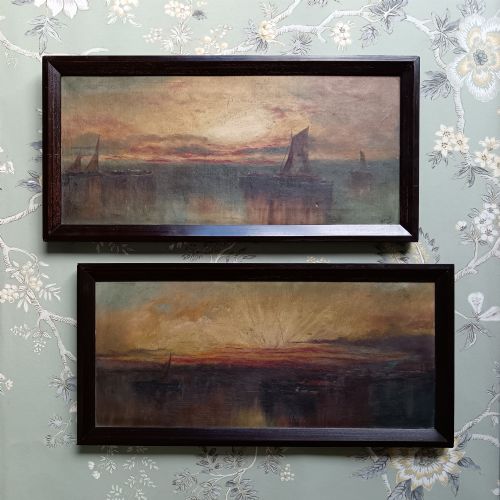
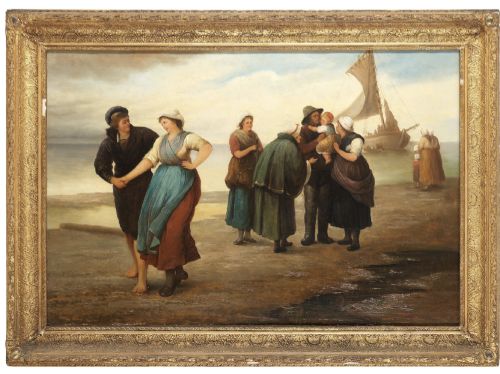
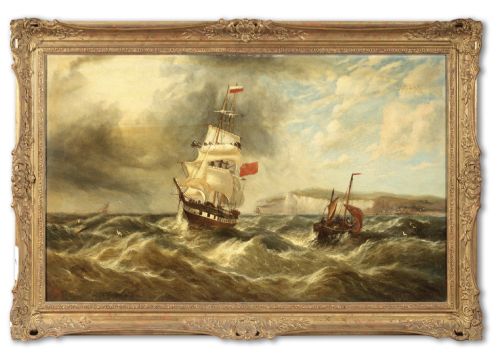
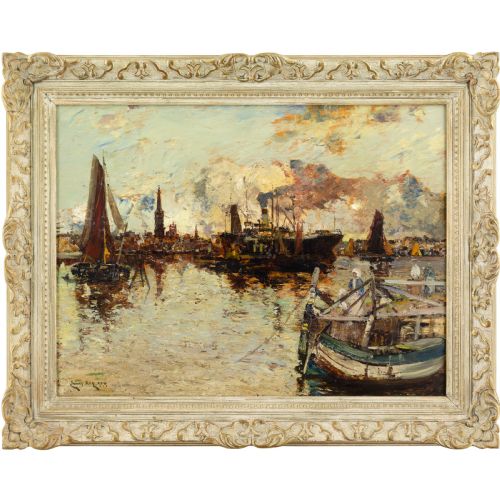
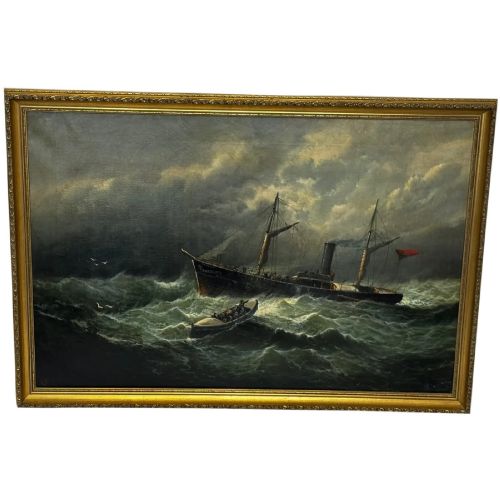
A nautical oil painting artwork depicts maritime subjects, from bustling harbour scenes and naval engagements to quiet coastal views and ships weathering heavy seas.
You are most likely to meet 19th-century and Edwardian examples on this page, reflecting periods of intense maritime activity and artistic output.
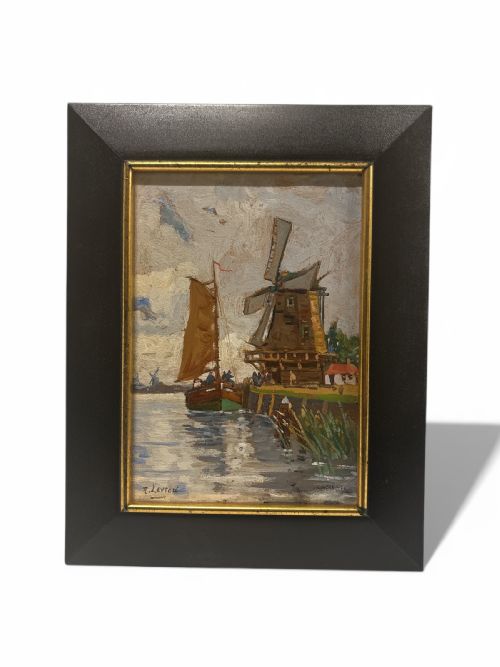
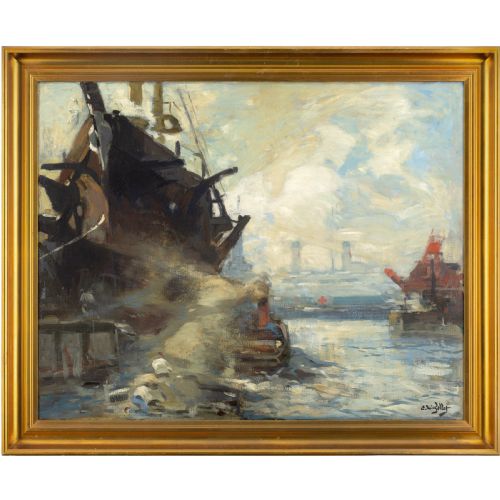
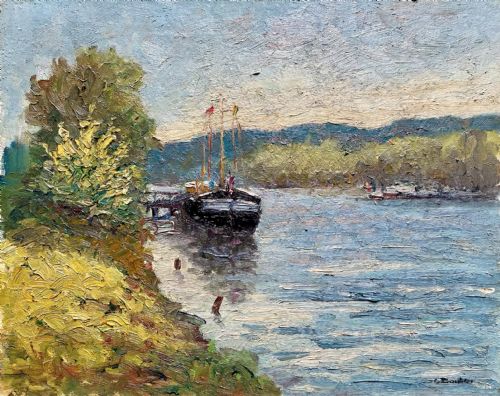
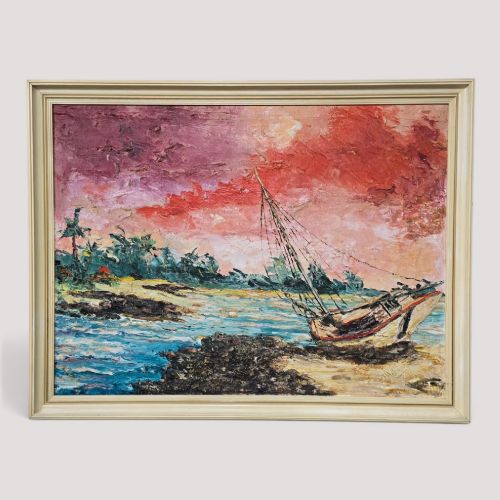
The works span different forms, including oil paintings on canvas, framed panel pieces, and depictions ranging from traditional marine art to post-impressionist interpretations.
How They Were Made
Artists built these compositions primarily using oil paint applied to canvas, stretched wooden panels, or rigid boards, sometimes set within gilt wood frames.
The technique relies on the slow-drying nature of oil to blend tones for sky and water, capturing light reflecting off the surface of the sea.
Several canvases record the turbulent paths of historic steamships and wooden barques braving the waters off Italy and Malta.
What Varies in Quality
Quality rests on the artist's command of perspective, the accurate rendering of rigging and hull structures, and the convincing movement of water.
The handling of light and atmosphere separates ordinary topographical records from works that convey the true drama of maritime life.
Kenneth Cozens·Eugène-Louis Gillot·William McAlpine·John Rose Miles·James Kay·Willem Bos·John Wilson Carmichael·William Henry Williamson·Bernard Benedict Hemy
The Nautical Oil Painting Artwork Glossary
- Canvas
- A heavy woven fabric stretched across a wooden frame to serve as a foundation for oil paint.
- Giltwood
- Wood carved and coated with a thin layer of gold leaf, commonly found on period frames.
- Seascape
- A work of art depicting the sea, coastline, or ships operating on the water.
- Panel
- A flat wooden board used by artists as an alternative to stretched fabric.
Nautical Oil Painting Artwork: Frequently Asked Questions
How do I date an old marine painting?
Examine the style of the vessels depicted, as ship designs changed rapidly between the sailing era and the rise of steamships. The construction of the canvas support and the composition of the frame offer further clues.
Signatures, artist records, and the type of pigments used also help narrow down the decade in which the work was produced.
What is the difference between marine art and seascapes?
Marine art specifically focuses on human interaction with the sea, featuring ships, naval battles, harbours, and fishing vessels. The presence of maritime architecture or watercraft defines the genre.
Seascapes, conversely, often concentrate purely on the natural elements of the ocean, coastline, waves, and weather without necessarily including boats.
How should I care for a framed oil painting?
Keep the artwork away from direct sunlight and sources of extreme heat to prevent the oil paint from cracking and the wooden frame from warping. Maintaining stable room temperature is essential for preservation.
Dust the surface gently with a dry, soft brush and avoid using any liquid cleaners on the canvas or the gilt frame.
Why are some maritime paintings signed while others are not?
Many professional artists signed their work clearly, while others left pieces unsigned if they were intended as rapid studies, trade output from a workshop, or created by amateur painters.
Attribution often relies on stylistic similarities, recorded exhibition histories, and historical documentation when a signature is absent.