



Nautical Brass Clock
A nautical brass clock brings maritime history straight into a room, offering functional timekeeping built to endure heavy weather.
Nautical Brass Clock
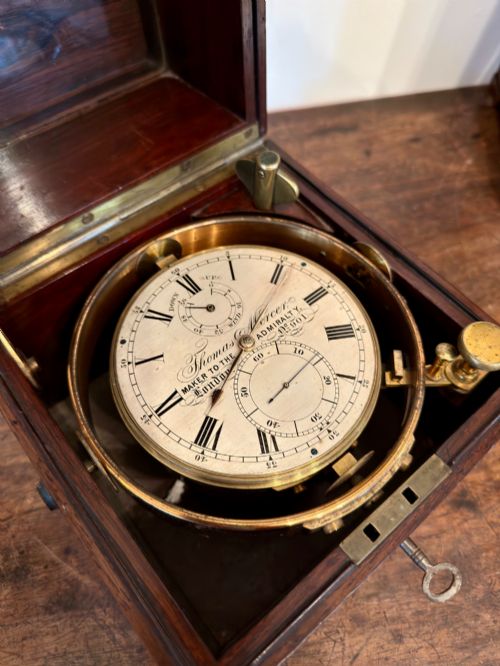
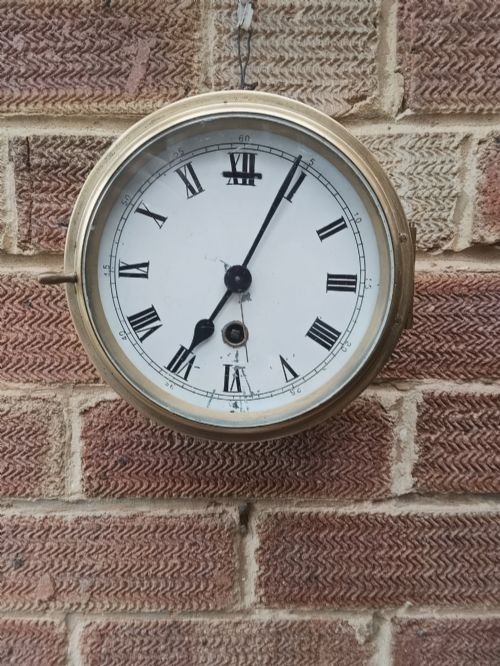
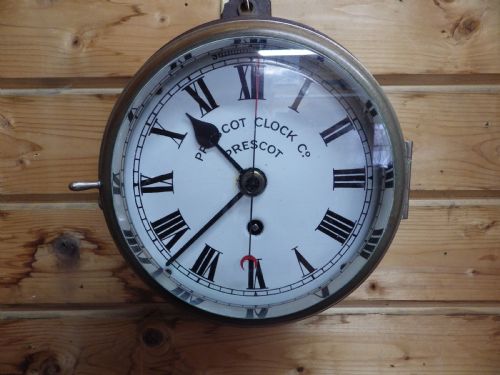
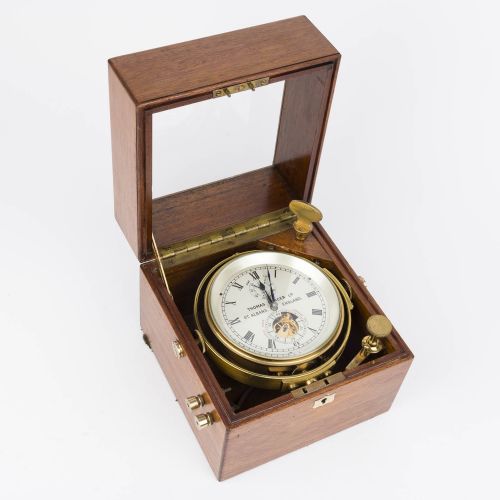
A nautical brass clock represents heavy-duty marine timekeeping designed for use aboard vessels, from engine rooms to captain's cabins. When searching for a nautical brass clock, a buyer encounters everything from robust bulkhead timepieces to delicate marine chronometers and novelty ships wheel designs.
The selection ranges across the nineteenth century, Edwardian era, and mid-twentieth century, capturing utilitarian naval equipment alongside decorative mantel and desk models. Wall clocks and heavy bulkhead pieces dominate, alongside specialised instruments housing complex fusee movements.
Makers and retailers from London, Liverpool, and further afield stamped their names on dials made for the Admiralty, merchant shipping, and domestic display. These instruments bridge the gap between working maritime tools and prized interior ornaments.
Evaluating craftsmanship and execution
Quality separates standard utility pieces from exceptional navigational instruments through the refinement of the movement and the weight of the casting. Twin fusee movements and signed dials by respected makers indicate a higher tier of production.
The crispness of engraving on silvered dials and the integrity of the brass casing distinguish precision chronometers from mass-produced bulkhead models. Original components, including matching gimbals and undamaged enamel faces, elevate the standing of any piece.
Some models chime eight bells to mark the traditional naval watch system, ensuring time is measured by the rhythm of the sea.
Mercer of London·Thomas Mercer·Litherland Davies Of Liverpool·Prescot Clock Co·Kelvin White Hutton London·Schatz of Germany·Smiths Empire·Gay Vicarino
The Nautical Brass Clock Glossary
- Bulkhead clock
- A sturdy timepiece designed to mount directly onto the interior wall of a ship cabin or bridge. These heavy clocks feature secure locking bezels to prevent the door swinging open in rough seas.
- Marine chronometer
- A highly accurate portable timekeeper used to determine longitude at sea by celestial navigation. They sit within gimballed brass boxes to keep the dial horizontal regardless of vessel motion.
- Fusee movement
- A conical pulley device connected to the mainspring by a chain or cord, designed to equalise the torque as the spring unwinds. This mechanism ensures consistent power delivery for precise timekeeping.
- Silvered metal
- A copper or brass dial treated with a silver solution to create a matte white finish with engraved numerals filled in black wax. This treatment reduces glare in bright sunlight aboard ship.
- Gimbal
- A pivoted ring suspension system that allows a chronometer or compass to remain level while the ship pitches and rolls. It isolates the delicate movement from the kinetic energy of the hull.
Nautical Brass Clock: Frequently Asked Questions
How do I mount a bulkhead clock safely?
Bulkhead clocks use heavy brass cases with pre-drilled screw holes through the flange or outer rim. Secure them directly into wall studs or backing timber using robust brass screws to bear the substantial weight.
Ensure the mounting surface is flat so the case does not distort when tightened, which could bind the internal mechanical movement.
How do fusee movements work?
A fusee movement uses a conical pulley alongside the mainspring barrel, linked by a fine steel chain. As the spring loses tension, the chain pulls higher up the wider cone to maintain equal leverage.
This clever mechanical compensation delivers steady power to the gear train from the fully wound state down to the last tick.
Can I hang a heavy brass clock on plaster walls?
Hanging a heavy brass clock requires anchoring directly into solid masonry, brickwork, or wooden wall studs. Plaster and lath alone cannot support the substantial weight of cast brass and thick glass bezels.
Use appropriate heavy-duty toggle bolts or wall anchors if stud placement does not align with the case mounting holes.
How do I clean the brass case without damaging the finish?
Wipe the brass case gently with a soft, dry microfibre cloth to remove surface dust and fingerprints. Avoid harsh chemical polishes that strip away age patinas or seep into the delicate dial joints.
If the metal requires deeper cleaning, use a specialist non-abrasive brass cream applied sparingly with a cotton bud, staying clear of painted or silvered dial markings.