


Narrow Wooden Drawer Unit
A narrow wooden drawer unit brings practical vertical storage to tight spaces, offering fitted compartments in timbers like mahogany, oak, and walnut.
Narrow Wooden Drawer Unit
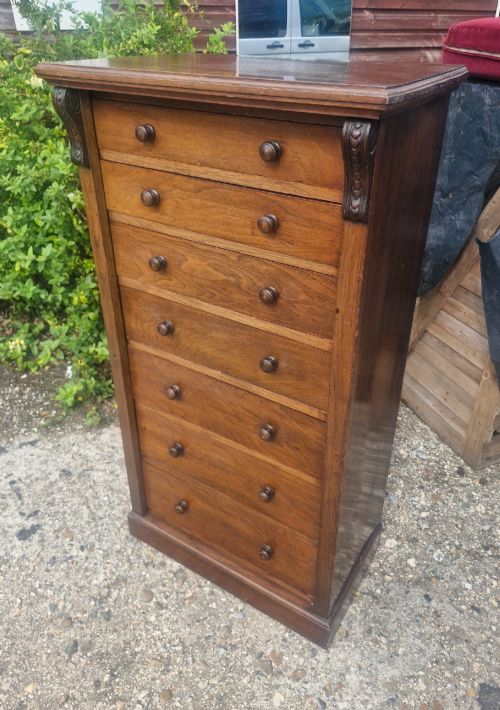
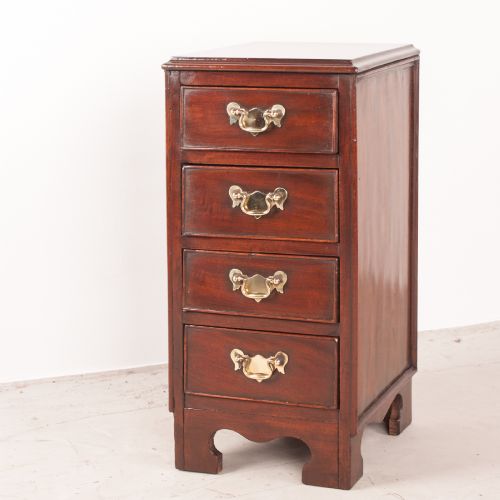
A narrow wooden drawer unit serves as a compact storage solution across multiple historical periods, frequently appearing in forms such as Wellington chests, music cabinets, and small bedside or trinket chests. These vertical pieces maximise floor space while providing compartmentalised storage for papers, sheet music, or personal items.
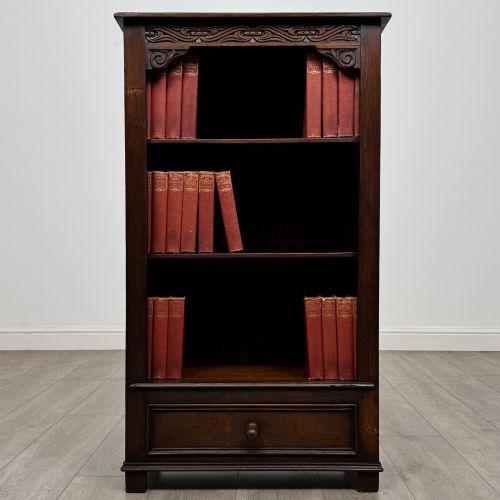
The selection on this page spans from Georgian and Victorian examples to Edwardian and early 20th-century pieces, reflecting shifts in domestic utility and interior taste. Alongside dedicated chests of drawers, buyers frequently encounter related tall formats such as narrow bookcases with drawers, shop chests, and compact dressers.
Makers and workshops of the 19th and early 20th centuries produced these items in various woods to suit both formal reception rooms and utilitarian spaces. The overriding characteristic remains their slender footprint, designed to fit alcoves and landings where standard furniture proves too wide.
How they were made
Cabinet makers utilised dense hardwoods such as mahogany, oak, and walnut to construct sturdy carcasses capable of supporting multiple stacked drawers. Timber selection often dictated the finish, with figured veneers and satinwood inlay applied to front facades for visual depth.
Functional hardware such as brass handles, escutcheons, and locking mechanisms were integrated into the design to secure contents, particularly in tall filing chests and Wellington models. Secondary woods formed drawer linings and backboards, while structural joints relied on traditional carpentry techniques appropriate to each period.
Some music cabinets still retain their original internal dividers, once meant for rolling sheet music.
What varies in quality
Quality reveals itself in the choice of timber and the precision of the cabinet work, particularly in how drawer linings are fitted and how smoothly the drawers run within their apertures. Figured veneers and crisp inlay work distinguish finer formal pieces from simpler utilitarian workshop output.
The integrity of original brass fittings, locking systems, and structural elements such as splayed feet or panelled sides determines the overall standard of a piece. Well-proportioned scaling and balanced grain patterns across the front elevation separate standard vernacular items from superior examples.
J Shoolbred
The Narrow Wooden Drawer Unit Glossary
- Wellington chest
- A tall, narrow chest of drawers secured by a hinged vertical locking bar on one side that fastens with a key.
- Satinwood inlay
- A contrasting light-coloured exotic wood inserted into the primary timber surface to create decorative geometric or floral borders.
- Shop chest
- A multi-drawer cabinetry piece originally designed for commercial counter use, featuring graduated drawers for small goods.
- Figured walnut
- Timber sourced from walnut trees exhibiting highly decorative, swirled grain patterns caused by branch junctions or growth stresses.
- Waterfall bookcase
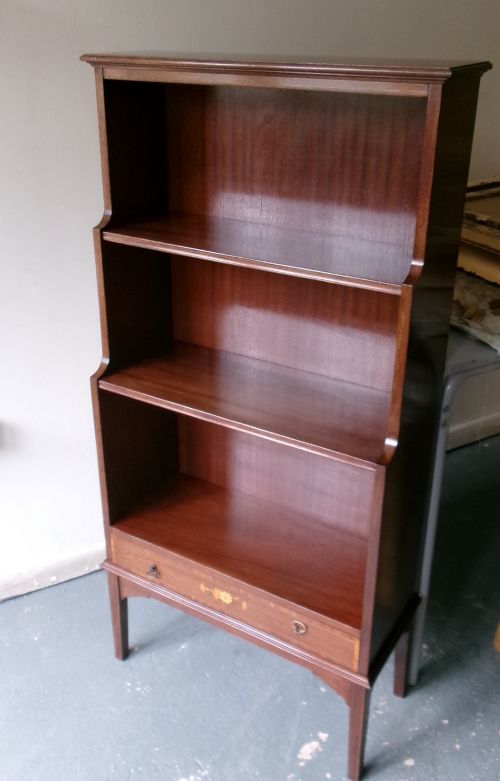
- A tiered shelving unit where the sides step back progressively from bottom to top, often incorporating lower drawers.
Narrow Wooden Drawer Unit: Frequently Asked Questions
Where should I place a narrow wooden drawer unit?
These compact pieces suit transitional spaces such as hallways, landings, and alcoves where traditional wide furniture blocks movement.
Their restricted footprint allows them to function effectively beside beds or desks without dominating the room.
How do I care for antique mahogany and walnut?
Keep wooden surfaces away from direct heat sources and strong sunlight to prevent the timber from drying out or fading over time.
Apply natural beeswax periodically to nourish the grain and maintain a soft protective lustre.
Are these drawers suitable for modern storage needs?
The slender proportions provide excellent organisation for smaller items such as stationery, accessories, or paperwork.
While individual drawers lack the depth of modern wardrobes, their segmented nature aids efficient sorting.
How can I tell a Victorian piece from an Edwardian one?
Victorian examples often employ heavier timbers like solid mahogany or figured walnut with formal decorative detailing.
Edwardian pieces frequently display lighter construction, simpler Arts and Crafts influences, or brighter oak finishes.