




Antique Walnut Filing Chest
An antique walnut filing chest brings disciplined storage into a room through rich timber and brass hardware.
Antique Walnut Filing Chest
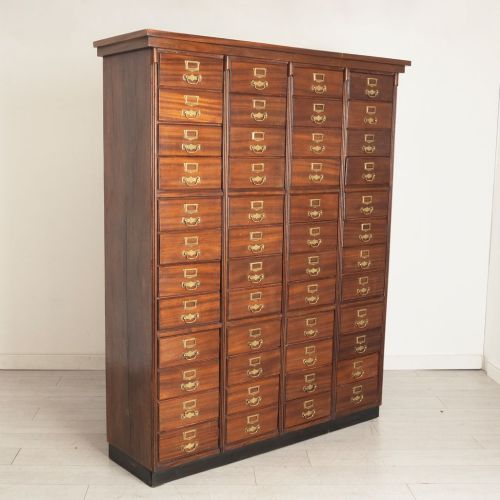
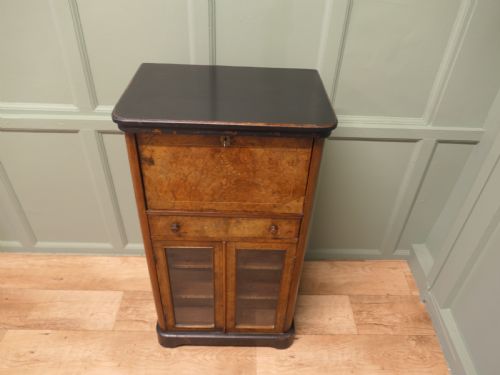
An antique walnut filing chest provides structured storage for papers, specimens and small valuables within domestic and commercial settings. The pieces seen here span from the Victorian and Edwardian eras down to the late nineteenth and early twentieth centuries, taking forms such as narrow Wellington chests, banks of drawers, and collectors cabinets. Walnut serves as the primary timber, appearing in figured, burr and satin varieties alongside supplementary materials.
Buyers seeking an antique walnut filing chest will most frequently encounter nineteenth-century English and French examples with multiple graduated drawers. These range from shop chests and jewellers cabinets to tall filing cabinets fitted with brass handles and sometimes locking mechanisms. Each form reflects the practical filing and sorting needs of its period, executed in rich hardwoods.
How they were made
Cabinet makers constructed these filing chests using solid and veneered walnut, frequently selecting burr or figured walnut for drawer fronts to highlight the grain. Secondary timbers such as mahogany and satin birch provided structural stability for the carcass and drawer linings.
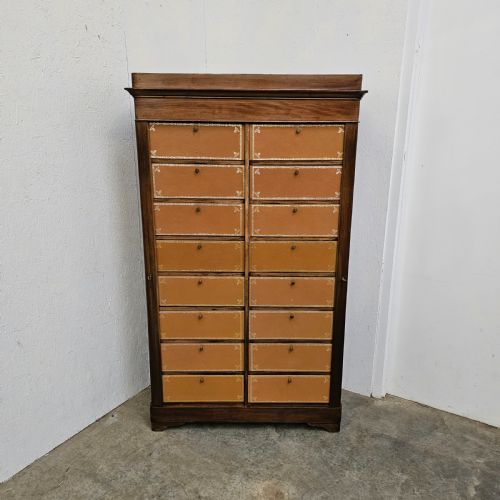
Metalwork played a functional role in construction, with brass utilised for handles, escutcheons and locking stiles on Wellington chests. Leather also appears on specialised pieces like cartonnieres, while glass occasionally fronts cabinets designed for display or collection storage.
Some nineteenth-century filing chests kept secrets behind locking stiles, built to guard private documents from prying eyes in busy Victorian offices.
What varies in quality
The selection of timber dictates the visual presence of the piece, with matched burr walnut veneers representing a higher tier of craftsmanship than plain walnut boards. Grain alignment across multiple drawers and the crispness of moulded details further separate standard utility pieces from exceptional examples.
Hardware and internal construction also distinguish the range, seen in the weight of the cast brass handles and the presence of locking mechanisms like the pivoting stile on Wellington chests. Dovetail joints executed with precision mark the better-made drawers designed to withstand frequent use.
S & H Jewells of London
The Antique Walnut Filing Chest Glossary
- Wellington chest
- A tall, narrow chest of drawers featuring a hinged locking stile on one side that secures all drawers when locked. This form typically contains six to nine drawers.
- Burr walnut
- A veneer sliced from the knotty growth of a walnut tree, prized for its swirling, highly decorative grain patterns. It was frequently applied to drawer fronts on finer pieces.
- Bank of drawers
- A multiple-drawer unit designed for sorting paperwork, specimens or small items in an office or shop setting. They often feature many shallow drawers.
- Cartonniere
- A freestanding piece of furniture fitted with multiple pigeonholes or compartments for holding loose papers, frequently incorporating leather detailing. Originating in France, they served administrative roles.
- Graduated drawers
- A series of drawers arranged vertically from smallest at the top to largest at the bottom. This proportioning creates a balanced facade.
Antique Walnut Filing Chest: Frequently Asked Questions
What is a Wellington chest?
A Wellington chest is a tall, narrow set of drawers characterised by a locking timber flap down one side. This hinged stile secures every drawer simultaneously when a key is turned in the lock.
Originally designed in the nineteenth century for gentlemen to store documents or linen, these pieces maximise vertical storage while occupying a minimal floor footprint.
How do I date an antique walnut chest?
Dating relies on observing construction methods, hardware styles, and timber choices across the piece. Victorian examples often feature hand-cut dovetails and heavy brass handles, while Edwardian pieces may show lighter proportions and satin walnut.
Archival clues like stamped maker marks or original locks also help narrow down the decade of production between the mid-nineteenth and early twentieth centuries.
Where were filing chests used?
These chests served administrative and commercial purposes in studies, offices, shops and solicitors chambers. They were built to organise paperwork, ledgers, trade samples and jewellers stock.
Over time, many transitioned from commercial workspaces into domestic interiors as practical storage for modern stationery or collections.
How do I care for walnut furniture?
Walnut benefits from placement away from direct sunlight and heat sources, which can dry out the timber and cause veneers to lift. Regular dusting with a dry, soft cloth preserves the polished surface.
Applying a quality beeswax periodically feeds the wood and maintains the deep lustre of the grain without building up heavy chemical residues.