

Narrow Victorian Chest Drawers
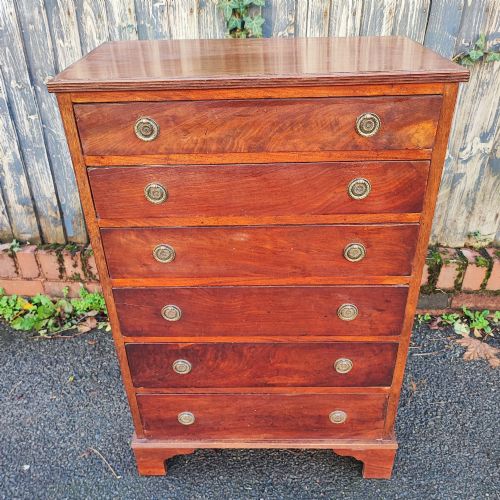
These narrow victorian chest drawers provide compact vertical storage in mahogany, walnut, and rosewood.
Narrow Victorian Chest Drawers
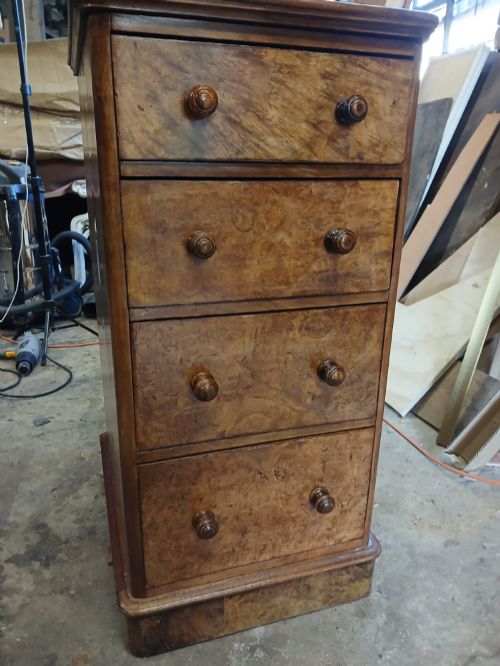
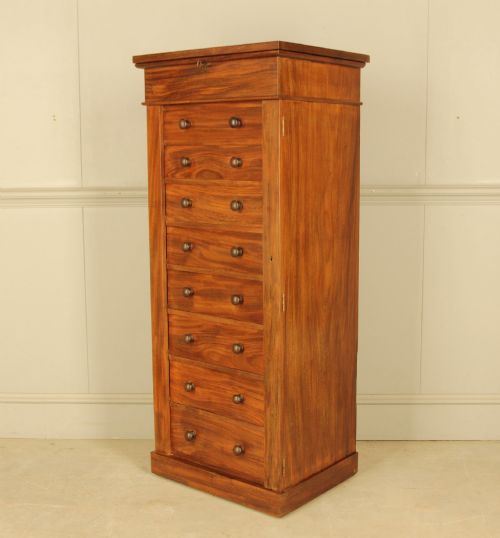
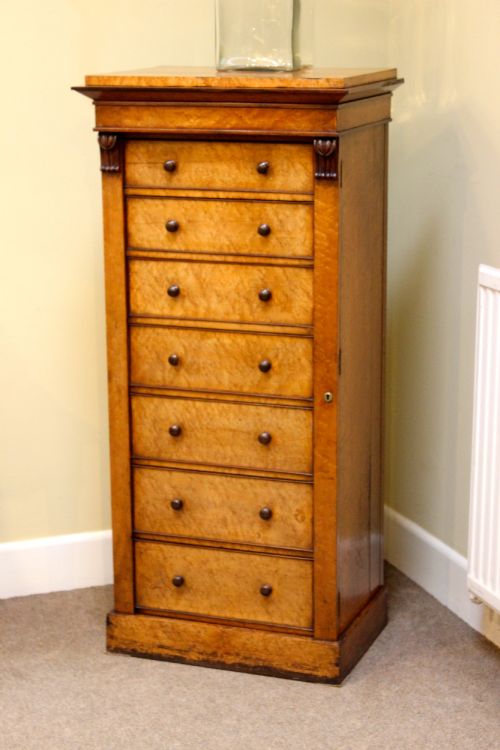
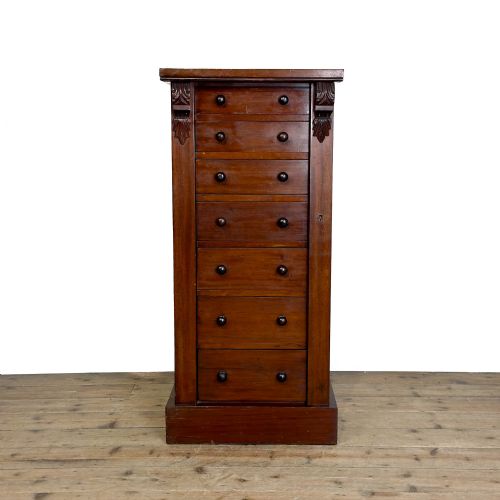
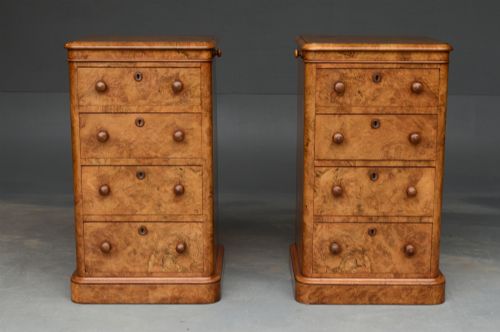
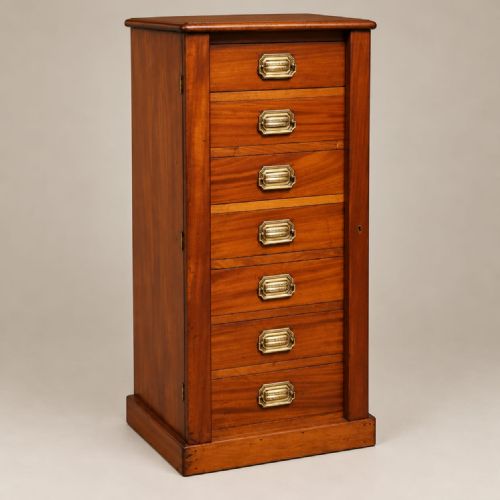
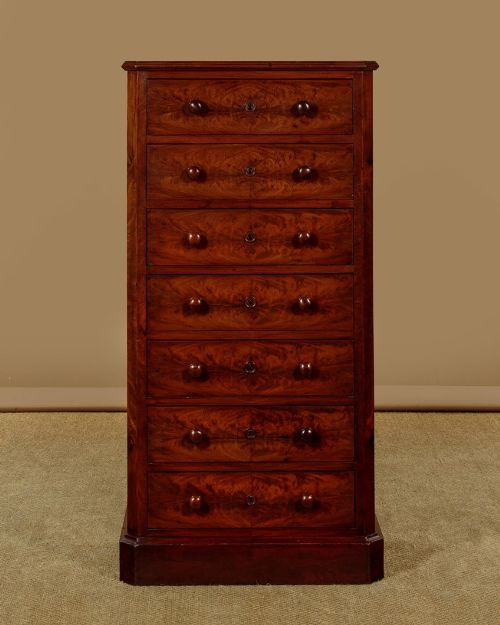
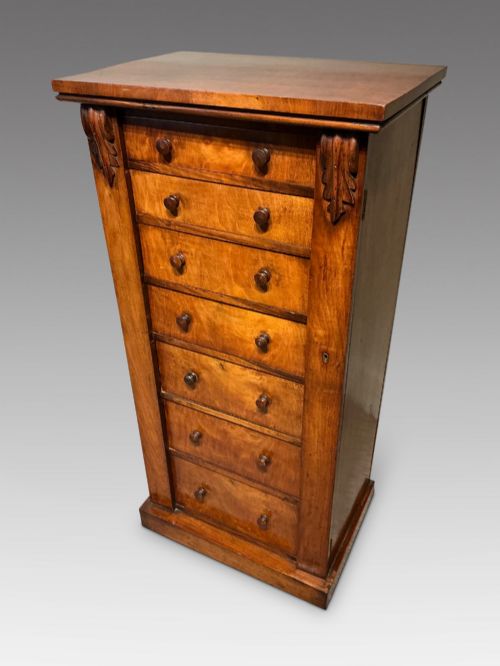
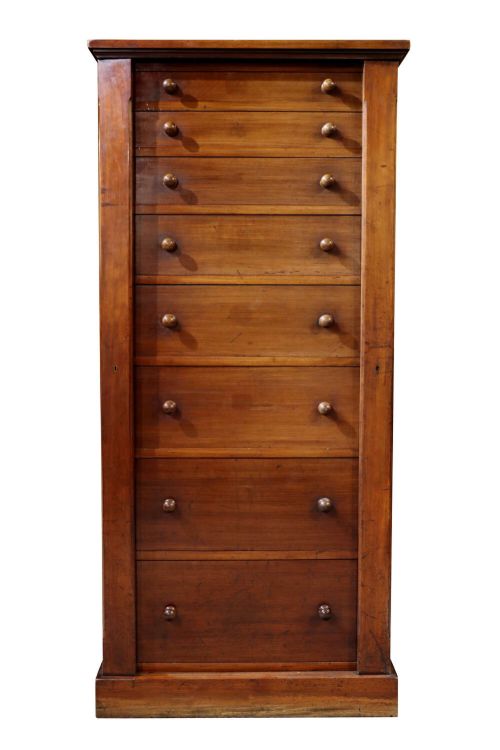
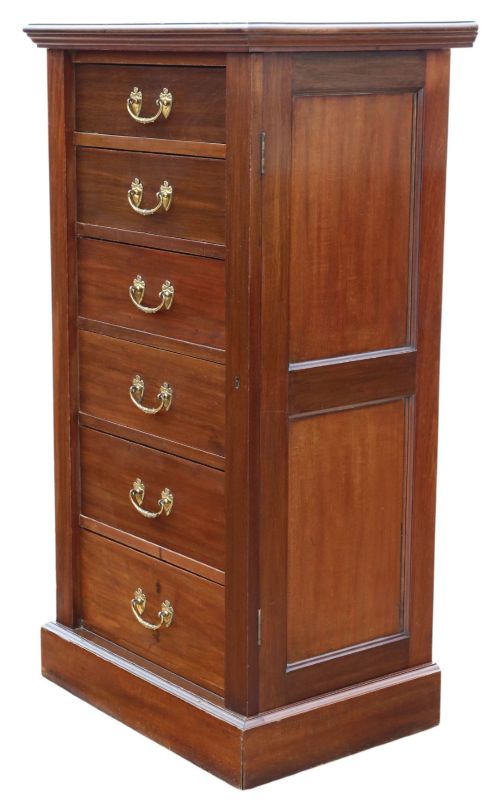
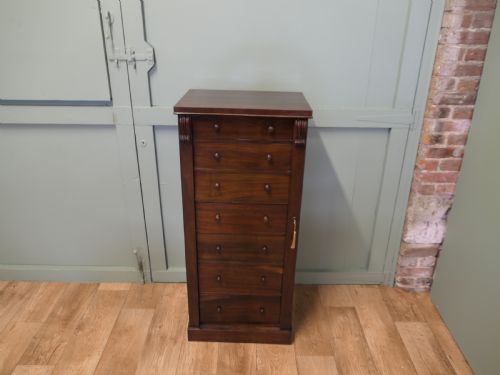
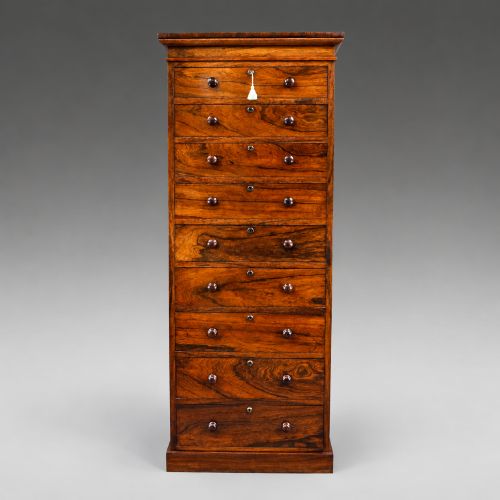
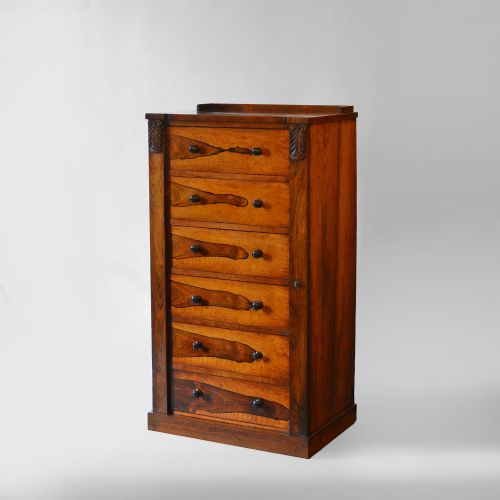
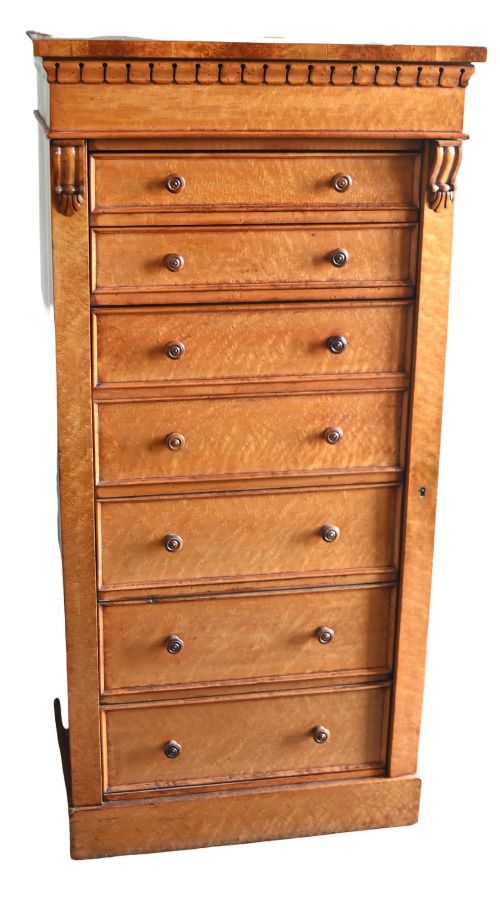
A narrow victorian chest drawers encompasses tall, slender storage pieces designed to fit tight spaces without sacrificing capacity. These items frequently appear as Wellington chests, bedside chests, and slim cabinets spanning the nineteenth century.
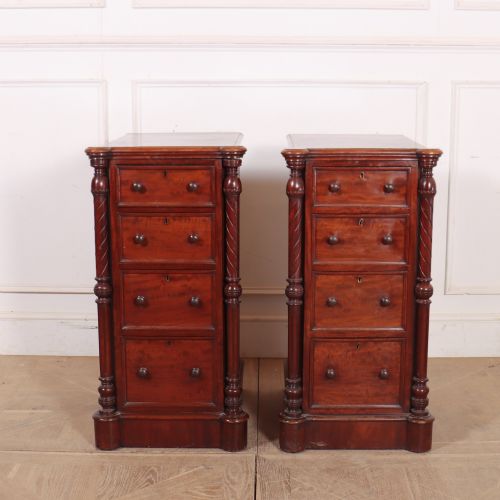
The selections on this page draw heavily from Victorian and late Victorian periods, alongside Edwardian and William IV examples. Forms range from multi-drawer banks and filing storage to bedside pairs and trinket chests.
Originating largely from British workshops, these pieces utilise traditional proportions to maximise storage footprint. Walnut, mahogany, and rosewood dominate the structural silhouettes seen across the inventory.
Materials and construction methods
Cabinet makers built these pieces using solid timbers like mahogany, oak, and pine, frequently applying decorative veneers of burr walnut, rosewood, and amboyna to primary display surfaces. Secondary woods like pine appear on internal drawer linings and backboards.
Joinery relies on traditional dovetailed drawer construction and turned wooden knobs or brass hardware. Wellington chests incorporate a characteristic locking hinged side stile that secures all drawers simultaneously.
Narrow Victorian Chest Drawers Retail Price Guide 2026
Typical asking prices for narrow victorian chest drawers among the pieces listed under this phrase on Sellingantiques today, from the lower quarter to the upper quarter. They describe what is for sale here now, not the wider market.
Some tall chests doubled as compact filing storage before modern office furniture existed.
Assessing craftsmanship and finish
The distinction between tiers rests upon timber selection and the complexity of decorative enrichment. Figured veneers, book-matched burr walnut, and intricate marquetry inlay separate standard utilitarian storage from high-status output.
Structural integrity of the locking mechanism on Wellington chests and the original condition of turned knobs or brass fittings dictate the preservation grade. Fine examples maintain crisp mouldings and uncompromised drawer runners.
Warings Liverpool·Gillows
The Narrow Victorian Chest Drawers Glossary
- Wellington chest
- A tall, narrow chest of drawers featuring a hinged locking side bar that secures the entire stack. This form became popular during the nineteenth century for storing linen or documents.
- Veneer
- A thin slice of figured wood applied over a secondary timber base to create decorative grain patterns. Burr walnut and rosewood veneers typify high-end nineteenth-century casework.
- Bedside chest
- A miniature set of drawers or a small cabinet designed to sit beside a bed. These often occur as matched pairs within the Victorian period.
- Campaign furniture
- Portable pieces designed for travel, featuring recessed brass handles and corner brackets. These items prioritize sturdy construction and space-saving dimensions.
Narrow Victorian Chest Drawers: Frequently Asked Questions
What is a Wellington chest?
A Wellington chest is a tall, narrow set of drawers characterised by a locking side pilaster or stile. This architectural feature holds all the drawers shut when locked in place.
Cabinet makers originally designed these pieces for secure storage of papers, linen, or personal valuables in bedrooms and studies.
How do I style a narrow chest?
These slender chests fit well in alcoves, hallways, or beside a bed where floor space is limited. Their vertical emphasis draws the eye upward without overcrowding smaller rooms.
Use the flat top surface for a small lamp or decorative object while keeping everyday items organised inside the graduated drawers.
Are these chests always made of mahogany?
While mahogany is the most common timber found in these pieces, makers also utilised walnut, burr walnut, rosewood, pitch pine, and satin birch. Selection depended on the period and the desired finish.
Many pieces combine a solid primary wood with decorative veneers on the drawer fronts and top panels.
How do I date a Victorian chest?
Dating relies on timber choices, drawer construction methods, and stylistic markers such as Gothic Revival details or classical mouldings. Exact decades often appear through maker stamps or documented design registrations.
Inspect the drawer linings and backboards for hand-cut dovetails and secondary woods that align with nineteenth-century practices.