

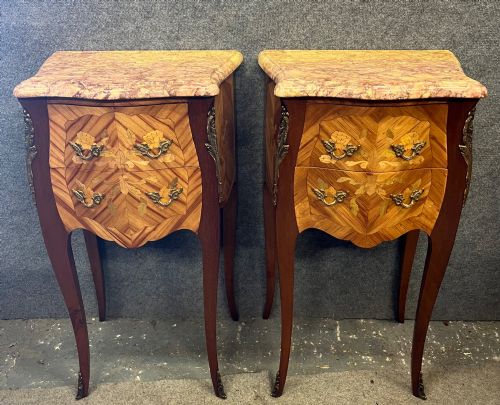

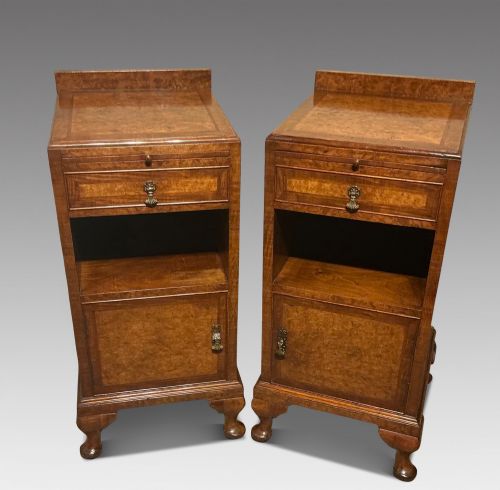


Pair Walnut Lamp Tables
These pair walnut lamp tables combine practical surface space with rich timber figure, originating mainly from the early twentieth century alongside eighteenth-century examples.
Pair Walnut Lamp Tables
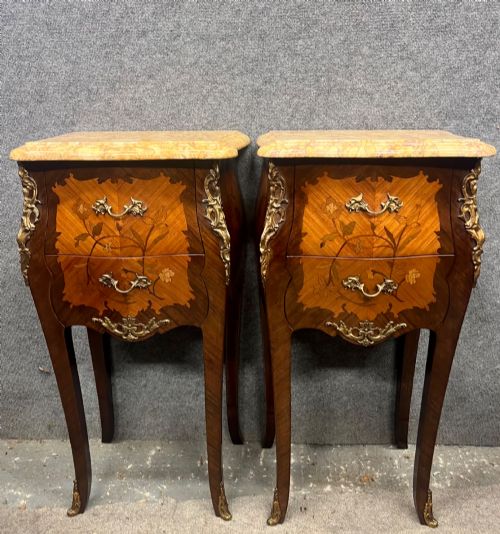
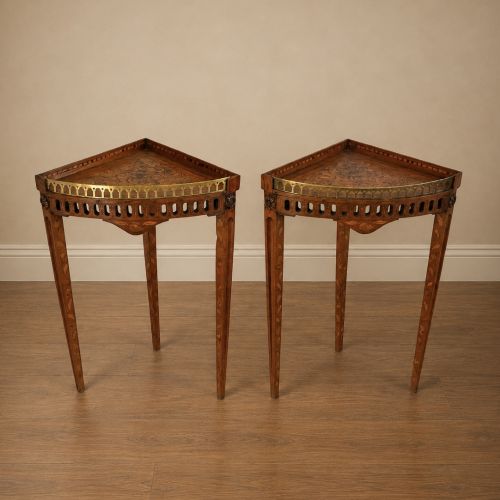
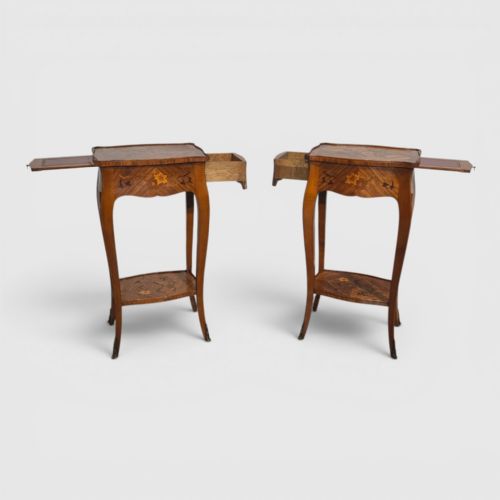
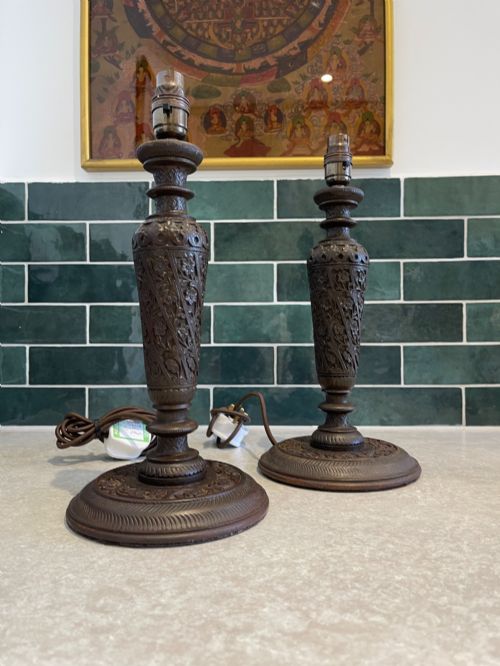
When searching for pair walnut lamp tables, buyers encounter matched sets designed to flank a bed, sofa, or armchair. These pieces function as bedside cabinets, lamp stands, side tables, and corner tables.
The selection here draws heavily from the 1920s and 1930s, featuring French regional styles, Art Deco influences, and Victorian periods. Earlier Georgian and 18th-century pieces also appear alongside Edwardian interpretations.
Forms range from serpentine bedside chests and three-tiered modernist designs to circular side tables and cabinet cupboards with drawers or doors.
Materials and construction methods
Cabinetmakers utilised solid walnut and figured burr walnut veneers over secondary timbers, often applying marquetry inlay to create geometric or floral patterns. Satin walnut and fruitwood also feature in the construction.
Many examples incorporate contrasting materials, pairing marble tops with wooden frames, or adding brass galleries and ormolu mounts to French-influenced designs.
Listings span multiple eras, encompassing 18th Century, Victorian, Edwardian, 1920s, and 1930s Art Deco periods.
Markers of distinction and build
Quality rests upon the selection of timber veneers, where highly figured burr walnut or crisp marquetry inlay elevates a piece above plain surfaces. The integration of marble tops and cast brass hardware further distinguishes finer examples.
Proportion and structural integrity define the upper tier, seen in cleanly fitted drawers, smooth serpentine curves, and matching grain patterns across both tables in the pair.
Hille
The Pair Walnut Lamp Tables Glossary
- Burr walnut
- A prized timber harvested from tree growths, yielding highly swirled and speckled grain patterns used for decorative veneer. It adds significant visual texture to cabinet fronts and tabletops.
- Marquetry
- The art of applying small pieces of veneer to form decorative patterns and pictures on furniture surfaces. Craftsmen use various woods to achieve tonal contrast.
- Ormolu
- Gilded bronze mounts applied to furniture edges and feet, frequently seen on French revival pieces from the nineteenth and early twentieth centuries. It provides a metallic accent to the dark wood.
- Serpentine
- A gently undulating furniture front or tabletop featuring a convex centre flanked by concave curves. This contour requires precise carpentry to execute successfully.
- Gallery
- A small pierced metal or wooden rail fitted around the edge of a tabletop to prevent items from sliding off. Brass versions are typical on eighteenth-century and revival pieces.
Pair Walnut Lamp Tables: Frequently Asked Questions
What rooms suit pair walnut lamp tables?
These tables work well beside a bed or flanking a living room sofa, providing surface space for lighting and books.
Their matched nature brings symmetry to a room arrangement without dominating the floor space.
How do I date a walnut lamp table?
Dating relies on stylistic clues, construction methods, and materials, ranging from 18th-century marquetry to 1930s Art Deco modernist tiers.
Victorian and Edwardian versions often display heavier proportions compared to lighter interwar French designs.
Are marble top tables practical?
Marble inserts offer a durable, heat-resistant surface that protects the underlying wooden structure from lamp heat and spills.
They add weight to the piece and introduce a contrasting texture against the surrounding walnut veneer.
What is the difference between a bedside cabinet and a lamp table?
Bedside cabinets generally include enclosed storage space behind doors or drawers intended for personal items.
Lamp tables focus on open surface area for illumination, though many designs on this page combine both functions.