

French Walnut Bedside Cabinets
French walnut bedside cabinets combine practical bedside storage with continental elegance, offering collectors and decorators versatile pieces suited to period and modern interiors alike.
French Walnut Bedside Cabinets
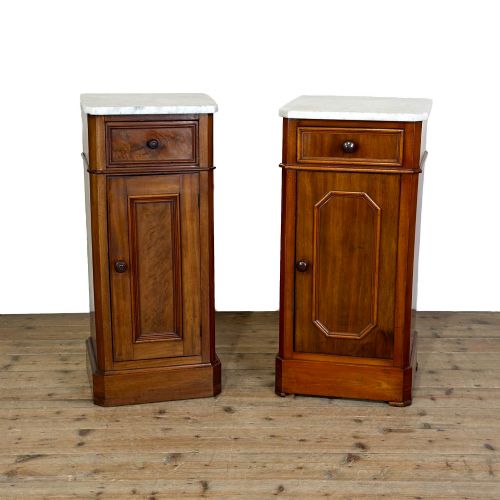
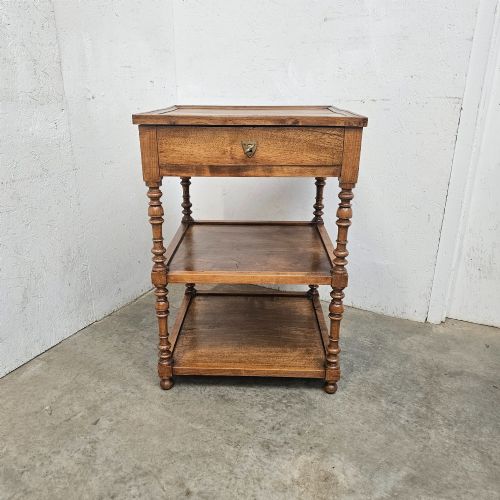
French walnut bedside cabinets bridge utilitarian bedroom storage and decorative continental design. When exploring french walnut bedside cabinets, buyers encounter enclosed cupboards, open compartments and small chests of drawers standing beside beds.
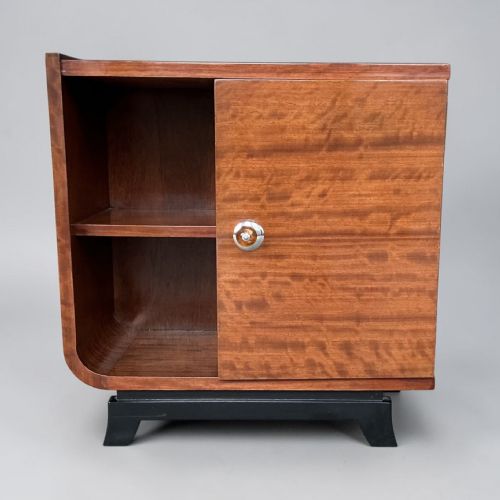
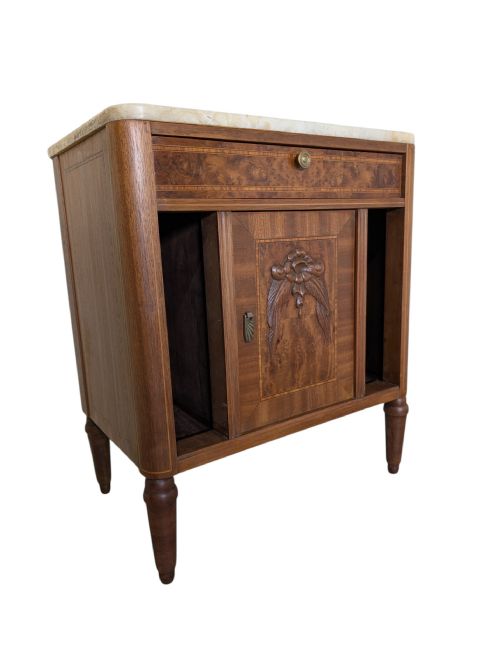
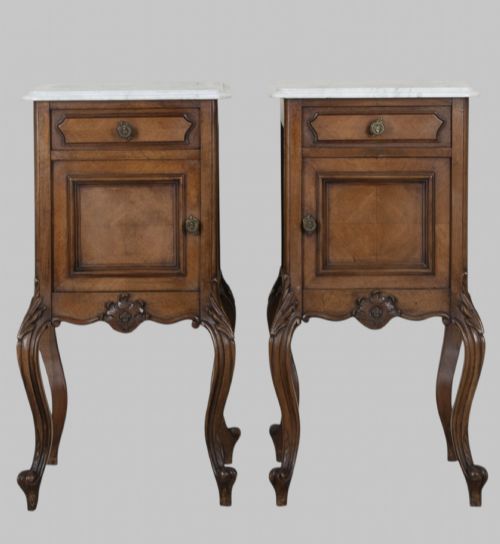
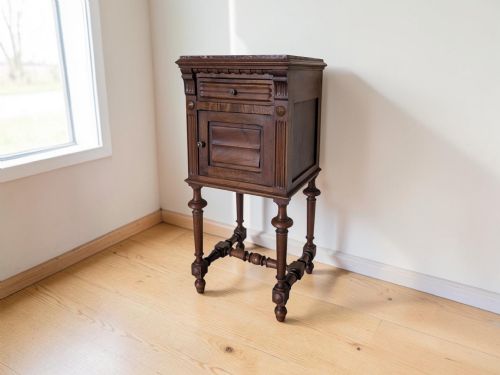
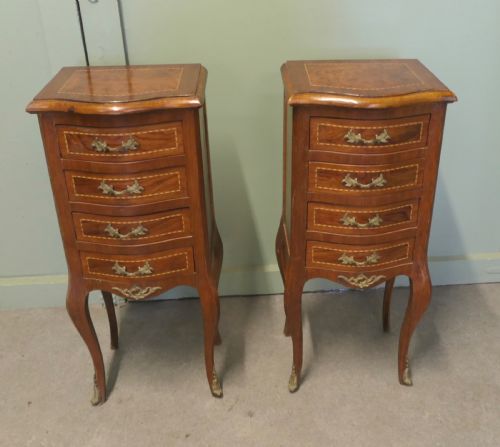
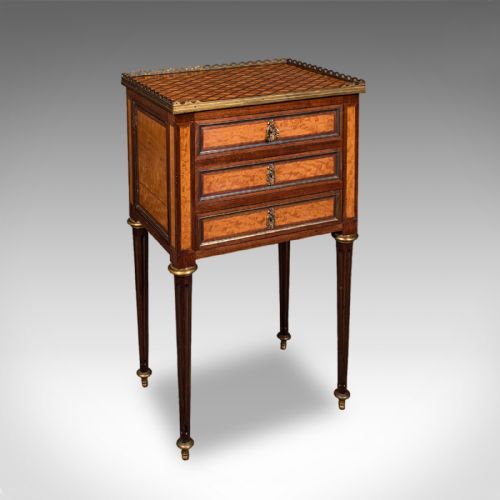
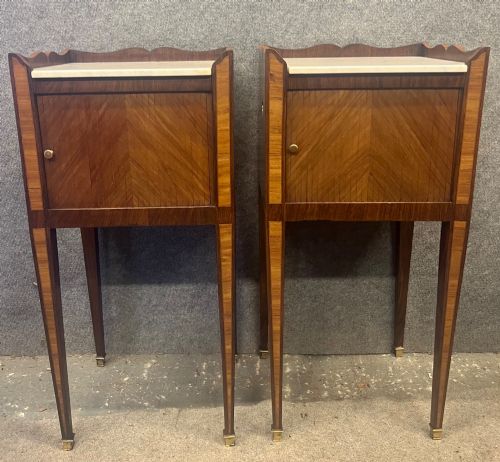
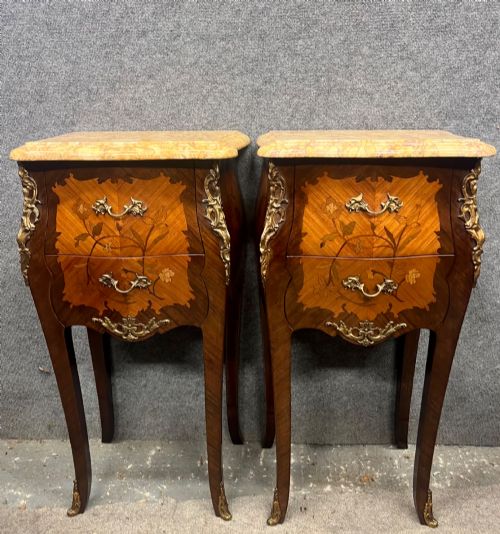
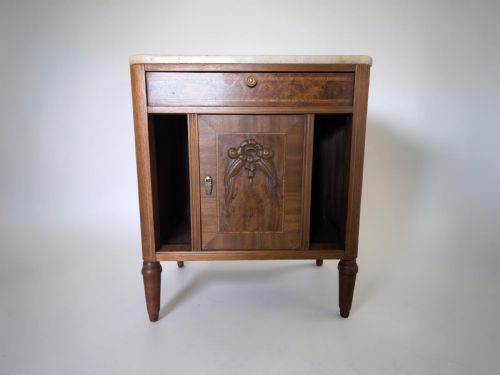
Most examples originate from the nineteenth and early twentieth centuries, spanning periods from Victorian craftsmanship through Art Deco. Forms range from simple single-door cupboards to elaborate marble-topped lamp tables with marquetry inlay.
Makers designed these items to sit low beside beds, holding night-time essentials while introducing warmth through figured timber and polished stone surfaces.
How they were made
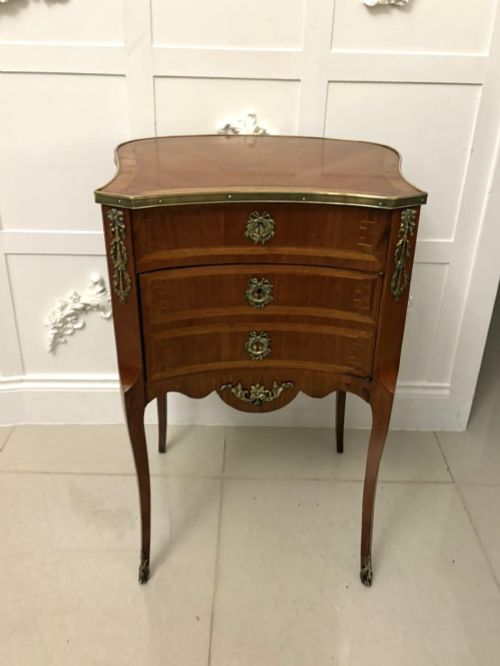
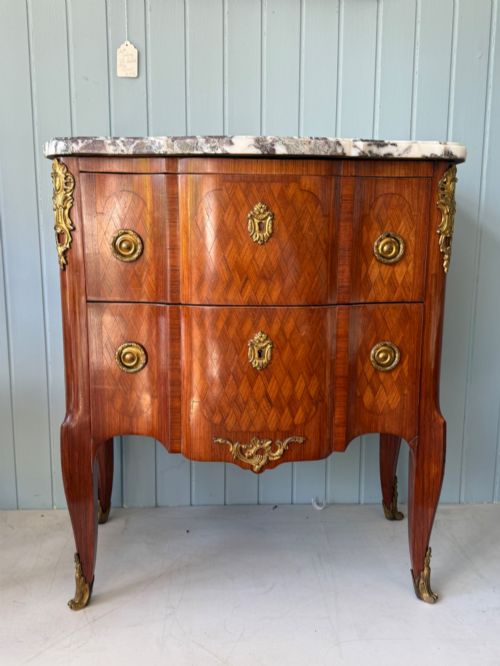
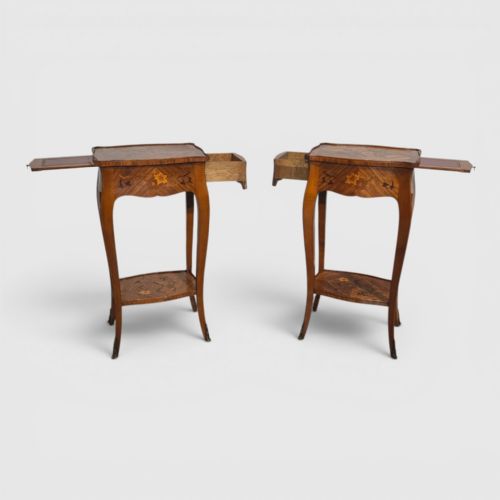
Cabinet makers utilised solid walnut and decorative veneers like burr walnut and kingwood over robust secondary timbers. Skilled hands applied intricate marquetry and parquetry patterns, creating geometric and floral motifs across door panels and drawer fronts.
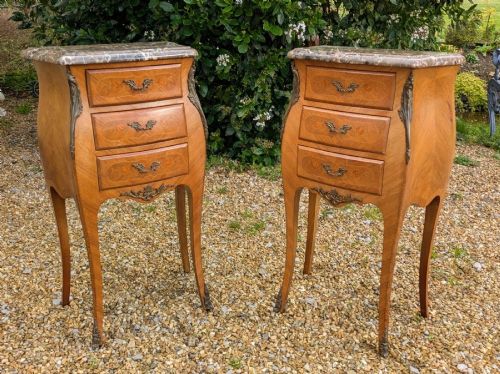
Many iterations incorporate heavy Belgian Sainte-Anne or veined marble slabs fitted precisely to the top surface. Ormolu, brass mounts and gilt bronze hardware punctuate the woodwork, providing functional handles, corner guards and decorative feet.
Current listings feature pieces spanning the Victorian era through the 1930s, utilising walnut, marble, brass and ormolu in Louis XV and Art Deco styles.
What varies in quality
Superior examples separate themselves through the selection of timber figures, where rich burr walnut or delicate marquetry displays exceptional symmetry and depth. The integration of original, unblemished marble tops and finely chased ormolu mounts elevates a piece significantly.
Construction methods also dictate grade, distinguishing robust, hand-dovetailed drawer boxes and tight joints from simpler assembly. Proportions and the crispness of carved details, particularly in revival styles, mark the division between standard workshop output and top-tier production.
The French Walnut Bedside Cabinets Glossary
- Marquetry
- A decorative technique applying pieces of veneer to a structure to form ornamental patterns or pictures. Craftsmen cut contrasting woods together to ensure tight, seamless fits.
- Ormolu
- Gilded bronze used for decorative mounts, handles and feet on furniture. The technique involves applying a mercury and gold amalgam to bronze before firing.
- Parquetry
- A geometric mosaic of wood pieces used for decorative floors and cabinet surfaces. It differs from marquetry by relying on repeating angular shapes rather than pictorial designs.
- Chevets
- The French term for bedside tables or small cabinets. These compact units frequently feature a combination of drawers and enclosed cupboards.
- Sainte-Anne
- A distinctive dark grey or black limestone marble quarried in Belgium with characteristic white calcite veins. Cabinet makers selected this stone for durable, elegant table surfaces.
French Walnut Bedside Cabinets: Frequently Asked Questions
What is the typical size of these cabinets?
These cabinets are generally compact, designed to sit neatly beside historical bed heights. Dimensions focus on narrow footprints to fit tight bedroom spaces while offering surface area for lighting and small items.
Interior compartments usually accommodate books or night essentials behind a single door or a small stack of drawers.
Are marble tops original to the furniture?
Many surviving examples retain their original inset marble slabs, which provided a durable, water-resistant surface for washing equipment and bedside jugs before modern plumbing. The stone sits within a rebated wooden frame specifically shaped to hold its weight.
Variations in marble colour and veining reflect the specific quarry sources utilised during the nineteenth and early twentieth centuries.
How do I care for walnut veneer?
Walnut veneer requires protection from direct sunlight and extreme humidity changes to prevent the timber from fading or the glue from drying. Regular dusting with a soft, dry cloth maintains the polished finish without risking moisture damage.
Applying occasional specialist wax preserves the natural lustre of the grain without building up heavy chemical residues.
How are different French periods distinguished?
Nineteenth-century pieces often reflect revival movements like Louis XV and Louis XVI styles, featuring curved cabriole legs, serpentine fronts and elaborate marquetry. Later pieces from the 1920s and 1930s lean towards Art Deco aesthetics, favouring cleaner geometric lines and striking burr walnut grains.
Hardware styles, construction techniques and secondary woods inside the drawers provide further clues to dating an individual cabinet.