
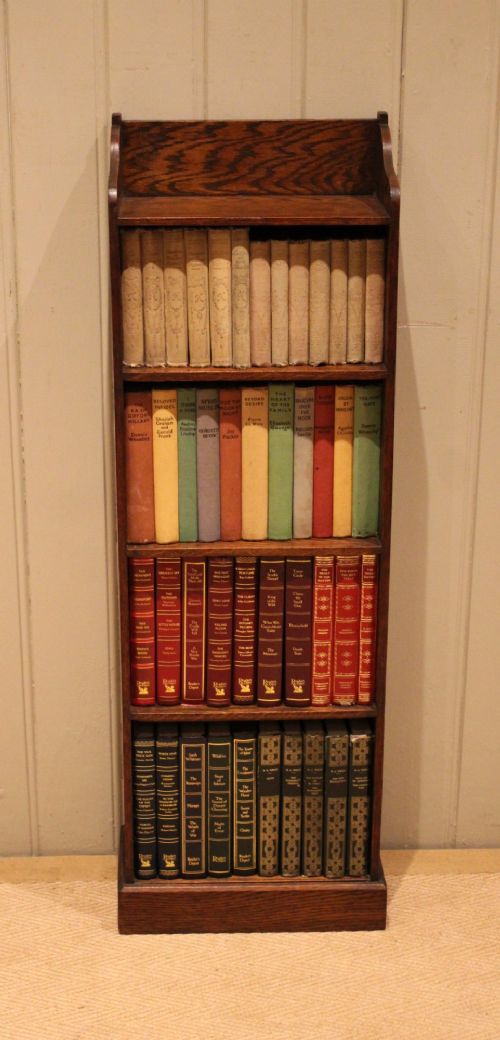
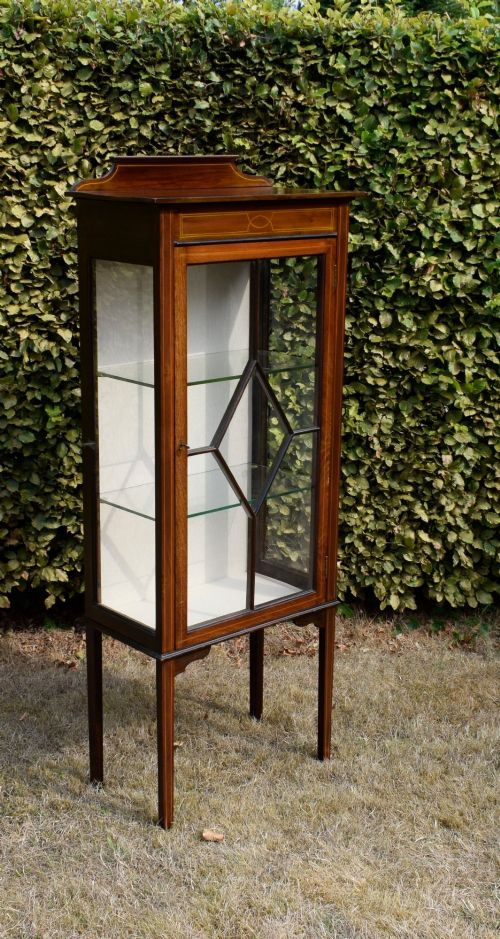
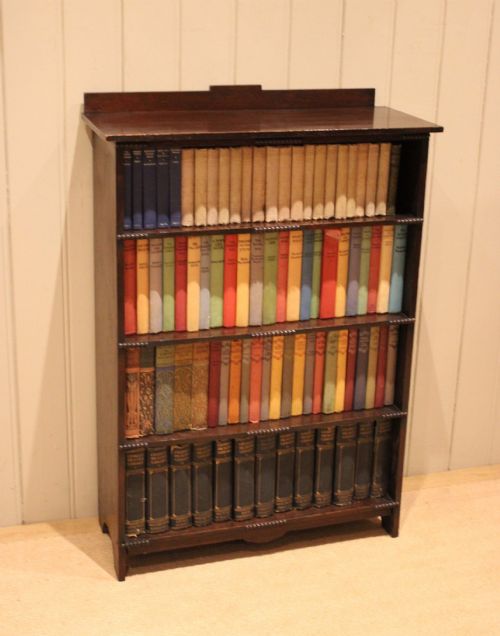
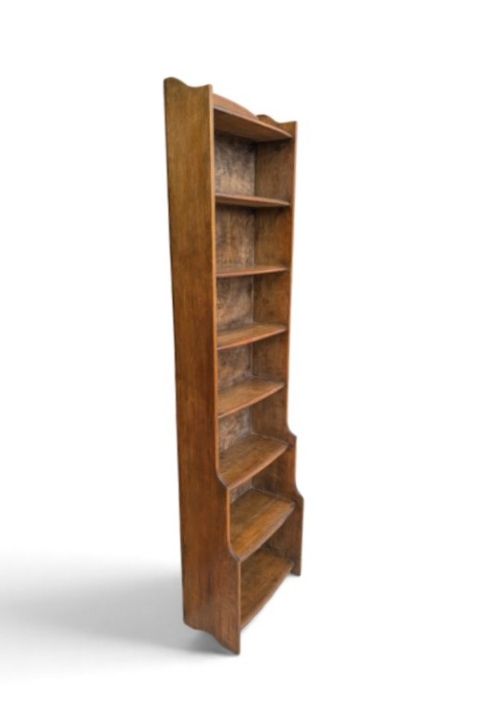
Narrow Standing Bookcase
A narrow standing bookcase offers compact vertical storage, bringing period timber and proportion to tight domestic spaces.
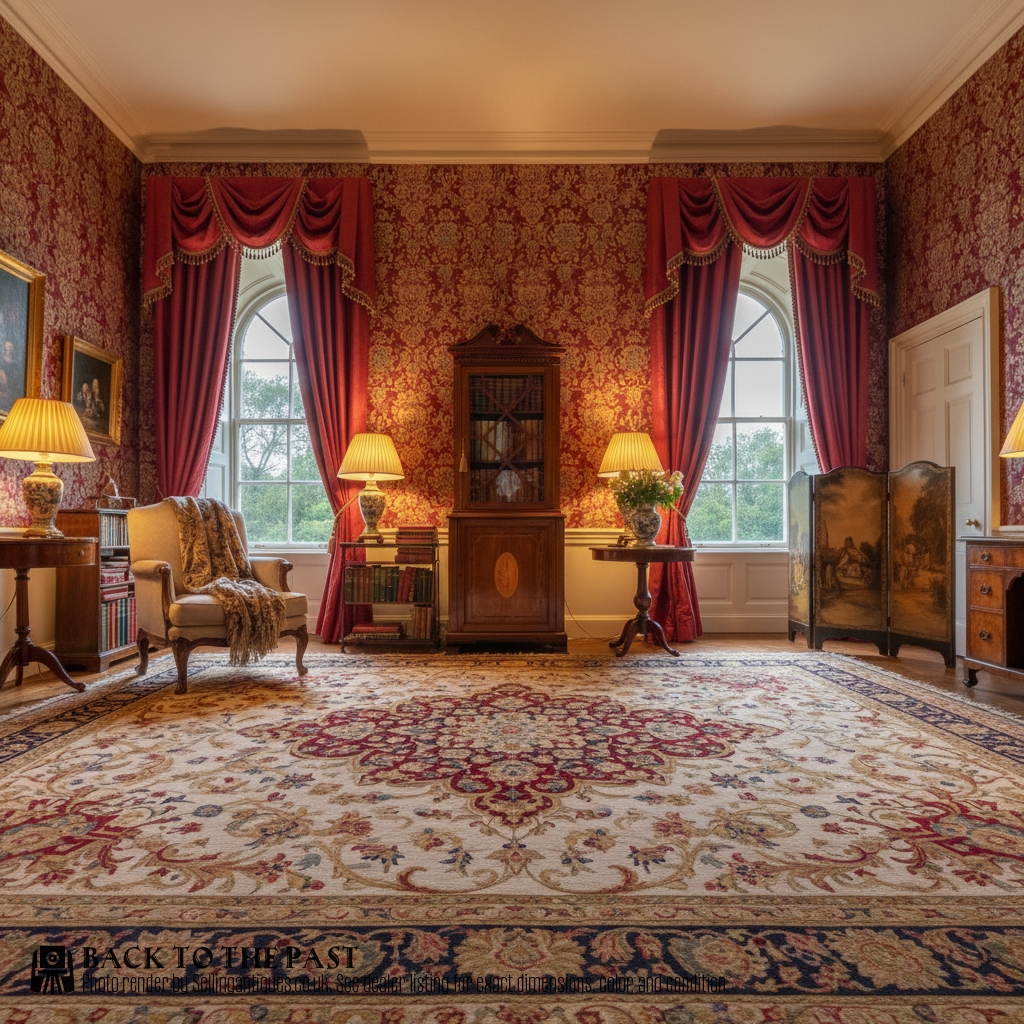
Narrow Standing Bookcase
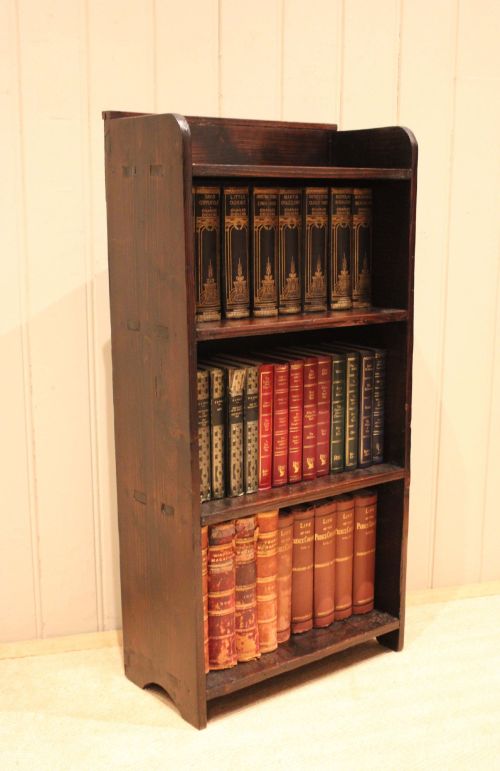
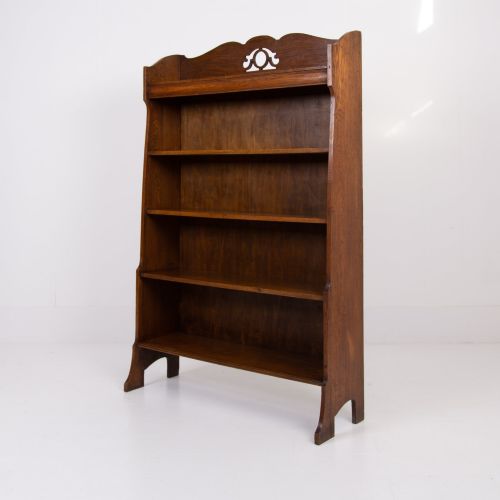
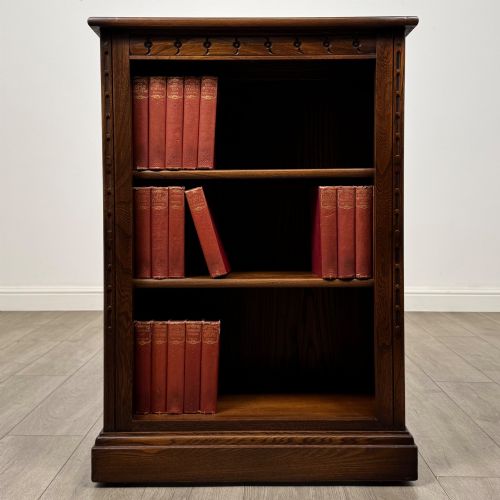
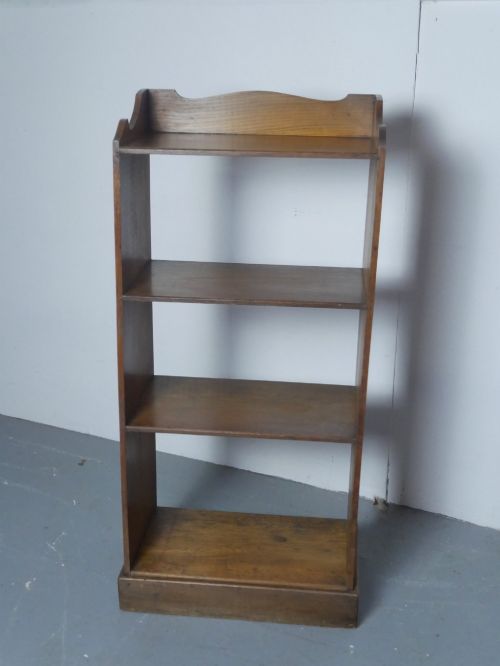
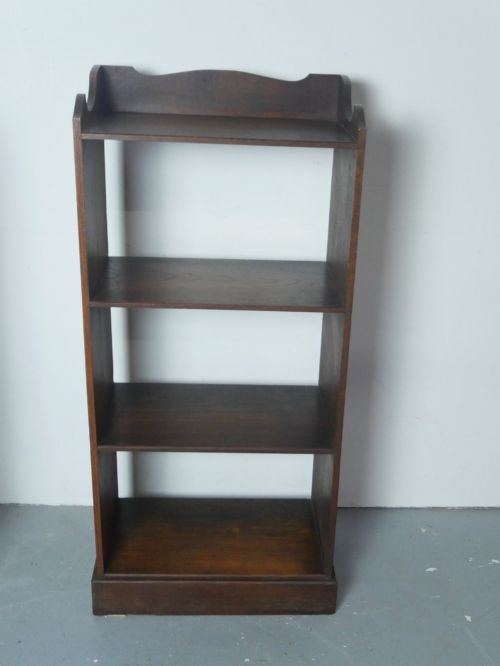
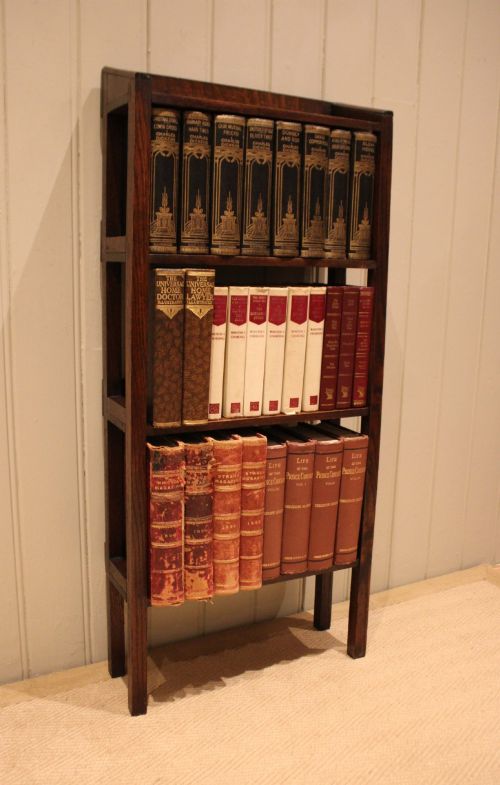
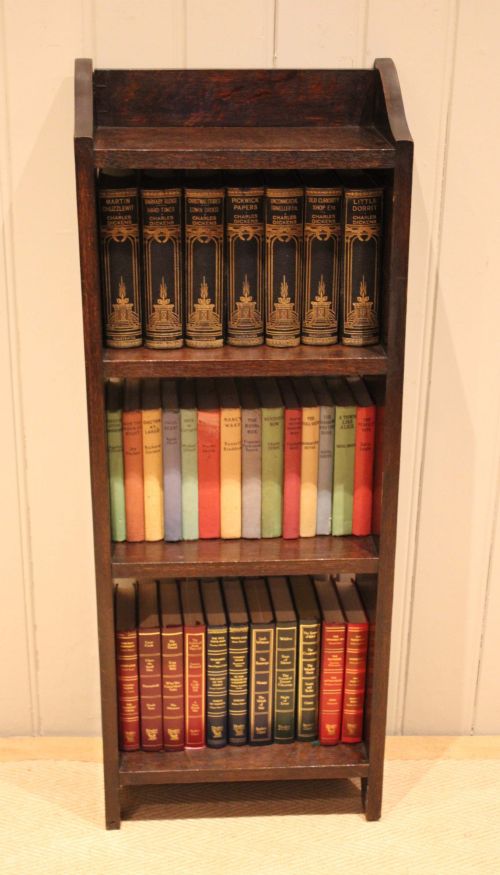
A narrow standing bookcase is a freestanding shelving unit designed to fit limited floor space while holding a substantial volume of books or display items. You will frequently encounter compact open shelf formats in oak and mahogany spanning the late nineteenth and early twentieth centuries.
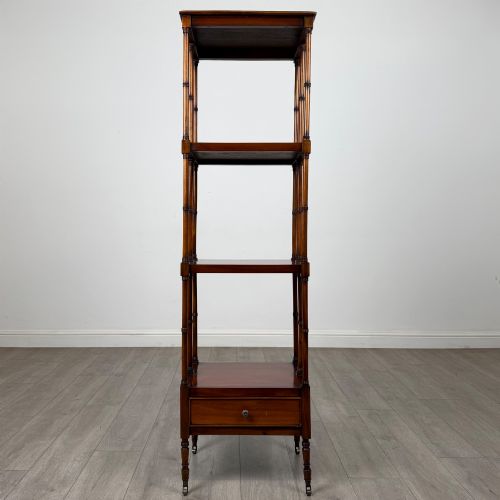
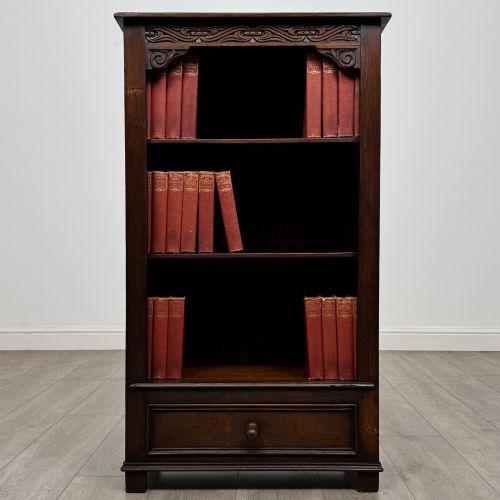
The pieces on this page draw from periods including the Victorian era, the Edwardian years, and the 1920s, alongside Revival styles like Arts and Crafts and Georgian. Makers often utilised a tall, slender footprint to maximise storage capacity without dominating a room.
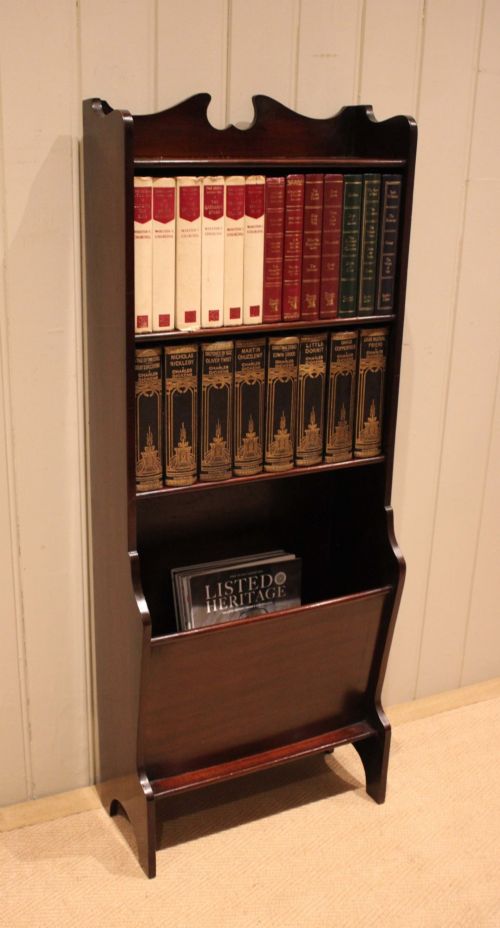
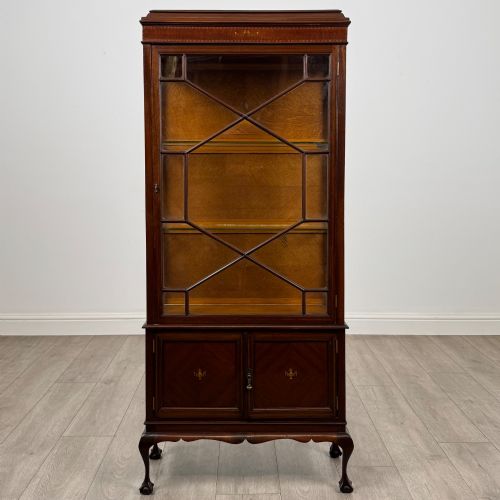
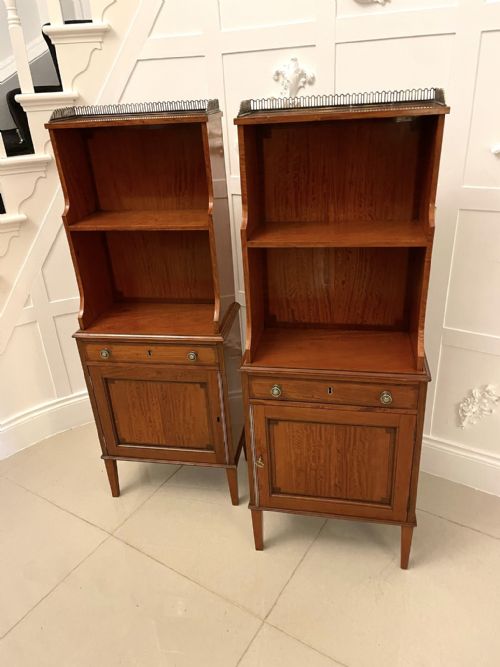
Beyond standard open shelving, variations include waterfall tiers, built-in magazine racks, inlaid satinwood details, and glazed or cupboard lower sections. These diverse configurations reflect the changing domestic requirements of their original owners from the 1880s onward.
What varies in quality
The standard of a narrow standing bookcase depends heavily on the selection of timber and the crispness of its joinery. Fine grain matching in mahogany or quarter-sawn figure in oak distinguishes superior examples from standard utility pieces.
Execution of decorative details separates workshop output from mass production. Hand-cut mouldings, precise inlay work, and integrated structural elements indicate a higher level of cabinet-making skill.
Listings feature oak, mahogany, rosewood, and satinwood across Victorian, Edwardian, and 1920s periods.
Wylie Lochhead of Glasgow·E.A. Taylor·Gillows
The Narrow Standing Bookcase Glossary
- Waterfall bookcase
- A tiered shelving unit where each lower shelf steps out wider than the one above it. This form became popular during the Edwardian period.
- Arts and Crafts
- A design movement prioritising visible construction, honest materials, and handcrafted details. Pieces from this style often feature exposed joinery and decorative cut-outs.
- Inlay
- A technique where pieces of contrasting wood or other materials are fitted into depressions flush with the surface. Satinwood and ebonised timber were frequently used for this purpose.
- Ormolu
- Gilded bronze mounts applied to furniture for decorative effect. These metal accents appear on select nineteenth-century pieces.
- Beaded edge
- A narrow, rounded moulding run along the edge of a shelf or frame. This detail adds subtle relief to plain timber surfaces.
Narrow Standing Bookcase: Frequently Asked Questions
Where should I place a narrow bookcase?
These compact units fit comfortably in alcoves, narrow hallways, or beside fireplaces where standard furniture proves too wide. Their vertical orientation makes efficient use of limited wall space.
Ensure the floor is level so the tall frame remains stable against the wall. Many period bookcases include simple bracket feet or plinths designed to sit flush.
How do I date an antique bookcase?
Dating relies on a combination of timber selection, construction methods, and stylistic cues. Edwardian and 1920s pieces often show lighter oak frames or inlaid mahogany, while nineteenth-century examples display denser timbers and heavier mouldings.
Hardware styles, backboard construction, and occasional maker labels or stamps further help narrow down the decade of manufacture.
Are these bookcases suitable for heavy books?
Solid oak and mahogany shelves provide sturdy support for standard volumes. Fixed shelving units generally offer greater load-bearing capacity than adjustable variants.
Distribute heavier volumes across the lower shelves to maintain overall stability in tall, narrow frames.
What is the difference between open and glazed bookcases?
Open bookcases provide immediate access to contents and were designed for everyday reading material. Glazed or cabinet versions protect delicate bindings from dust and light.
Both formats appeared concurrently across the Victorian and Edwardian periods, chosen according to the room's function.