
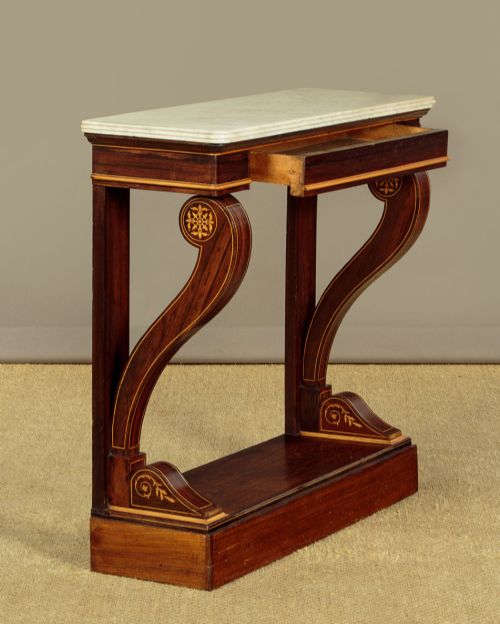
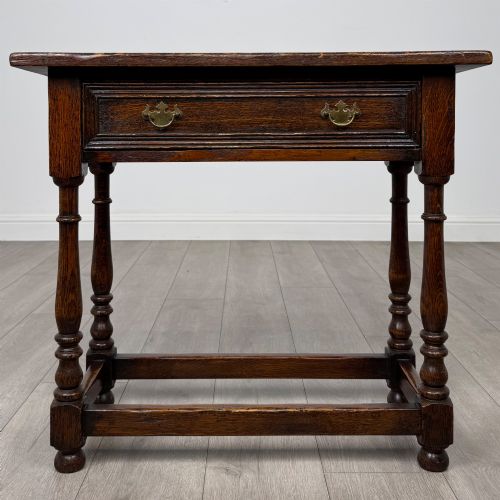
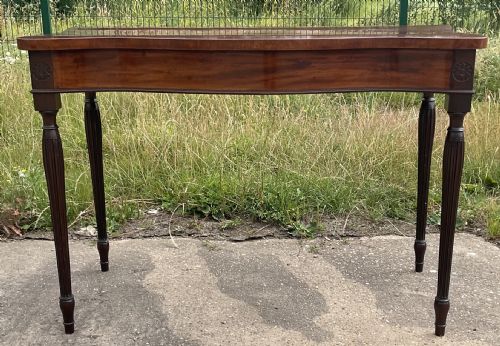
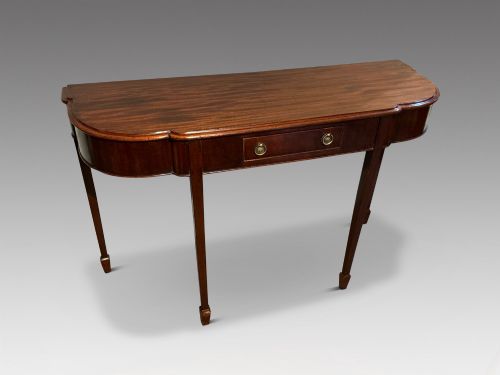
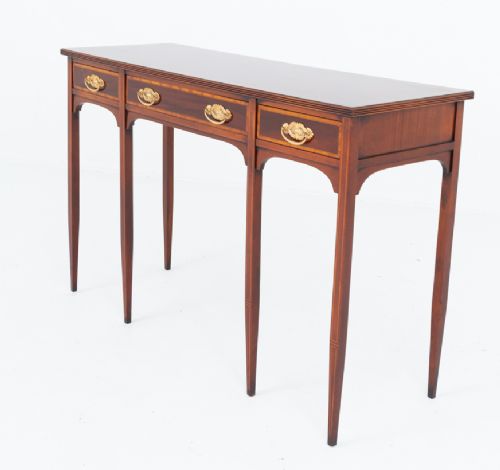


Narrow Entry Console Table
A narrow entry console table solves the eternal problem of furnishing a shallow hallway with genuine period timber and stone.
Narrow Entry Console Table
A narrow entry console table is designed for tight spaces like hallways, landings and passages where depth must be kept to a minimum. The pieces gathered under this phrase span console tables, side tables, sideboards and altar tables, fulfilling the same functional role in domestic interiors.
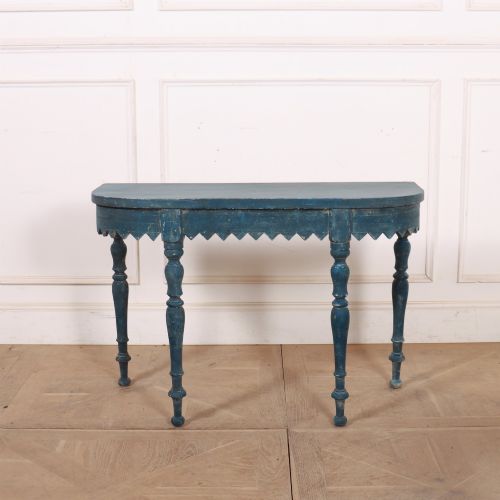
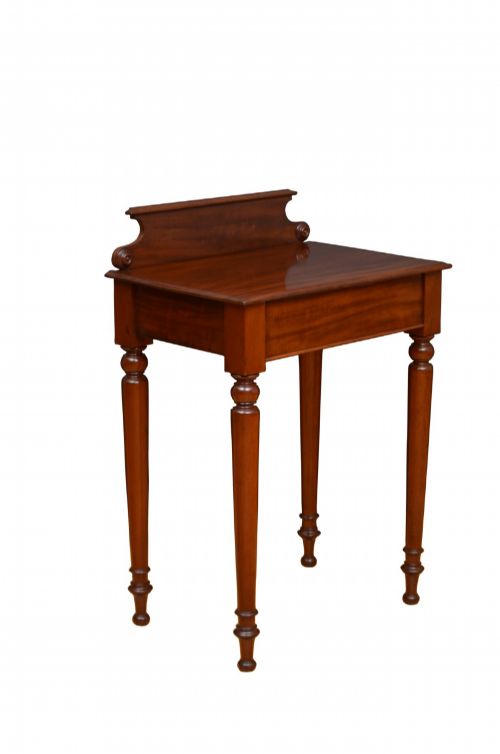
Most examples you encounter here belong to the nineteenth and early twentieth centuries, drawing on Victorian, Edwardian and Georgian design traditions. These range from mahogany bow ends and serpentine fronts to painted demi lune shapes and pitch pine freestanding builds.
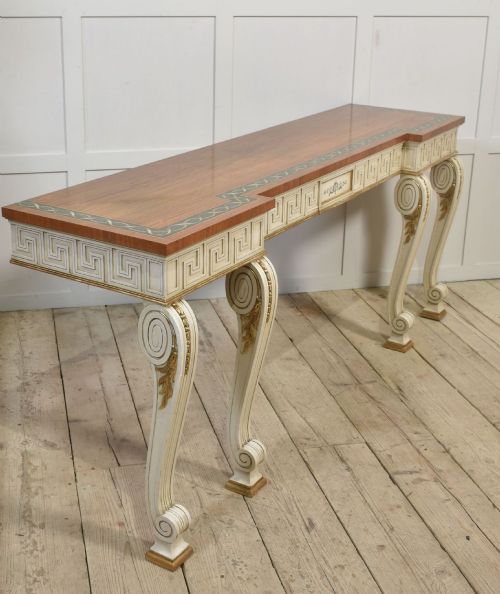
Makers and workshops of the past also looked further afield, incorporating French provincial forms, Neoclassical details and Qing Dynasty altar tables into the mix. This variety ensures you find a piece suited to both traditional country houses and compact modern town dwellings.
Assessing Quality and Character
Quality rests in the selection of timber figures, the crispness of carved or inlaid details and the integrity of the original structure. Pieces featuring well-figured mahogany or clean marble tops command attention for their tactile presence and refined execution.
Proportion and scale dictate how successfully a table occupies a narrow corridor, separating utilitarian items from pieces designed with genuine architectural grace. The harmony between the base material and surface finish ultimately defines the standing of each console.
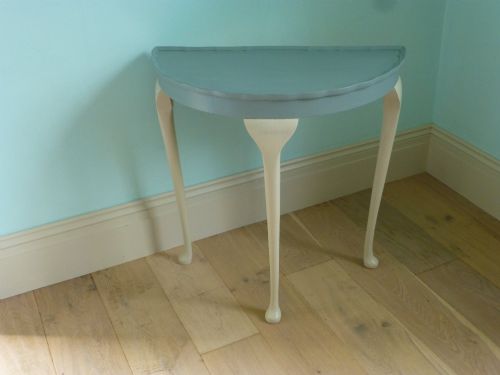
Demi lune tables were cunningly shaped into half-moons so families could push two together into a full circle for dining.
Druce and Co
The Narrow Entry Console Table Glossary
- Demi lune
- Half-moon shape. This curve allows console tables to sit flush against a wall while projecting minimally into a hallway.
- Serpentine front
- An undulating facade curving outward at the centre and inward at the sides. It demands high cabinet-making skill.
- Pier table
- A decorative table designed to stand against the wall between two windows. These often match the height of the windowsills.
- Altar table
- A traditional Asian table form featuring an elongated top and often upturned ends. They bring architectural presence to entryways.
- Bow end
- A convexly curved front edge. This softening of sharp corners prevents bumped hips in narrow corridors.
Narrow Entry Console Table: Frequently Asked Questions
Where should I place a narrow console table?
These pieces find their natural home in hallways, narrow entryways and landings where floor space is at a premium. Their shallow depth allows them to sit against a wall without obstructing the flow of movement.
They also work well behind sofas or in dining rooms as serving surfaces where standard sideboards prove too deep.
Can I use a console table as a desk?
Many narrow tables feature single drawers and flat tops that accommodate a laptop or writing materials for short periods. You must check the height and knee clearance beneath the apron before attempting daily work.
Most antique examples were built for display rather than typing, so comfort depends entirely on the specific proportions.
How do I care for a marble top table?
Marble requires regular wiping with a damp cloth and mild soap to prevent staining from moisture or oils. Acidic liquids like wine or lemon juice etch the polished surface instantly if left unattended.
Applying a specialist stone sealer helps protect the material while maintaining its natural sheen over decades of use.
How do I distinguish Victorian from Georgian styles?
Georgian furniture leans toward classical symmetry, restrained mahogany veneers and subtle bracket or straight legs. Victorian pieces often introduce bolder proportions, darker finishes and more eclectic revival details.
Many listings describe Georgian style pieces made during the Edwardian era, which combine earlier aesthetic lines with later construction methods.