
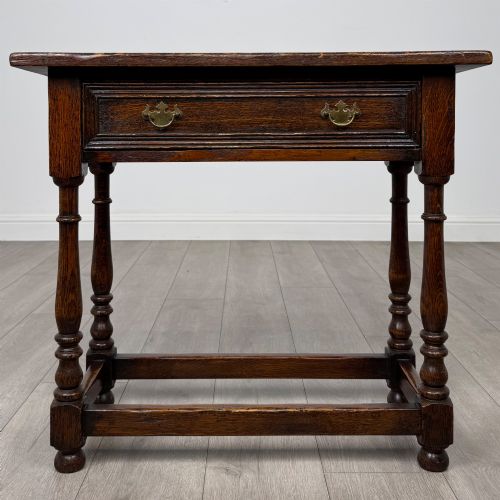
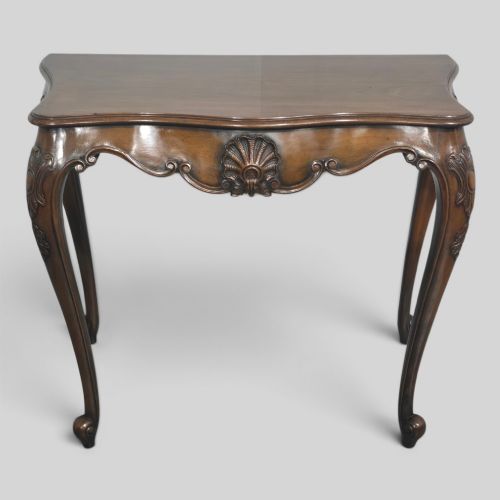
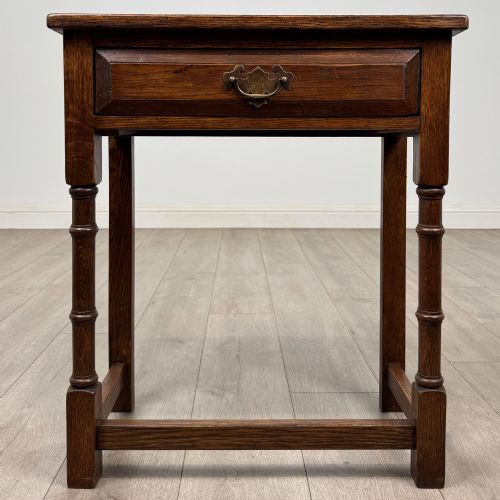
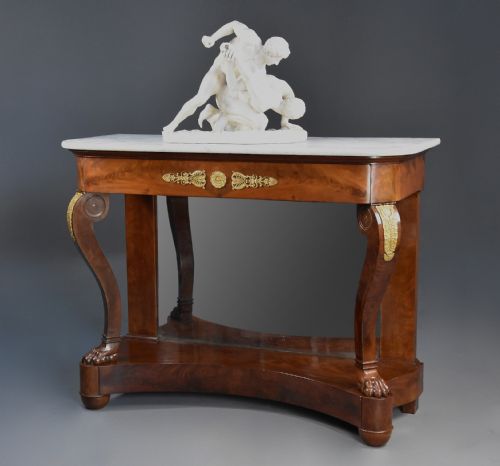
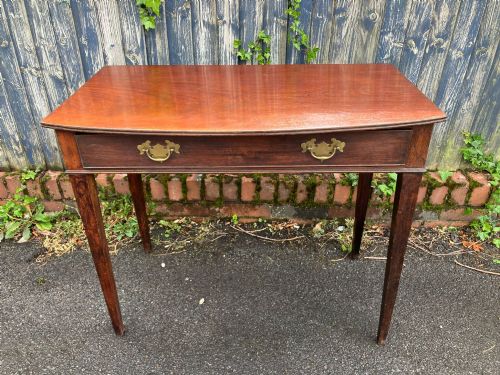
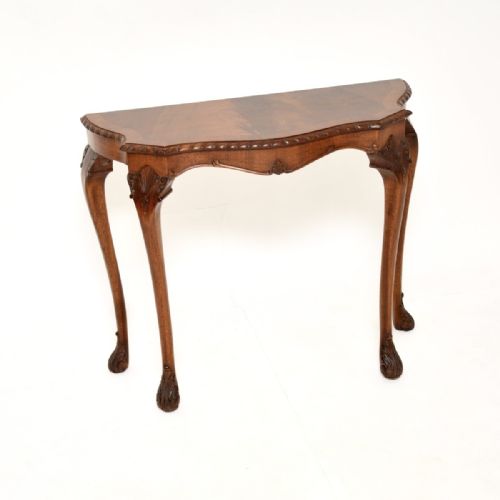
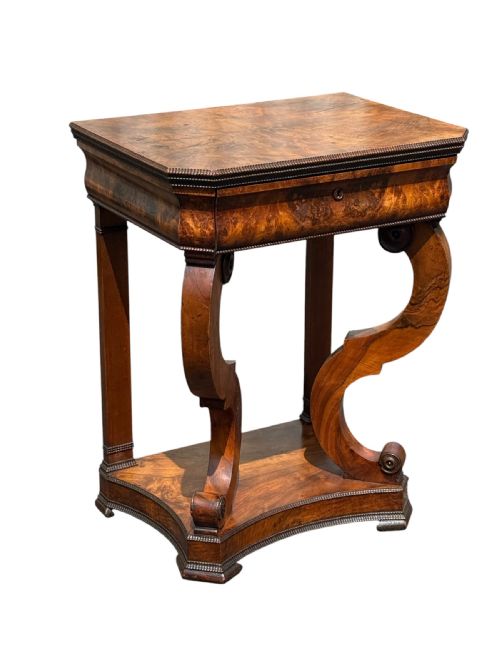
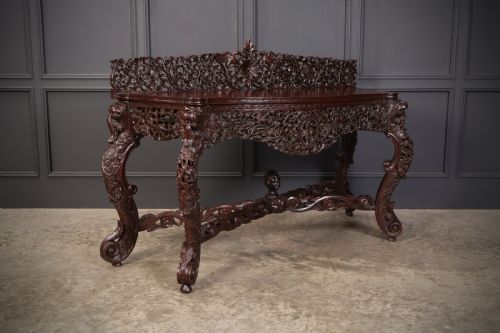
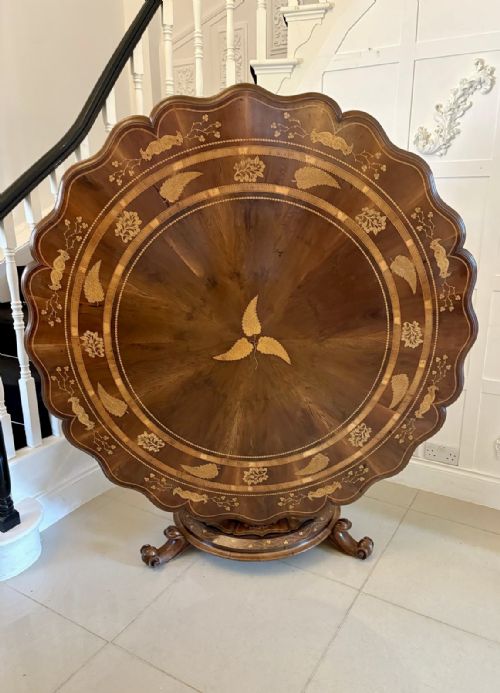
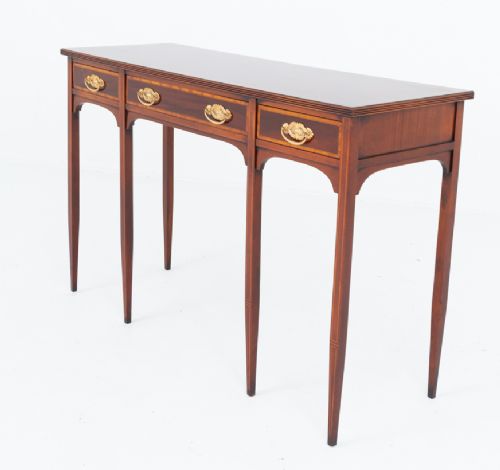
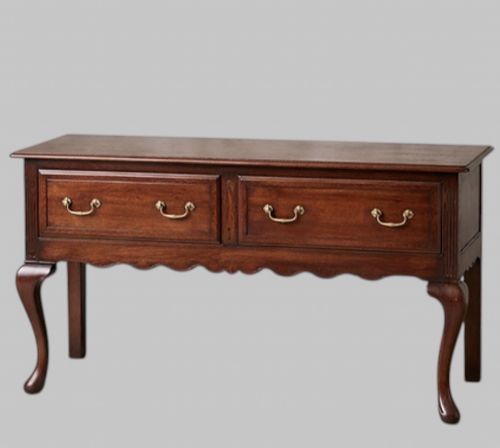

Brown Wood Entry Table
A brown wood entry table brings character and a welcoming surface to a hallway, drawing the eye with rich timber grain.
Brown Wood Entry Table
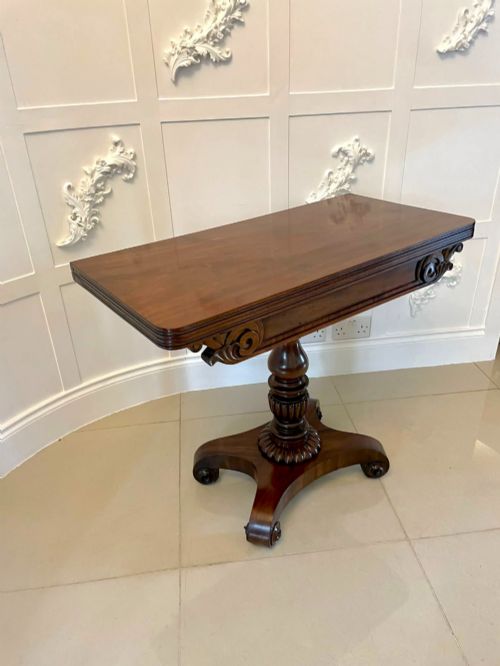
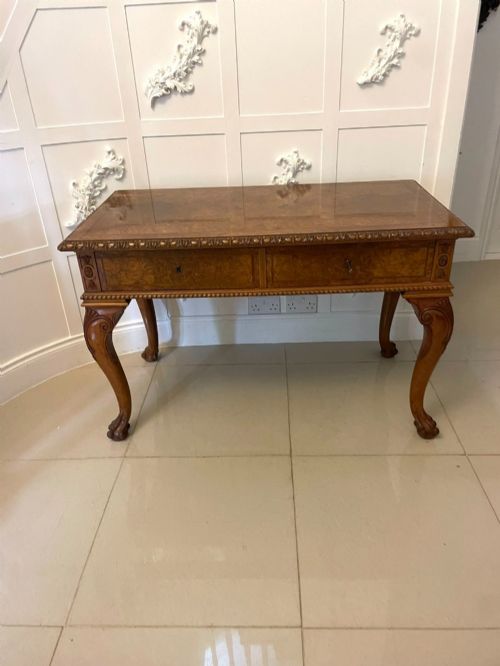
A brown wood entry table serves as a functional and decorative focal point in a hallway or reception space, offering a surface for everyday items. When searching this phrase, buyers encounter a diverse selection of forms including console tables, hall tables, side tables, and centre tables designed to fit narrow spaces.
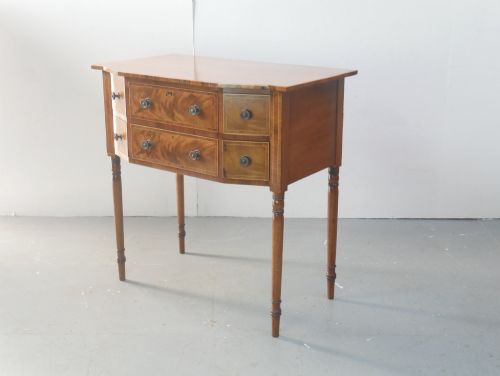
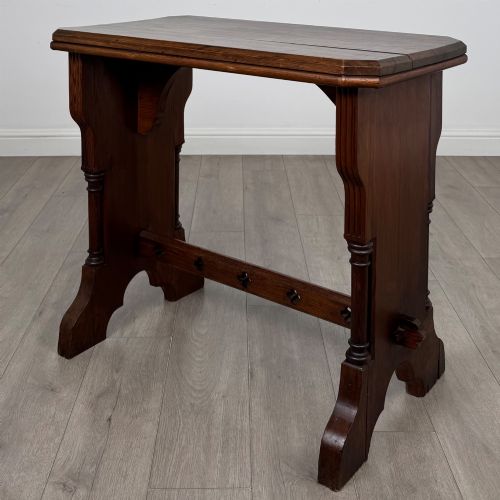
The pieces available span multiple eras, with examples originating from the Georgian period through to the early twentieth century. Common furniture types include narrow side tables in oak, bow front mahogany designs, and freestanding console tables.
Origins vary widely across the selection, ranging from British regional workshops to French, Italian, and Chinese makers. Materials such as mahogany, walnut, and oak dominate, often shaped into demilune, rectangular, or serpentine formats.
Materials and construction
Cabinet makers utilised dense hardwoods such as mahogany, walnut, oak, and yew, frequently selecting figured or burr veneers to create decorative patterns on the top surface. Solid timbers formed the structural frames, legs, and aprons, while specialised inlays incorporated contrasting woods and marquetry.
Surface treatments included polished finishes that highlighted the natural grain of the timber, alongside hand-carved details like barley twist legs or Chinoiserie motifs. Marble inserts occasionally topped French console tables, providing a contrasting cool texture to the warm wood below.
Periods represented span the Georgian era, Victorian times, Edwardian decades, and the early twentieth century through Art Deco.
What separates the tiers
The distinction between standard examples and exhibition quality pieces lies in the selection of timber and the ambition of the joinery. Highly figured burr walnut, elaborate marquetry inlay, and attribution to recorded workshops elevate a piece far above simple utility tables.
Proportion and execution define the better specimens, where crisp carving, well-matched veneers, and harmonious secondary timbers demonstrate skilled craftsmanship. Finer tables often display considered detailing such as serpentine fronts, brass hardware, or integrated drawers assembled with traditional joints.
Egan Workshop·Epstein and Co·McKeon’s of Liverpool·Edward and Roberts
The Brown Wood Entry Table Glossary
- Console table
- A table designed to stand against a wall, historically supported by brackets or console legs. Many versions in this selection serve narrow entryways.
- Marquetry
- Decorative veneer work forming pictures or geometric patterns using various coloured woods. This technique appears on tabletops from the nineteenth century.
- Demilune
- Half-moon shaped furniture designed to sit flush against a wall. These tables suit compact hallways due to their curved profile.
- Lowboy
- A small eighteenth-century English table with drawers, typically raised on cabriole or straight legs. They function well as compact side tables.
- Altar table
- A traditional Chinese form featuring an elongated rectangular top, often with carved ends or aprons. These pieces bring architectural presence to an interior.
Brown Wood Entry Table: Frequently Asked Questions
Where should I place a brown wood entry table?
These tables fit naturally in entrance halls, corridors, or behind living room sofas where surface space is needed without blocking movement.
Their shallow depth allows them to sit against walls in narrow areas while holding lighting, mail, or decorative objects.
How do I care for antique wood surfaces?
Regular dusting with a soft, dry cloth protects the polished finish from microscopic abrasion. Applying quality beeswax occasionally helps nourish the timber and maintains its natural lustre.
Avoid placing these tables in direct sunlight or near heat sources to prevent the wood from drying out or splitting.
What is the difference between a console and a hall table?
Console tables traditionally required wall attachment or specific scroll brackets for support, though many later interpretations stand independently. Hall tables are generally built as freestanding furniture designed specifically for passageways.
Both types share a narrow footprint intended to maximise floor space in entrance areas.
How can I identify the period of a wooden table?
Dating relies on examining construction methods, timber choices, and stylistic cues characteristic of specific eras such as Georgian, Victorian, or Edwardian. Tool marks, joint types, and secondary woods often provide clear clues to age.
Cabinet makers frequently reflected the prevailing taste of their decade through leg profiles and decorative carving styles.