
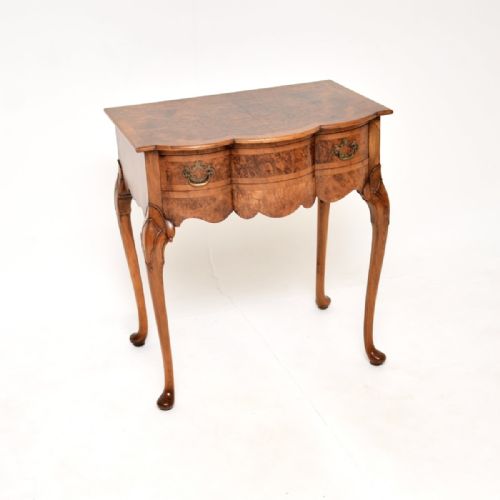


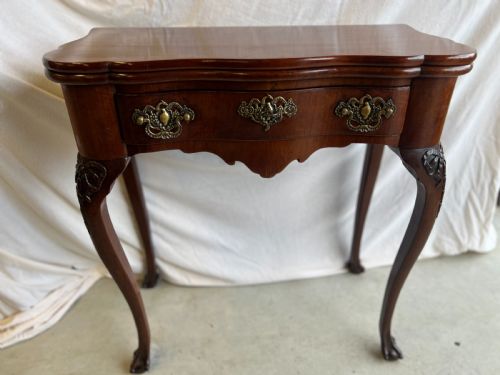


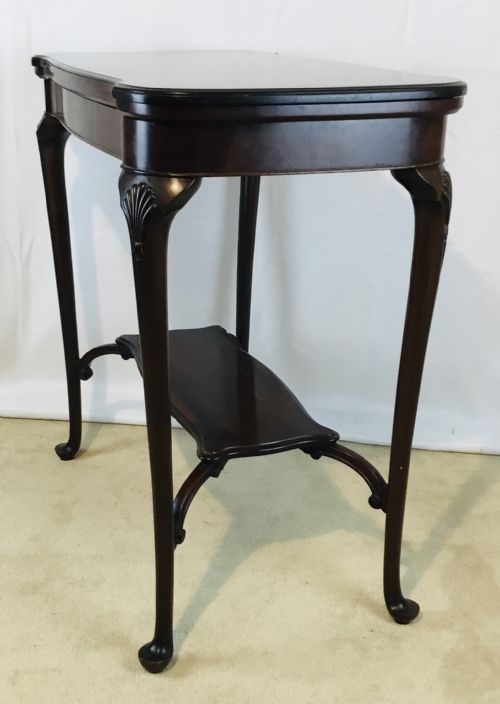


Carved Knee Side Table
These carved knee side table examples are solid wood functional pieces built to last, offering classic proportions and rich timber grain for any traditional room.
Carved Knee Side Table
A carved knee side table search brings up timber furniture spanning the eighteenth, nineteenth, and early twentieth centuries, encompassing Georgian, Victorian, and Edwardian eras. These domestic items include side tables, tea tables, card tables, and drop leaf tables designed for specific daily uses.
The pieces on this page appear in various timber forms such as mahogany, Cuban mahogany, burr walnut, and general walnut. Alongside standard side tables, the listings show console tables, occasional tables, writing desks, and wine tables featuring carved details.
How they were made
Construction relies heavily on mahogany and walnut, with select items utilising burr walnut veneers for decorative surfaces. Craftsmanship incorporates traditional joinery suited to the period, from eighteenth-century drop leaf frames to later Victorian and Edwardian revival pieces.
Carving serves as the primary ornamentation across these items, appearing on legs, edges, and aprons. Brass fittings also supplement the timber construction on specific tables, adding functional hardware and subtle contrast to the dark wood.
Tables featuring carved wine holders ensure your vintage bottle remains safely anchored during lively afternoon card games.
What varies in quality
Quality differences stem from the choice of timber and the precision of the carving work. Figured woods like burr walnut and Cuban mahogany elevate a piece above standard domestic variants through richer grain patterns.
The sharpness and depth of the carved motifs dictate the refinement of the item. Pieces showing careful hand-chiselled details on the legs and borders reflect a higher standard of workshop production than simpler utilitarian examples.
The Carved Knee Side Table Glossary
- Demi lune
- Half-moon shape, typically describing the top and footprint of card tables designed to sit flat against a wall. This format became popular during the Georgian period for saving space.
- Pie crust
- A decorative carved raised edge shaped in small waves, frequently found on the circular tops of occasional and tilt-top tables. It requires skilled hand-carving directly into the solid timber.
- Drop leaf
- A table top featuring hinged flaps on one or both sides that fold down to reduce the footprint when not in use. Supported by swinging legs, this mechanism offers flexible sizing for smaller rooms.
- Burr walnut
- Wood taken from a walnut tree growth or burl, yielding complex and swirling grain patterns. Cabinet makers prized this veneer for high-status surfaces.
- Console table
- A table fixed to a wall or standing freely with brackets, designed primarily for display rather than heavy dining use. These often feature ornate carving along the front apron.
Carved Knee Side Table: Frequently Asked Questions
What is a carved knee side table?
A carved knee side table is a wooden domestic furnishing built during the eighteenth, nineteenth, or early twentieth centuries. These items serve functional roles in living spaces while displaying period decorative styles.
They encompass various forms such as tea tables, card tables, and occasional tables. The defining feature is the presence of carved woodwork integrated into the frame or legs.
How were these tables used originally?
These tables fulfilled specific domestic duties ranging from serving afternoon tea to playing card games. Drop leaf and console formats allowed households to adapt room layouts easily.
Writing desks and dressing tables provided dedicated surfaces for correspondence and personal grooming. Wine and lamp tables offered convenient placement for evening illumination and refreshments.
How do I identify the period of a table?
Dating relies on observing the timber choice, construction techniques, and stylistic revival markers. Eighteenth-century pieces often feature heavy mahogany construction with hand-cut joinery.
Later Victorian and Edwardian examples may reproduce earlier Queen Anne or Georgian styles. Reviewing the hardware, such as brass fittings, also helps establish the era of manufacture.
Where should I place these in a home?
These tables fit naturally in entrance halls, living rooms, and studies where surface space is required. Console and demi lune formats sit flush against walls without obstructing walkways.
Smaller occasional and wine tables function well beside seating areas for lamps or cups. Their solid timber construction allows them to blend with both traditional and contemporary interiors.