







Antique Wooden Centre Desk
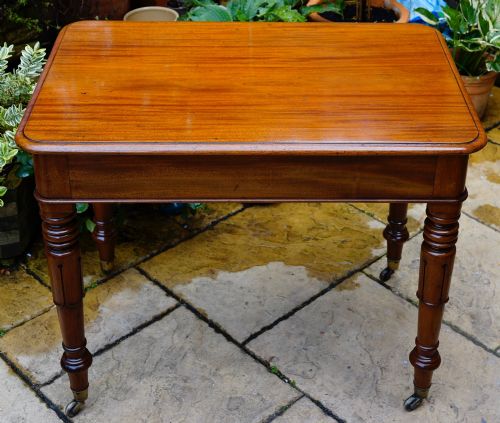
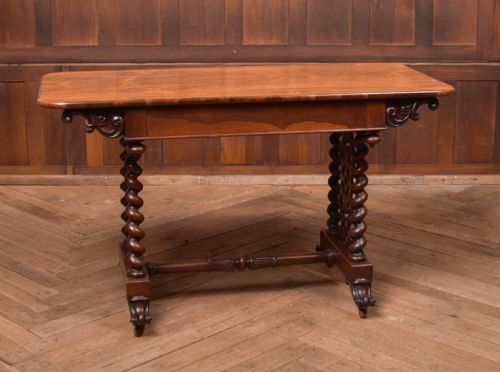
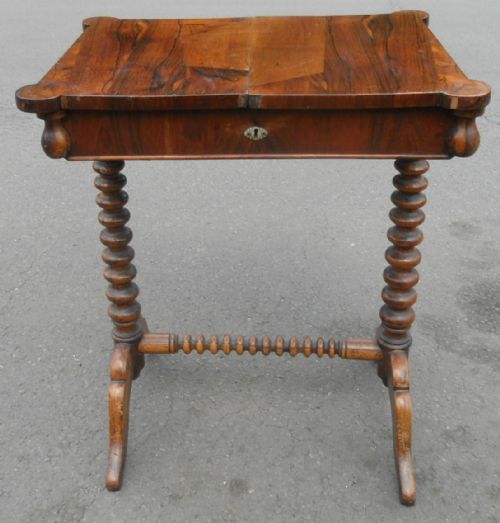
An antique wooden centre desk stands free in a room, offering a finished back and ample writing surface for a study.
Antique Wooden Centre Desk
When you search for an antique wooden centre desk, you are looking at freestanding tables adapted for writing and study from the eighteenth and nineteenth centuries. These pieces sit in the middle of a room rather than against a wall, finished on all sides so they look correct from every angle.
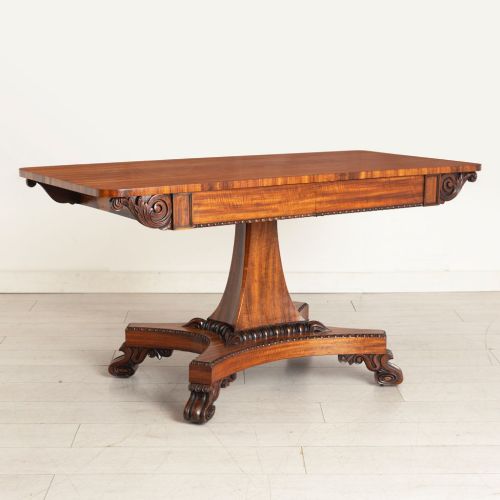
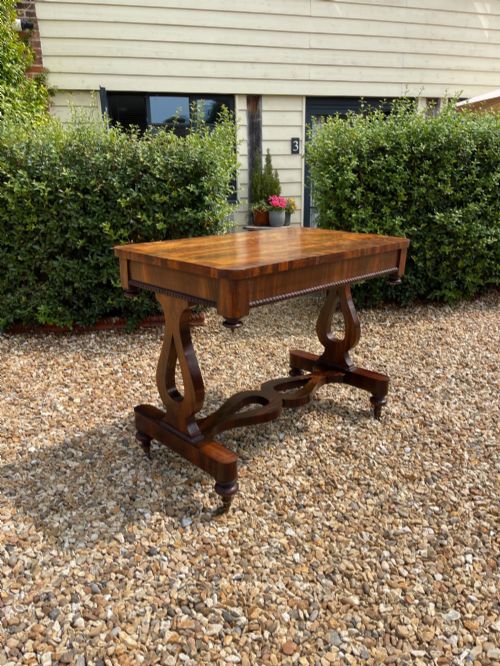
You are most likely to meet Victorian and Regency examples on this page, alongside earlier eighteenth century pieces. Woods such as mahogany, walnut, and rosewood dominate the selection, often complemented by inlaid marquetry or leather writing surfaces.
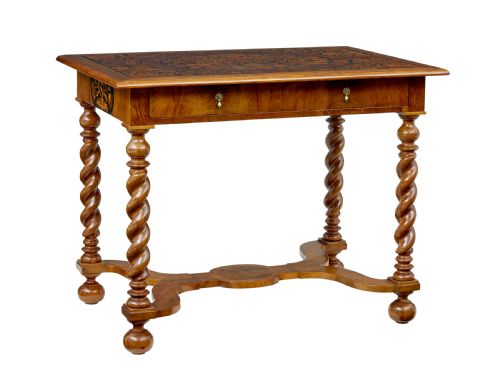
Forms range from simple library tables and writing tables to elaborate burr walnut and fruitwood designs. They span diverse stylistic revivals including Gothic, Renaissance, and Spanish Baroque alongside standard nineteenth century production.
Materials and construction
Cabinet makers utilised solid timbers and wood veneers over secondary woods, selecting dense hardwoods like mahogany and walnut for their durability and grain. Burr walnut and rosewood provided decorative surfaces, frequently enhanced with contrasting stringing and intricate marquetry.
Joinery techniques relied on traditional hand-cut joints, while turned legs, carved pedestals, and stretcher bases provided structural support. Brass fittings, leather inserts, and hand-carved details completed the construction of these freestanding library and writing tables.
Antique Wooden Centre Desk Retail Price Guide 2026
Typical asking prices for wooden centre desk among the pieces listed under this phrase on Sellingantiques today, from the lower quarter to the upper quarter. They describe what is for sale here now, not the wider market.
Periods represented on this page range from the seventeenth century through the Victorian era and into the early twentieth century.
Evaluating quality and craftsmanship
The distinction between standard production and top-tier pieces rests on the selection of timber and the precision of the cabinet work. Finely figured burr walnut veneers, crisp hand-carved details, and well-executed marquetry indicate superior workshop standards.
Originality of surface finish and the preservation of secondary timbers determine the integrity of a piece. Tables retaining their original brass hardware, leather tops, and patinated timber demonstrate greater historical value than heavily restored examples.
The Antique Wooden Centre Desk Glossary
- Centre table
- A freestanding table designed to be viewed from all sides rather than placed against a wall. These pieces often served functional roles as library tables or writing desks.
- Burr walnut
- A prized wood grain obtained from the warted growths on walnut trees, showing swirling patterns. Cabinet makers utilised this timber for decorative veneer panels.
- Marquetry
- The art of applying pieces of veneer to a structure to form decorative patterns and pictures. Makers employed contrasting woods to achieve detailed surface designs.
- Library table
- A large sturdy table utilised for reading and writing, typically fitted with drawers. They share the freestanding format of a centre table.
- Regency
- A British architectural and design style spanning the early nineteenth century, known for classical restraint and exotic hardwoods. Pieces from this period often display clean lines and tropical timber selection.
Antique Wooden Centre Desk: Frequently Asked Questions
How were centre desks used historically?
Historically, these desks provided a dedicated writing surface in libraries, studies, and drawing rooms where the table stood away from the walls.
They allowed occupants to sit and write while keeping writing materials close at hand within drawers or on the spacious top.
How do I live with a centre desk?
Living with a freestanding desk requires placing it where you can walk around it and appreciate the finished back and sides.
Keep the timber away from direct heat sources and sunlight to protect wood veneers and leather inserts from drying out.
How can I tell periods apart?
Periods are identified by characteristic woods, carving styles, and structural forms that reflect the prevailing taste of the era of manufacture.
Regency pieces often utilise exotic tropical hardwoods, while Victorian examples frequently display burr walnut veneers, heavy turnings, or Gothic revival details.