




Napoleon III Upholstered Sofa
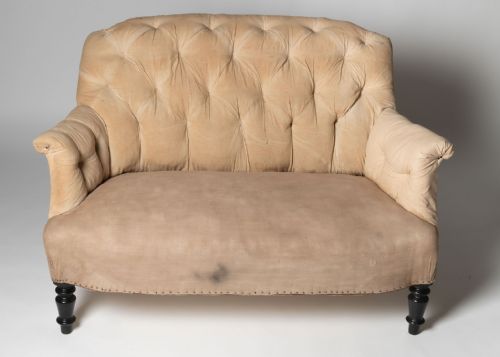
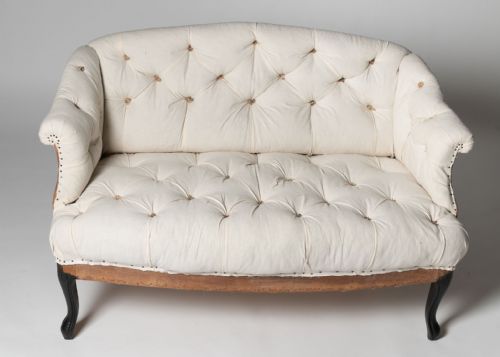
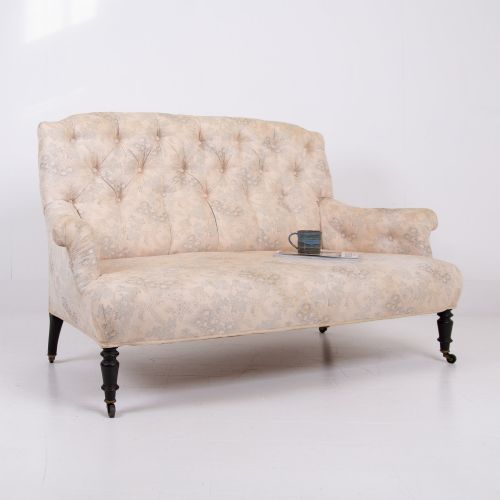
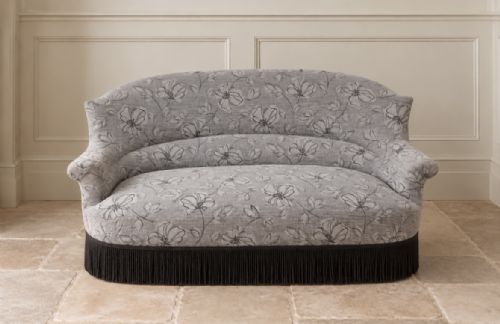
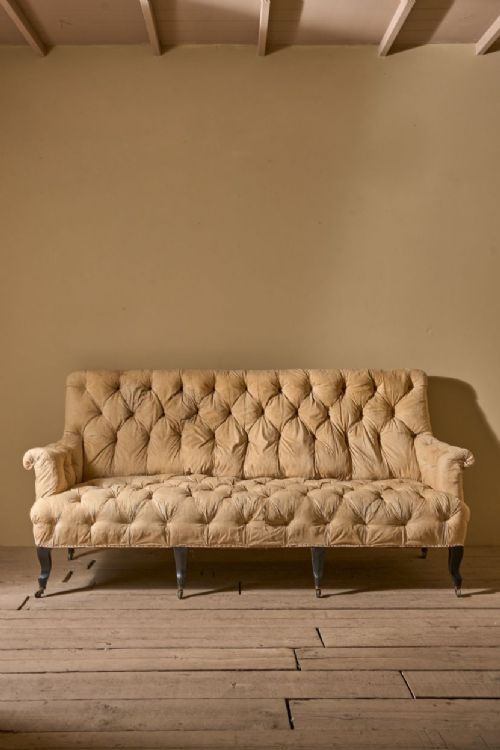
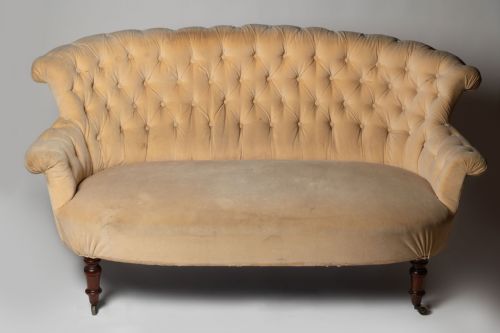
A napoleon iii upholstered sofa brings Second Empire elegance into a room with deep buttoning and rich velvet.
Napoleon III Upholstered Sofa
A napoleon iii upholstered sofa is a distinctive seating form developed during the French Second Empire, combining generous proportions with elaborate comfort. The pieces gathered here span the nineteenth century, including specific dates around eighteen eighty and eighteen seventy, alongside Victorian iterations.
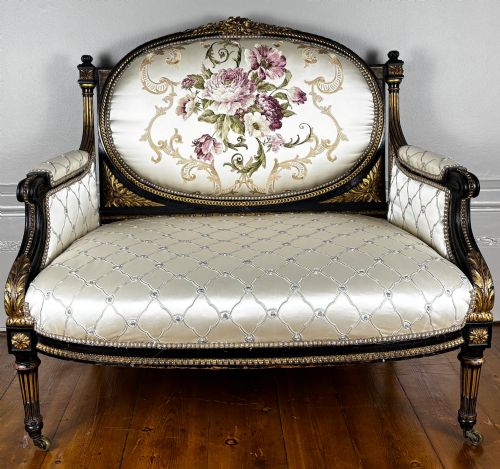
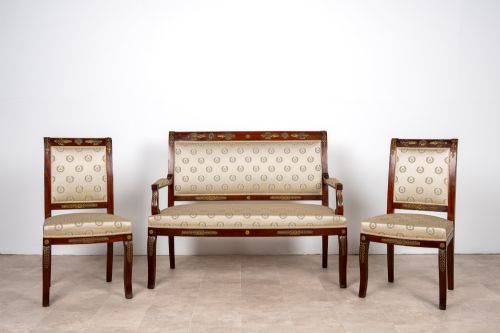
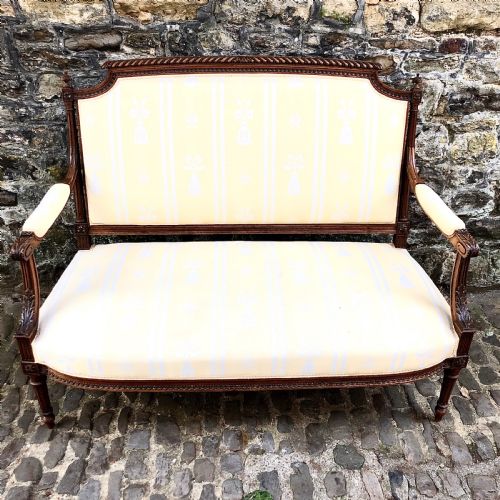
Buyers encounter various formats within this search, ranging from curved back designs and buttoned high back small sofas to piecrust chaises and daybeds. Salon suites and sets featuring matched settees and armchairs also appear, often framed in ebonised timber, parcel gilt, or walnut.
The aesthetic leans heavily into French traditions, drawing on French Louis XV and French Empire influences alongside core Napoleon III styling. Forms vary from compact small sofas to expansive pieces measuring over two metres in length.
Construction and Materials
The structural framework of these pieces relies on timber, wood, and walnut, frequently finished with ebonisation and parcel gilt or decorated with marquetry inlay. Brass details sometimes accent the woodwork, grounding the decorative forms in solid construction.
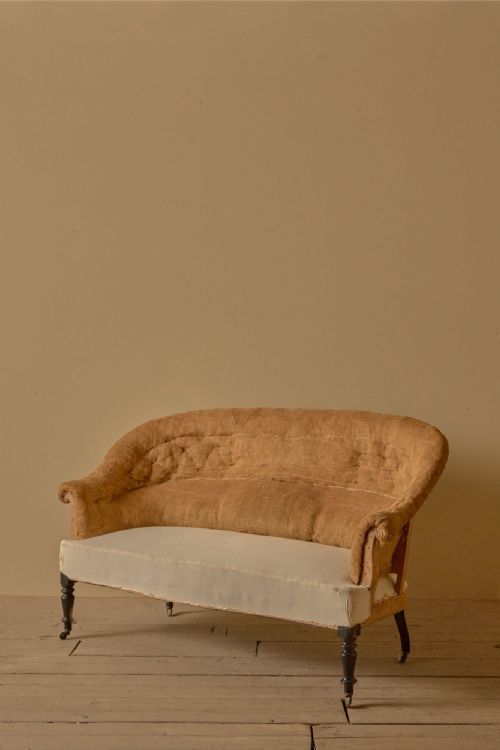
Upholstery techniques define the character of the seating, utilising traditional internal foundations built with hessian, calico, and linen. Visible surfaces are finished in tactile textiles, most notably velvet, alongside general fabric options and examples supplied for re-upholstery.
Napoleon III Upholstered Sofa Retail Price Guide 2026
Typical asking prices for napoleon iii upholstered sofa among the pieces listed under this phrase on Sellingantiques today, from the lower quarter to the upper quarter. They describe what is for sale here now, not the wider market.
Listings feature nineteenth-century pieces spanning from eighteen seventy to nineteen hundred, utilising wood, walnut, velvet, calico, and brass.
Assessing Quality and Character
Quality reveals itself in the execution of the timber frame, where the crispness of parcel gilt, the depth of ebonisation, and the precision of marquetry inlay distinguish finer examples. The structural integrity of curved backs and high backs dictates how well the piece holds its formal silhouette.
The standard of upholstery and buttoning forms a major division between pieces, particularly in the regularity of the tufting and the choice of surface fabric such as raspberry pink velvet. Original or sympathetic textile choices elevate the piece, whereas examples stripped for upholstery offer a blank canvas for restoration.
The Napoleon III Upholstered Sofa Glossary
- Napoleon III
- A nineteenth-century French design style spanning the Second Empire, known for lavish comfort and eclectic revivalism. It borrows heavily from earlier royal aesthetics while embracing modern industrial cushioning techniques.
- Ebonised
- Timber treated to resemble ebony, creating a dark, polished black finish that highlights gilt highlights. This technique was highly favoured for dramatic contrast in nineteenth-century salons.
- Parcel Gilt
- Woodwork partially decorated with gold leaf or gilt paint, usually accentuating carved details on a contrasting base colour. It adds subtle brilliance to walnut and ebonised frames.
- Marquetry
- Decorative veneer work arranged in pictorial or geometric patterns using various woods. It displays the cabinetmaker's skill on flat surfaces and structural panels.
- Canapé
- A traditional French term for an ornamental sofa or settee designed for multiple people. These pieces often form part of a larger salon suite alongside matching armchairs.
Napoleon III Upholstered Sofa: Frequently Asked Questions
What defines a Napoleon III sofa?
These sofas are nineteenth-century French seating pieces characterised by deep buttoning, generous cushioning, and elaborate frames influenced by the Second Empire.
They frequently feature curved or high backs, exposed timber such as walnut or ebonised wood, and luxurious textile coverings like velvet.
How were these sofas used originally?
Originating in French chateaux and urban salons, these settees served as formal reception seating for entertaining guests.
Their comfortable sprung construction and supportive buttoned backs also made them suitable for private boudoirs and day-long resting.
How do I style one in a modern home?
A period sofa works well as a focal point in a contemporary living room, contrasting sharply against minimalist walls and neutral flooring.
Pairing the piece with complementary lighting allows the rich velvet upholstery and dark timber frames to stand out.
How do I distinguish between periods?
Nineteenth-century pieces often blend Second Empire proportions with earlier French Louis XV or Empire decorative motifs.
Examining the underlying frame construction, timber treatments, and upholstery materials helps clarify whether a piece dates closer to eighteen seventy or the turn of the century.