


French Corbeille Settee
A french corbeille settee brings curved elegance and classic seating into a room with genuine period character.
French Corbeille Settee
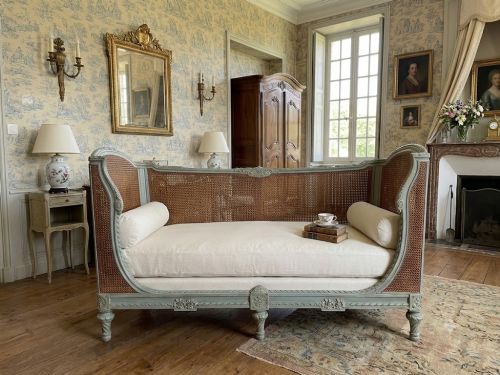
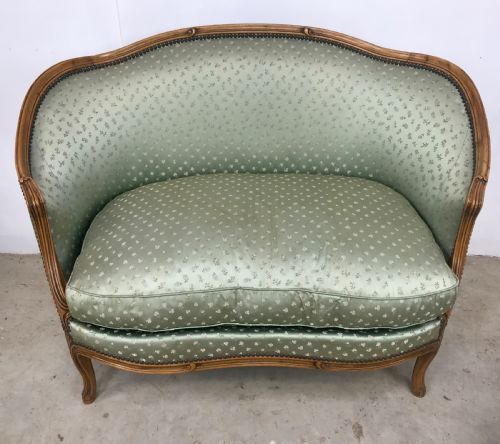
The aesthetic draws heavily from traditional French design movements, most notably Louis XVI styles and revivals alongside French Rococo influences. Buyers looking through these listings will encounter painted finishes, wood frames, and characteristic fluted legs.
How they were made
Frames rely on sturdy timbers such as walnut, beech, and general wood structures that provide the necessary foundation for curved backs. Artisans shaped these sturdy hardwoods into flowing lines typical of traditional French seating.
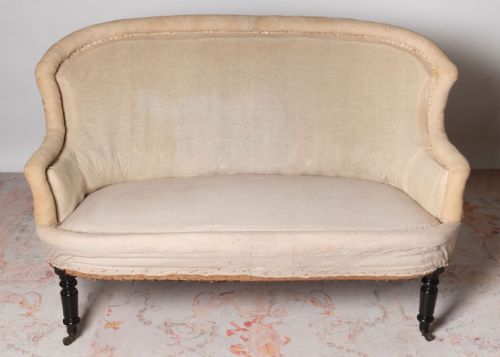
Cane panels frequently form the back and sides, woven intricately into the wooden frames to create a light yet supportive structure. Upholstered elements utilise linen and assorted fabrics alongside timber and brass details.
Some nineteenth-century makers evidently believed that if a love seat could not whisper secrets back to you, it simply was not French enough.
What varies in quality
Quality rests in the precision of the frame carving and the tightness of the woven cane work. Superior examples display crisp detailing along the wooden elements and harmonious proportions in the curved backrest.
The integration of painted finishes and the retention of original structural materials dictate the overall character of each piece. Finer items maintain balanced symmetry across their fluted supports and decorative motifs.
The French Corbeille Settee Glossary
- Canapé
- A traditional French term for a long upholstered sofa or settee. It denotes seating designed for multiple persons with an exposed wooden frame.
- Corbeille
- French for basket, describing furniture with a rounded, enclosing backrest shaped like a basket. This profile creates an intimate seating environment.
- Fluted
- A decorative treatment featuring parallel vertical grooves carved into wood legs or columns. This detail is common in classical revival furniture.
- Louis XVI Style
- A neoclassical design movement characterised by straight lines, symmetry, and classical motifs following earlier curved Rococo excesses. It informs many pieces on this page.
French Corbeille Settee: Frequently Asked Questions
What is a french corbeille settee?
A french corbeille settee is a traditional piece of seating furniture featuring a rounded, basket-like backrest. These items originate from periods spanning the nineteenth and early twentieth centuries.
They combine exposed wooden frames with upholstered cushions or woven cane panels. Their compact proportions make them suitable for smaller parlours or bedrooms.
How do I style a corbeille settee?
These settees fit well in traditional living spaces, bedrooms, or reading nooks where their curved silhouettes stand out. Pairing them with classic decor highlights their French heritage.
Position the settee against a neutral wall to let the carved wooden frame and painted finishes catch the eye. Adding complementary cushions enhances both comfort and visual appeal.
What materials are used in these settees?
Makers constructed these frames using hardwoods such as walnut and beech. Timber and brass components often complete the structural integrity of the piece.
Cane is frequently employed for woven backrests, while linen and other fabrics provide soft seating surfaces. Painted finishes appear across many of the listed examples.
How do I identify a Louis XVI style settee?
Louis XVI style pieces typically feature straight, fluted legs and symmetrical geometric shapes rather than the heavy curves of earlier Rococo designs. Neoclassical motifs often decorate the wooden frames.
Look for refined proportions and restrained ornamentation that contrast with more ornate antique seating. This specific design language defines several listings from the early twentieth century.