

Music Canterbury with Drawer
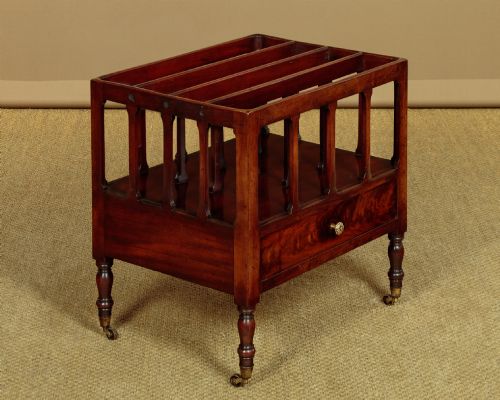
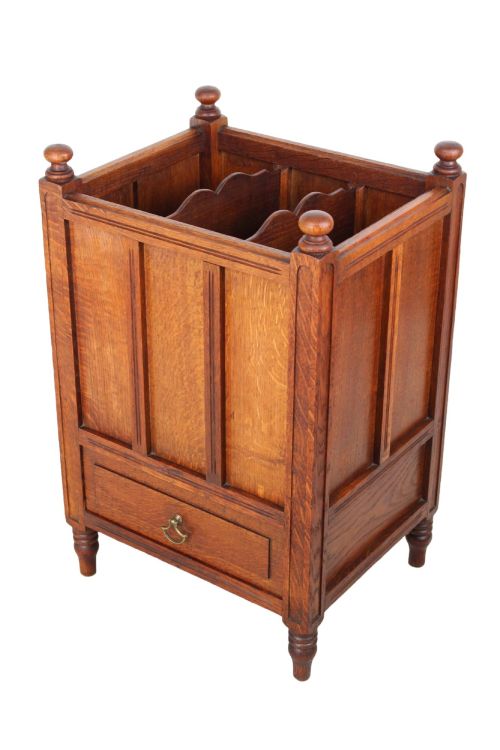
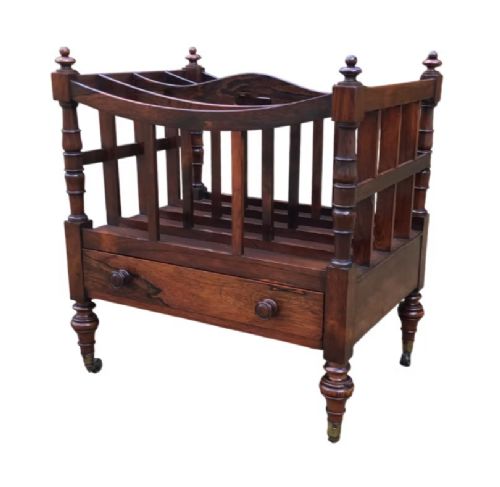
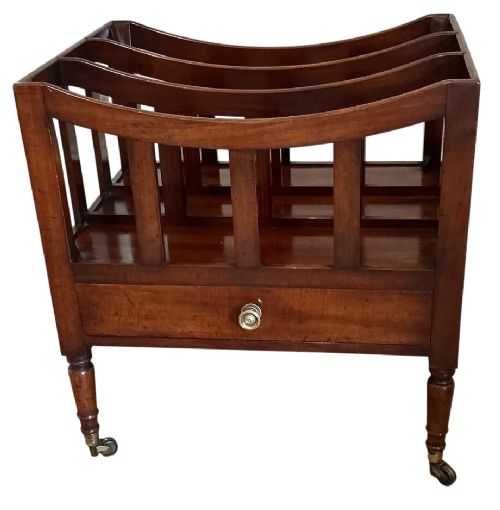
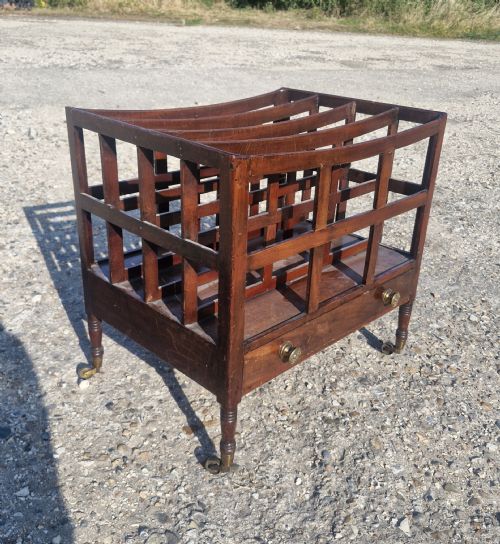
A music canterbury with drawer is a practical Victorian or Regency stand for scores and periodicals, bringing elegant compartmentalised storage to a sitting room.
Music Canterbury with Drawer
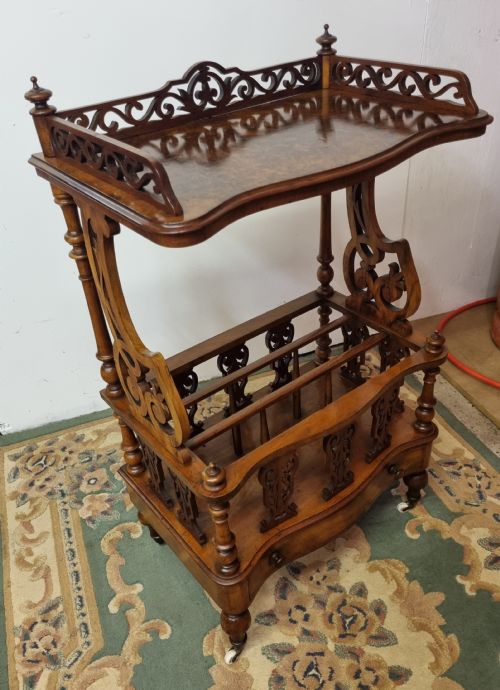
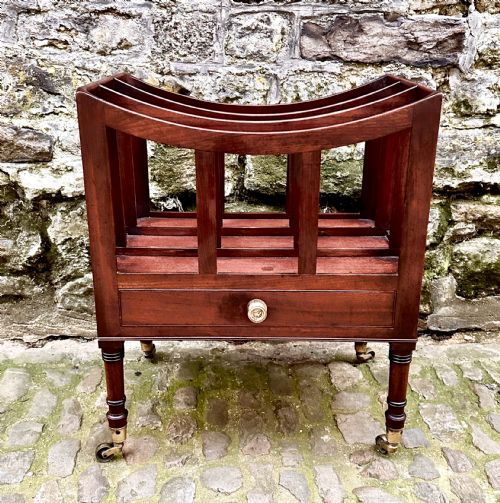
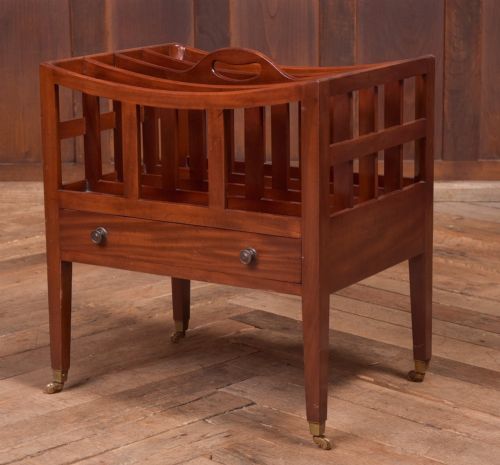
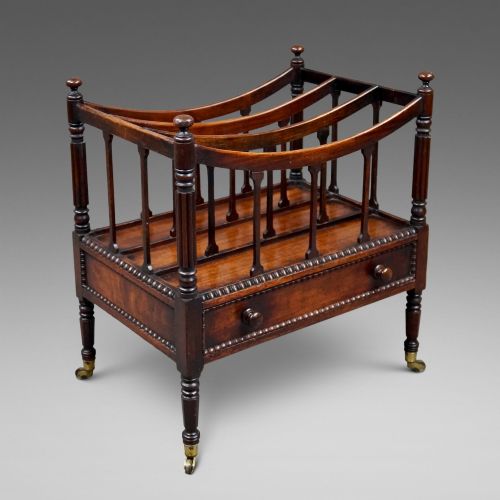
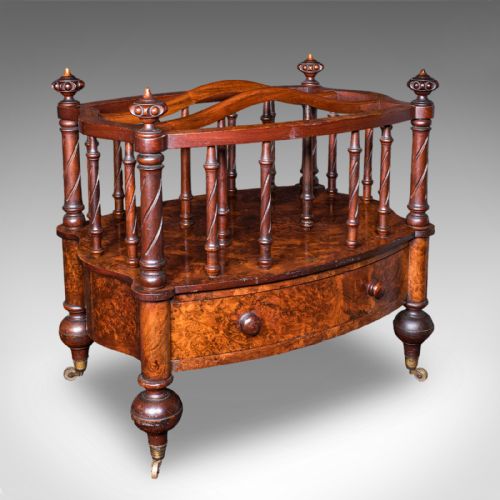
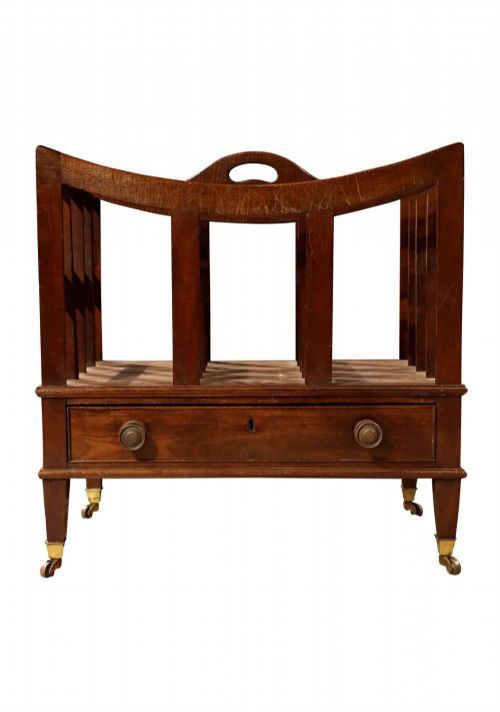
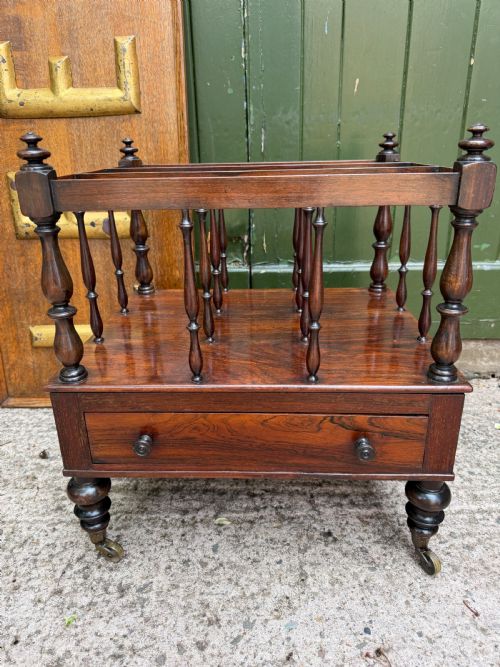
When you search for a music canterbury with drawer, you encounter a distinct nineteenth-century furnishing designed to hold sheet music and periodicals beneath its vertical dividers. These pieces emerged during the Georgian period and evolved through Regency, William IV, and Victorian eras into multi-functional stands that frequently incorporated a lower drawer for smaller items.
Materials and Construction Methods
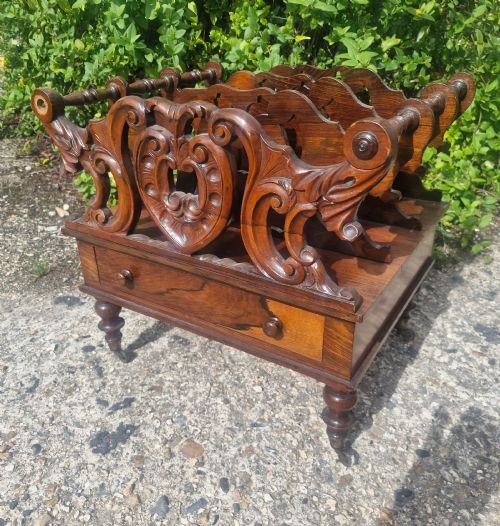
Cabinetmakers utilised dense timbers such as mahogany, rosewood, walnut, and burr walnut, sometimes enhancing the surfaces with satinwood or ebony inlay. These woods provided the necessary structural strength for the slatted or pierced vertical divisions while offering a polished visual finish suitable for formal reception rooms.
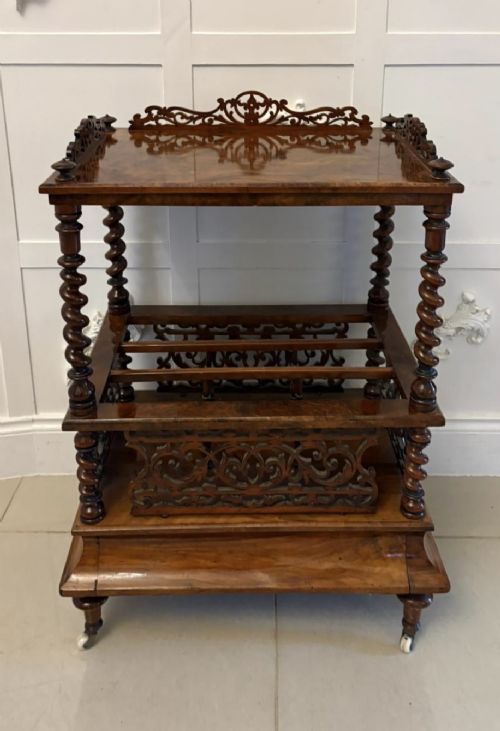
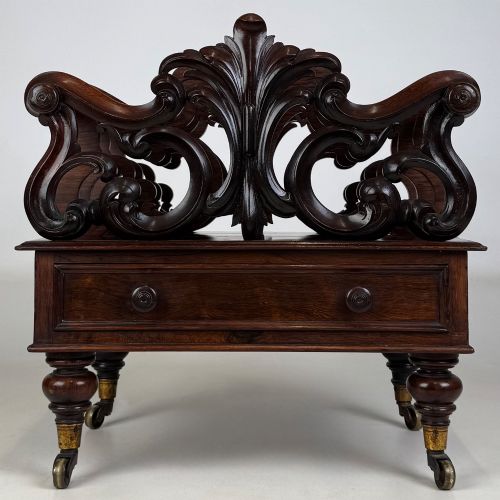
Joinery techniques combined traditional framing for the low drawers with turned or fluted upright supports, frequently mounted on castors to allow easy movement across carpets. Details like pierced fretwork, carved scrollwork, and brass fittings demonstrate the high standard of cabinet-making applied to these compact domestic pieces.
The archive demonstrates that practical additions like ceramic castors and brass carrying handles appear frequently across nineteenth-century examples.
Distinctions in Quality and Design
The distinction between standard utility items and exceptional examples lies in the choice of timber and the ambition of the ornamentation. Pieces featuring figured burr walnut, intricate ebony inlay, or finely pierced fretwork indicate superior workshop production rather than standard commercial output.
Structural harmony also dictates standing; finer pieces maintain crisp lines in their carved divisions and display thoughtful grain matching across the drawer fronts and shelf surfaces. The integration of the drawer into the overall frame without disrupting the visual balance separates notable examples from simpler variants.
Edwards and Roberts·Howard and Sons
The Music Canterbury with Drawer Glossary
- Canterbury
- A low stand with divisions for holding sheet music, newspapers, or books. The form dates back to the late eighteenth century and often includes a base drawer.
- Division
- An upright partition forming a slot for holding papers or folios vertically. These are frequently pierced, fretted, or shaped with scroll designs.
- Whatnot
- A piece of open shelving furniture designed for the display of ornaments or books. Examples in this category often combine the standard canterbury base with upper tiered shelves.
- Boat-shaped
- A curved hull-like contour seen on the side rails of certain Regency designs. This stylistic outline softens the strict rectangular geometry of the rack.
Music Canterbury with Drawer: Frequently Asked Questions
What was a music canterbury originally used for?
These stands held sheet music, folios, and scores near a piano or music stand in nineteenth-century drawing rooms.
The lower drawer kept smaller accessories, tuning keys, or manuscript papers organised and close to hand.
How do I tell a Regency canterbury from a Victorian one?
Regency models tend to feature cleaner architectural lines, brass details, and boat-shaped frames in mahogany or rosewood.
Victorian versions frequently employ darker walnut, richer burr veneers, more elaborate fretwork, and heavier turned supports.
Can I use a music canterbury for modern magazines?
The vertical divisions work exceptionally well for contemporary periodicals, newspapers, and large books.
Placing them in a modern living space repurposes the original slots without altering the historical character of the furniture.
Are all canterburys fitted with drawers?
Many examples consist solely of open vertical racks, but those with an integrated base drawer offer enclosed storage.
The inclusion of a drawer distinguishes more substantial pieces intended for comprehensive music collections.