



Antique Music Portfolio Stand
An antique music portfolio stand provides an elegant home for large sheets and folios, bringing refined order to any music room.
Antique Music Portfolio Stand
An antique music portfolio stand encompasses varied forms designed to hold sheets, folios, and magazines in domestic interiors. When searching for an antique music portfolio stand, buyers encounter pieces that double as reading tables, cabinets, and compartmented storage stands.
The pieces on this page span the Regency, Victorian, and Edwardian periods, stretching from eighteen hundred to the early twentieth century. Mahogany forms the backbone of these selections, alongside walnut, rosewood, and carved wood.
Makers utilised distinct forms like the Canterbury and the music cabinet, incorporating brass inlay, marquetry inlay, and carved details. Most items function equally well today as magazine racks or occasional tables in a study or sitting room.
How They Were Made
Cabinetmakers constructed these stands primarily in solid mahogany, walnut, and rosewood, often selecting veneers for rich figuring across flat surfaces. Timber frames received careful shaping, turning, and polishing by hand to highlight the natural grain.
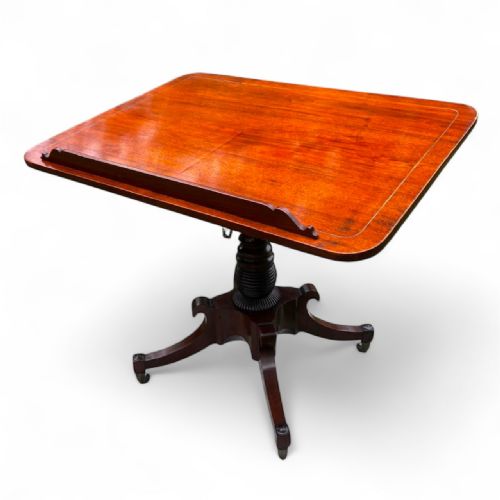
Decoration relied on brass inlay, marquetry inlay, and carved wood details, particularly seen in Black Forest examples and Regency brass-inlaid tables. Slatted partitions, drawers, and lower shelves required precise joinery to support heavy paper folios and music books.
Materials seen across these listings include mahogany, walnut, rosewood, brass, and marquetry inlay.
What Varies in Quality
Quality rests upon the crispness of the timber carving, the precision of brass or marquetry inlay, and the structural integrity of the partitions. Superior examples display thoughtful proportions and careful timber selection that elevate functional storage into fine furniture.
Simpler pieces offer robust utility through straightforward mahogany framing, while elaborate specimens feature fine turning, fitted drawers, and distinct regional cabinetmaking attributes like those attributed to Gillows of Lancaster.
Gillows of Lancaster
The Antique Music Portfolio Stand Glossary
- Canterbury
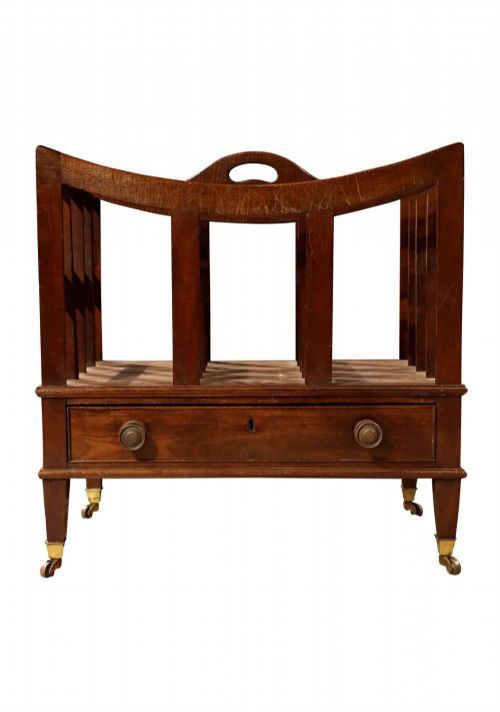
- A low stand with upright partitions for holding music sheets, folios, or magazines, often fitted with a drawer below. This form developed in the late eighteenth century and remained popular through the Victorian era.
- Regency
- An English design period spanning roughly from eighteen hundred to eighteen thirty, known for classical restraint and architectural lines. Pieces from this era frequently feature rosewood or mahogany with fine brass inlay.
- Marquetry Inlay
- The art of forming decorative patterns on timber surfaces using fitted veneers of different woods or contrasting materials. It adds pictorial or geometric richness to table tops and cabinet fronts.
- Black Forest
- A term for carved wooden items produced in the mountainous region of Central Europe during the nineteenth century. These pieces are recognised by deeply carved naturalistic motifs like foliage and animals.
Antique Music Portfolio Stand: Frequently Asked Questions
What is a Canterbury?
A Canterbury is a low stand featuring vertical slatted partitions designed to hold sheet music, portfolios, or periodicals. Many versions include a shallow drawer beneath the main compartment for smaller accessories.
Originating in the late eighteenth century, this form adapted over the decades to serve as a convenient beside table or companion piece to a piano.
How do I date these pieces?
Dating relies on observing timber choices, decorative techniques, and structural styling across different eras. Regency pieces often showcase rosewood and precise brass inlay, while Victorian examples lean towards walnut and marquetry.
Edwardian items from nineteen hundred onward typically present lighter mahogany frames combined with cabinet doors and fitted interior shelving.
Were these stands only for music?
While originally built for sheet music and large artistic folios, their compartmented layout suits contemporary living just as well. Owners frequently use them as magazine racks or reading tables in sitting rooms.
Combinations with flat tops also allow them to function effectively as occasional tables beside armchairs or sofas.
What timbers were commonly used?
Mahogany serves as the primary timber across the nineteenth-century selections, valued for its strength and warm reddish-brown hue. Walnut and rosewood appear frequently in later Victorian and Regency variants.
Specialist decorative work often incorporates contrasting woods for marquetry inlay or highlights details in polished brass and carved wood.