
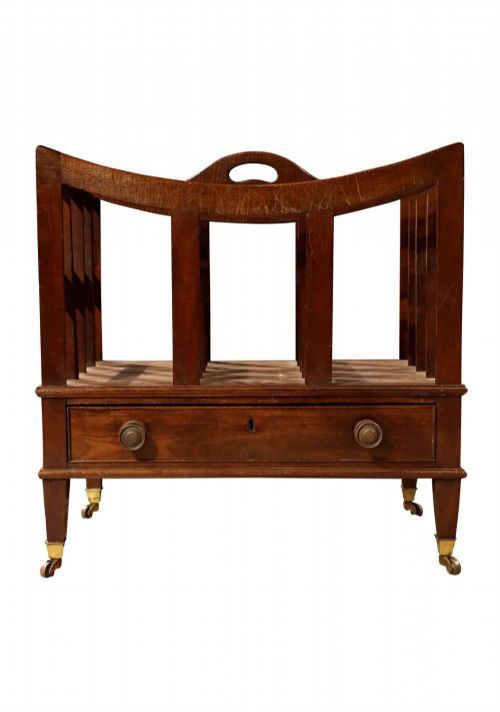


Mahogany Canterbury Furniture
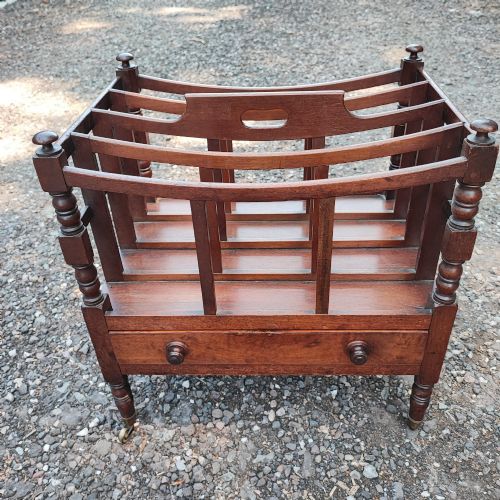
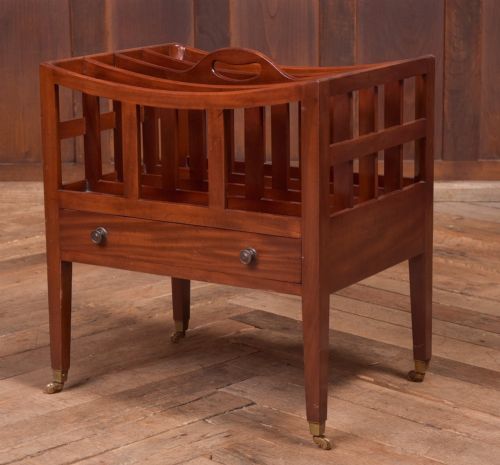
Mahogany canterbury furniture serves as a practical repository for sheets of music, newspapers, and folios, bringing orderly charm to a traditional sitting room.
Mahogany Canterbury Furniture
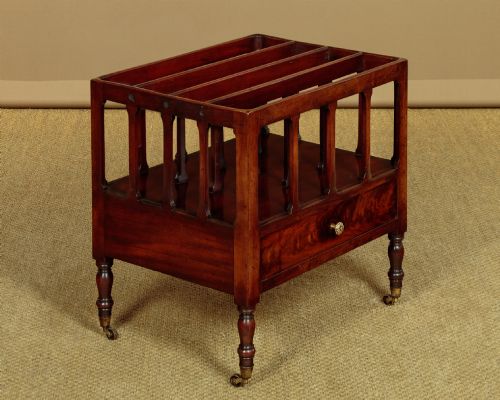
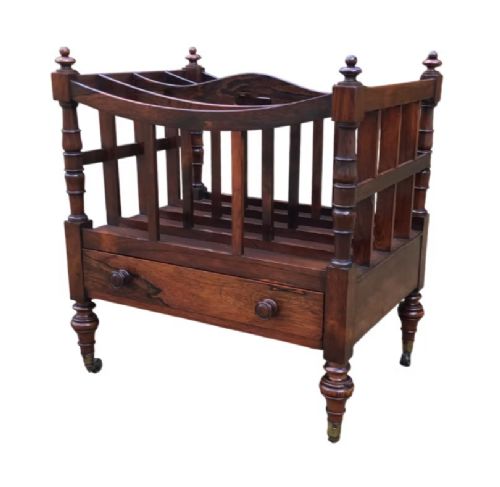
A search for mahogany canterbury furniture reveals tiered wooden stands designed originally to hold sheet music, folios, and periodicals. These pieces frequently appear from the Georgian, Regency, and Victorian periods, spanning the late eighteenth century into the early twentieth century.
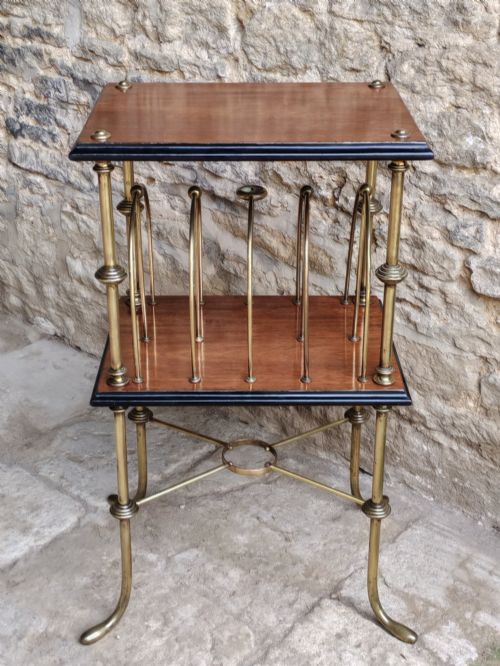
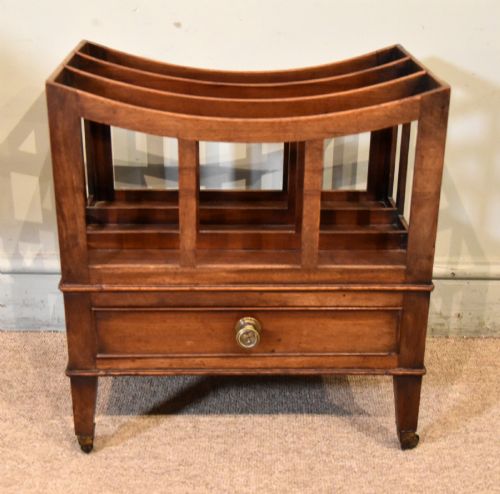
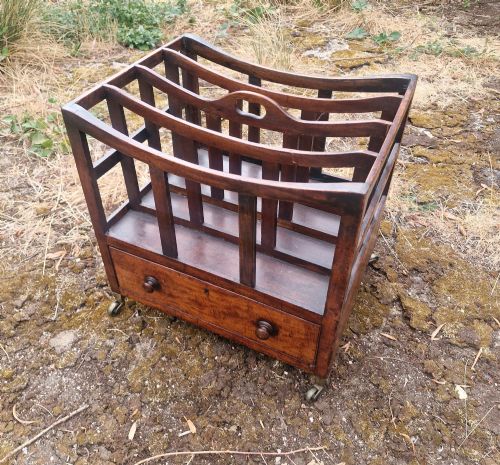
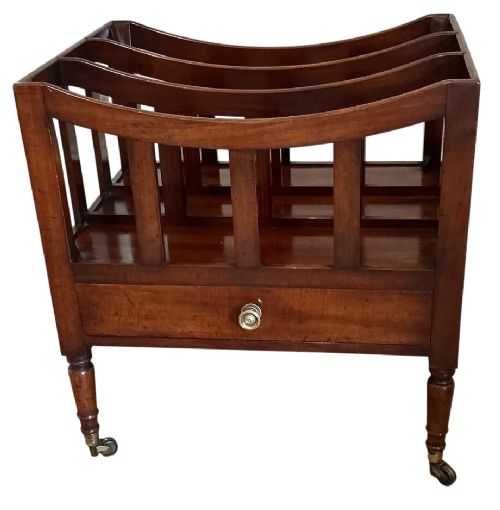
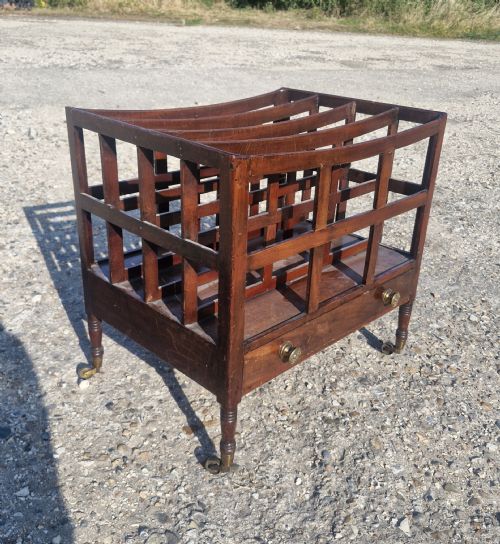
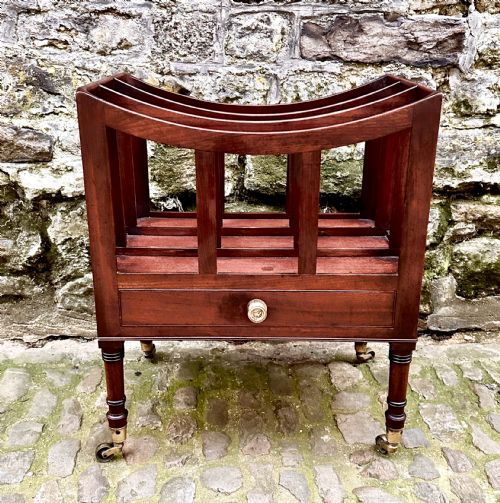
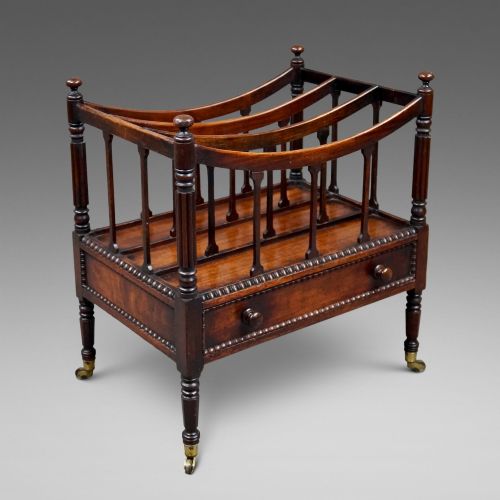
The most common forms on this page include open-division racks, boat-shaped designs, and multi-tiered stands, often incorporating a single drawer at the base. Makers utilised specific regional variations, producing everything from simple country house items to grand scale Regency folios.
Buyers will encounter items designated as music stands, magazine tidies, and sheet music cabinets alongside standard canterburys. The core function remains the compartmentalised storage of loose papers and publications within domestic interiors.
How they were made
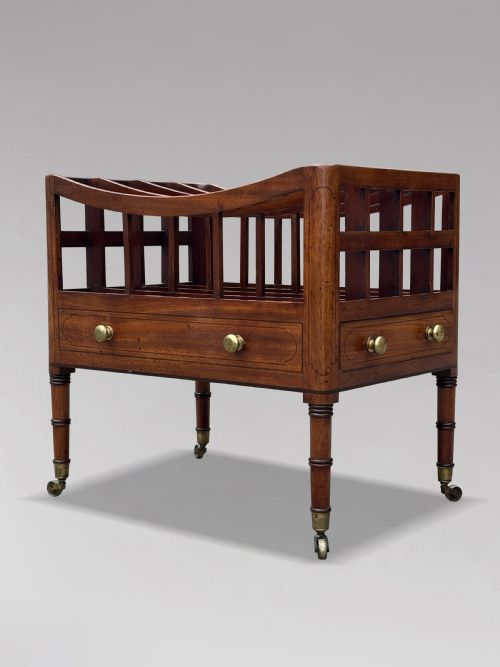
Cabinet makers constructed these items primarily from solid timber and veneers, frequently selecting standard mahogany alongside richly figured Cuban mahogany. Selected examples incorporate contrasting details such as satinwood inlay, ebony banding, and brass mounts.
Structural elements include turned legs often supported by castors for mobility, alongside slatted partitions forming individual compartments for papers. Drawers integrated into the lower sections utilise traditional joinery to house smaller accessories.
Listings feature mahogany, Cuban mahogany, rosewood, and glass, alongside contrasting inlay materials such as satinwood and ebony.
What varies in quality
Quality differences emerge in the selection of the timber grain, particularly where figured Cuban mahogany or precise satinwood and ebony inlay enhance the visual depth of the exterior. The crispness of turned leg elements and the integration of brass hardware distinguish superior workshops from standard production.
Proportion and structural balance dictate the success of the design, with finer items maintaining stability across multiple tiers and divisions without appearing heavy. The execution of internal drawer construction and the original retention of mobile castors contribute further to an individual piece's standing.
Gillow’s·Liberty
The Mahogany Canterbury Furniture Glossary
- Folio
- A large-format book or collection of loose printed sheets. These stands were engineered specifically to support such oversized items.
- Satinwood inlay
- A decorative technique inserting contrasting light-coloured exotic wood into the primary mahogany surface. This ornamentation defines finer Georgian and Regency examples.
- Castor
- A small wheel mounted on a swivel attached to the base of each leg. They allowed these stands to be moved easily across carpets during the nineteenth century.
Mahogany Canterbury Furniture: Frequently Asked Questions
What is a canterbury used for?
These stands were originally designed to hold sheet music, folios, and scores near a piano or seating area. Over time, their partitioned divisions made them equally suitable for newspapers, magazines, and general reading material.
Today, they function well beside contemporary seating to store periodicals or oversized books while maintaining visible floor space.
How do I date a mahogany canterbury?
Dating relies on observing stylistic markers, timber characteristics, and construction methods. Georgian and Regency pieces often display clean architectural lines, brass castors, and finely turned legs, whereas Victorian and Edwardian examples may incorporate heavier mouldings, fall fronts, or applied fretwork.
The choice of wood also assists, as dense Cuban mahogany is more commonly associated with the early nineteenth century.
Are music cabinets the same as canterburys?
While both store paper goods, traditional canterburys feature open slatted divisions designed for quick access to unbound sheets and folios. Music cabinets usually incorporate enclosed doors or drop-front drawers to protect bound volumes and smaller accessories.
Both forms emerged to serve the musical habits of nineteenth-century drawing rooms.
Where should I place a canterbury at home?
These compact stands suit living rooms, studies, or music rooms where reading materials accumulate near armchairs. Their finished backs and freestanding construction allow them to sit away from walls rather than strictly against them.
Avoid placing antique mahogany in direct sunlight or beside active heat sources to protect the polished wood finish.