


Multicoloured Staffordshire Figurine
These multicoloured staffordshire figurine pieces bring shelf presence and narrative charm, offering a tangible link to nineteenth-century domestic mantelpiece display traditions.
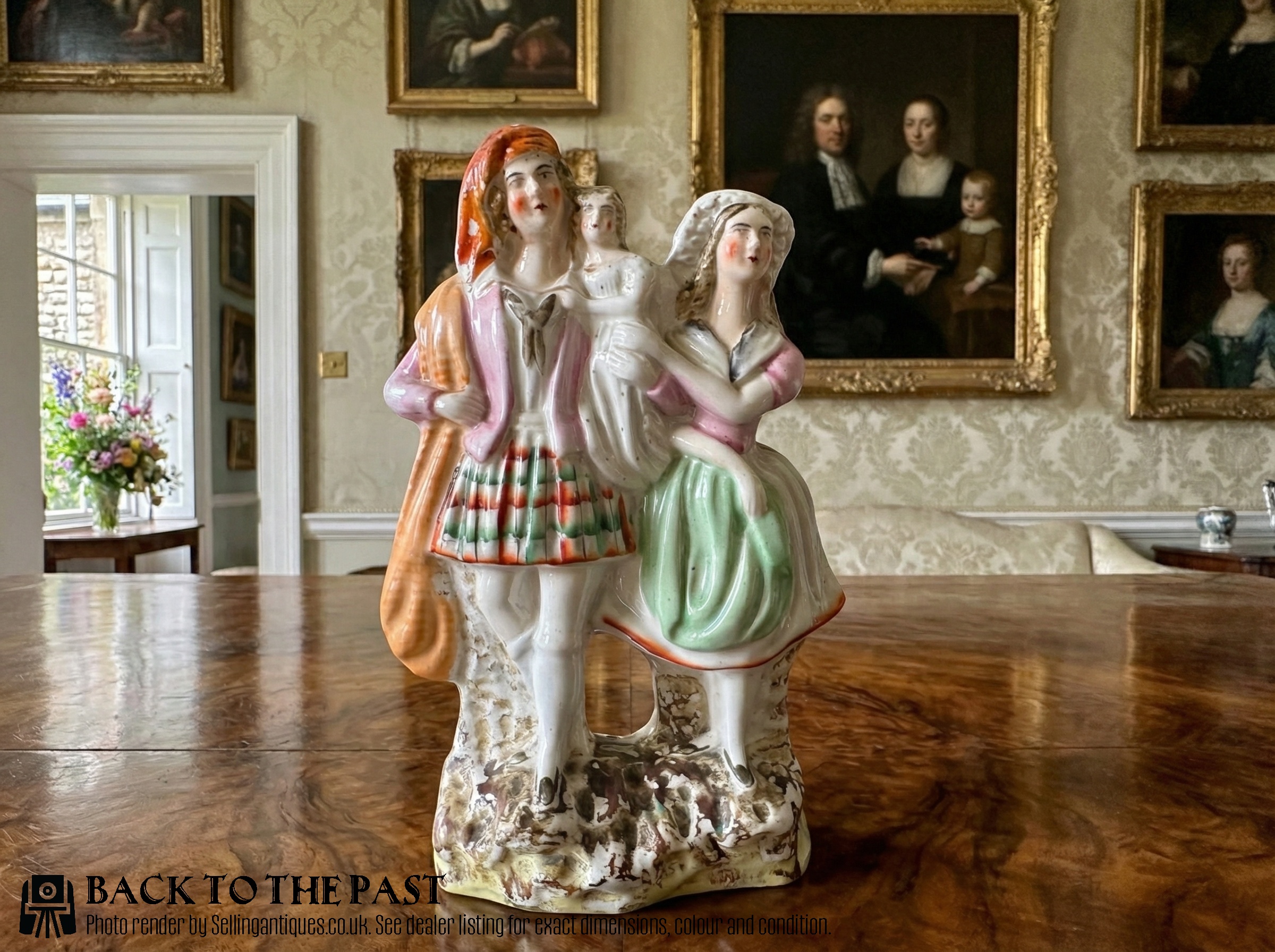
Multicoloured Staffordshire Figurine
A multicoloured staffordshire figurine represents a diverse category of ceramic figures, decorative statuettes, tobacco jars, and jugs. The selection spans the Georgian, Victorian, and Edwardian periods, recording subjects from royalty and military history to literature and everyday trades.
Most examples encountered here belong to the nineteenth century, including Victorian flatback figures designed specifically to face forwards against a wall. The makers range from traditional earthenware potteries to named manufacturers such as Wedgwood and Co and Minton.
How they were made
Makers utilised earthenware, pearlware, and glazed ceramic bodies, shaping the figures through traditional moulding techniques. Lead glaze provided a protective and reflective finish across the pottery surfaces.
Detailing relied upon enamel paint and coloured glazes applied by hand before the final firing. This pigment application accounts for the varied palette seen across figures like the Robin Hood, Pierrot, and royal portrait pieces.
Listings span earthenware, pearlware, and glazed ceramic materials across the Georgian, Victorian, and Edwardian periods.
What varies in quality
The sophistication of the glaze and enamel work dictates visual success. Finer examples maintain crisp paint application without blurring, whereas weaker production shows hurried brushwork and muddied colours.
Wedgwood and Co Ltd·Lakin and Poole·Minton
The Multicoloured Staffordshire Figurine Glossary
- Flatback
- A figurine moulded with a finished front and a plain, unpainted flat rear designed to sit flush against a wall.
- Pearlware
- A refined earthenware developed in the late eighteenth century featuring a faint bluish tinge in the glaze pooled around recesses.
- Enamel paint
- Coloured vitreous pigments applied over the fired glaze surface and fixed with a low-temperature second firing.
- Lead glaze
- A glossy coating containing lead oxide that vitrifies during firing to seal porous earthenware bodies.
Multicoloured Staffordshire Figurine: Frequently Asked Questions
What subjects do these figures depict?
The subjects range widely from literary and historical characters to royalty, biblical scenes, and street vendors. Figures depict notable personalities like Napoleon III and Eugenie alongside traditional themes such as Little Red Riding Hood and the Crimean War.
This variety reflects the changing popular tastes of the nineteenth century, serving both as decorative ornaments and as accessible cultural commentary for Victorian homes.
Were these figures meant for display?
Most pieces were created specifically for domestic interior display on mantelpieces, sideboards, and brackets. Flatback figures in particular were built with unadorned backs because they were intended to be viewed solely from the front.
Some objects, such as tobacco jars and jugs, combined decorative figural sculpture with practical household utility.
How do I identify a Victorian piece?
Victorian examples typically date from the nineteenth century and often employ bright enamel colours over glazed earthenware bodies. Stylistic cues include moulded flatbacks and subjects reflecting mid-Victorian military campaigns or royal portraits.
Earlier Georgian and pearlware pieces generally exhibit softer palettes and different potting characteristics compared to later Victorian production.
How should I care for ceramic figures?
Keep figurines out of direct sunlight to prevent the hand-painted enamel colours from fading over time. Dust them gently with a dry, soft brush rather than using liquid cleaners that might damage the glaze or remaining paint.
Stable placement away from edges and heavy vibrations ensures these delicate earthenware pieces remain secure on display.