


Antique Pottery Chimney Ornaments
These antique pottery chimney ornaments are expressive earthenware figures that bring warmth and character to a mantelpiece.
Antique Pottery Chimney Ornaments
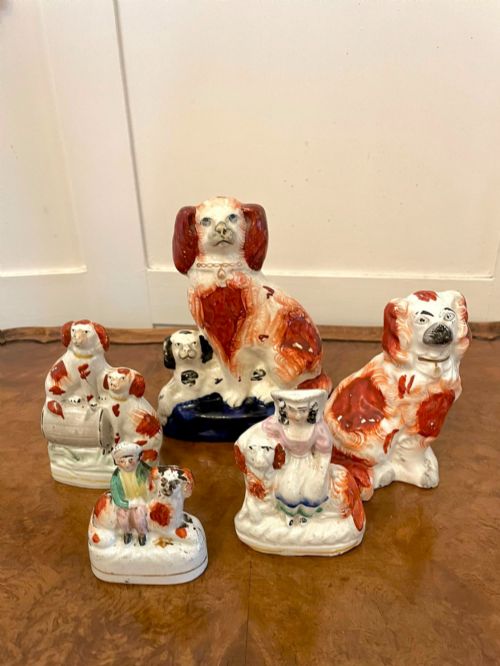
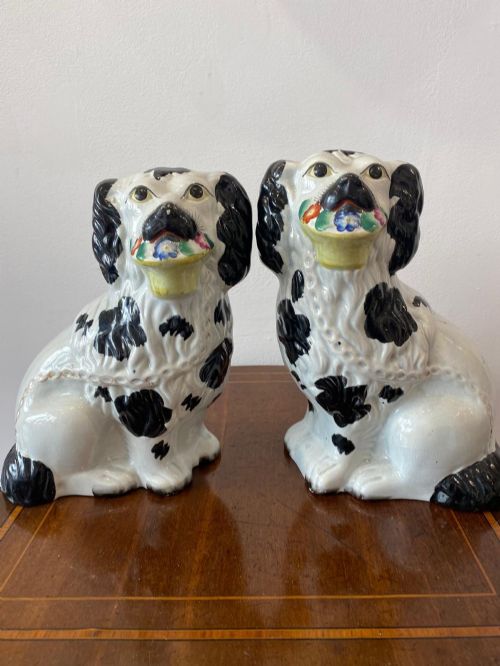
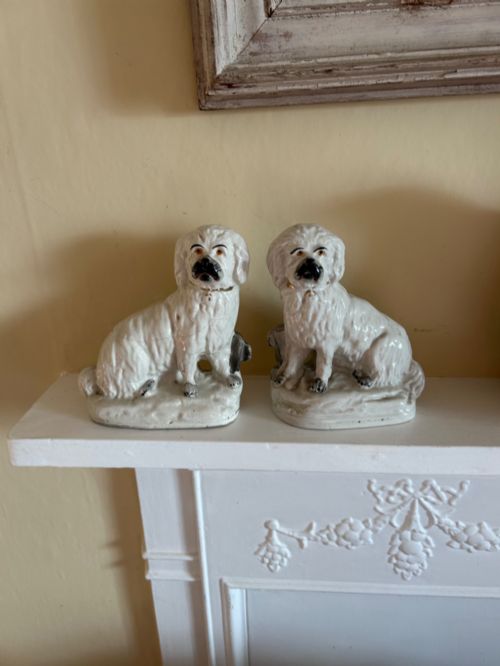
When you search for antique pottery chimney ornaments, you encounter nineteenth-century earthenware figures designed to sit atop fireplaces. The pieces on this page span the Regency and Victorian eras, taking the form of dogs, lions, deer, pugs, spaniels, and human figures.
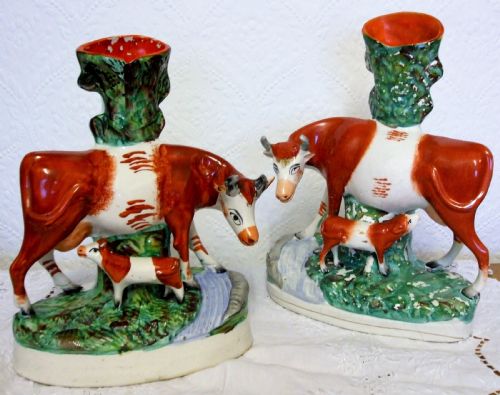
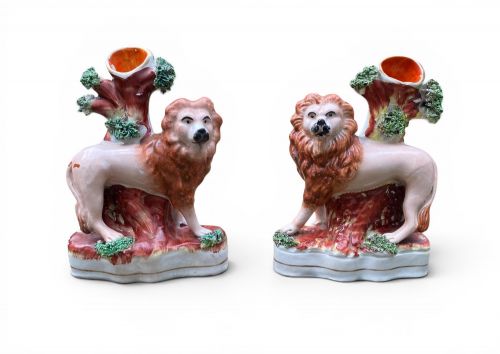
You frequently meet Staffordshire flatbacks and spill vases among these listings. These decorative objects range from charming pairs of dogs and pugs to architectural cottages, castles, and turret bridges.
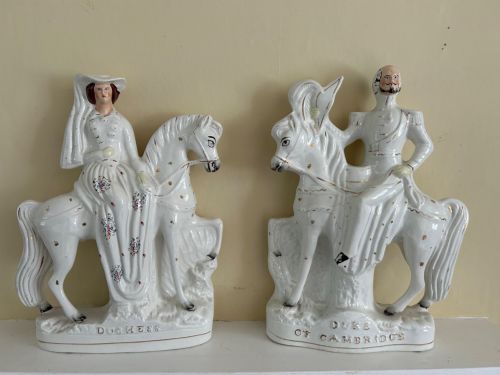
The makers intended these figures to be viewed primarily from the front, hence the flat, unglazed backs typical of the flatback tradition. They capture domestic animals and historical personages with robust charm.
How they were made
Potters shaped these figures from earthenware clay, often utilising press moulds to form the hollow bodies and separate limbs. Artisans then applied liquid glazes, sometimes incorporating lead glaze or enamel colours before firing.
The listings here feature earthenware and ceramic materials decorated with enamel, lead glaze, and gold leaf.
What varies in quality
Scale and complexity also separate standard figures from superior examples, particularly with elaborate spill vases depicting animals with calves or detailed castles and bridges. The depth of the glaze and the preservation of the original paintwork dictate the visual weight of the piece.
The Antique Pottery Chimney Ornaments Glossary
- Earthenware
- A porous pottery type fired at relatively low temperatures, forming the primary body for these nineteenth-century figures.
- Flatback
- A style of figure moulded with a decorated front and a flat, usually unglazed rear designed to sit flush against a wall or mantel.
- Spill Vase
- A hollow-backed ceramic vessel incorporating a small vase alongside a figure, originally intended to hold wooden spills for lighting fires or candles.
- Lead Glaze
- A glossy surface coating containing lead oxide, providing a bright, protective finish to the underlying earthenware body.
- Pearlware
- A refined earthenware body developed in the late eighteenth century with a bluish-white glaze that sits pooling in crevices.
Antique Pottery Chimney Ornaments: Frequently Asked Questions
Where did these ornaments sit?
These earthenware figures stood upon the mantelpiece or shelf above a fireplace in nineteenth-century homes.
Because coal fires warmed the room, the ornaments were placed where guests could admire the bright enamels and varied animal or architectural subjects.
Why do some figures have open tubes?
The cylindrical openings serve as spill vases designed to hold thin wooden matches or taper lights.
Potters combined decorative figures like deers, cows, and lions with these functional holders so households could easily light their hearth fires.
What does flatback mean?
A flatback describes a figurine moulded with detail solely on the front while the reverse remains flat and unglazed.
This technique saved time and materials because the makers knew the pieces would stand against a wall or chimney breast.
How do I tell Regency from Victorian pieces?
Regency items often utilise pearlware bodies with distinctive blue-tinted glazes, whereas Victorian pieces lean toward robust earthenware and flatback construction.
Stylistic cues in the painting and the specific type of clay help distinguish the earlier Regency work from the later Victorian output.