



Multicoloured Persian Carpet
These multicoloured Persian carpet examples bring rich tribal palettes and hand-knotted textures straight into your sitting room.
Multicoloured Persian Carpet
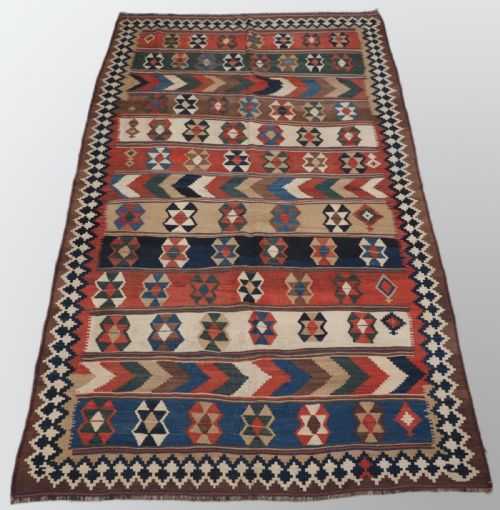
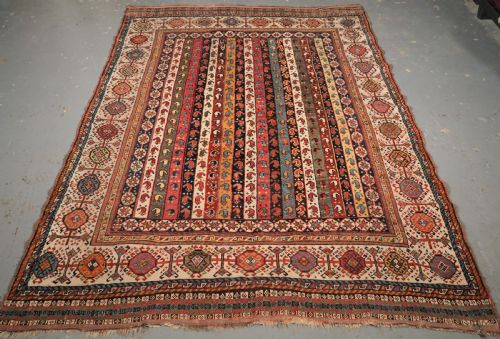
A multicoloured Persian carpet encompasses tribal rugs, runners, and kilims originating from regions such as the Caucasus and Persia. Buyers looking at this selection encounter pieces spanning several decades from the late nineteenth century up to 1930.
The assortment relies heavily on Qashqai, Baktiari, and Caucasian styles, alongside rarer long rugs and room-size carpets. These floor coverings bring distinct geometric patterns and varied hues into domestic spaces.
How they were made
Weavers utilised natural materials such as wool, cotton, and hand-spun wool to construct these floor coverings. Pile rugs and flatwoven kilims were created using traditional hand-knotting and weaving techniques.
The combination of durable wool fibres and sturdy cotton foundations allowed these carpets to withstand daily wear while retaining their complex patterns and vibrant dyes.
Certain Qashqai weavers hid tiny geometric animal motifs inside large diamond fields, rewarding close inspection with unexpected discoveries.
What varies in quality
Quality separates through the fineness of the weave and the complexity of the design, such as distinctive boteh motifs or striped layouts. The choice of hand-spun wool and the precision of tribal patterns dictate the upper tier of these items.
Condition and scale also define the differences across the range, with room-size carpets and long runners demanding specific considerations regarding their original tribal execution and structural integrity.
The Multicoloured Persian Carpet Glossary
- Kilim
- A flatwoven carpet or rug produced without a pile. These pieces rely on tightly packed horizontal and vertical threads to form sharp geometric patterns.
- Boteh
- A traditional almond-shaped motif with a curved upper end. This ancient Persian design appears frequently in Caucasian and tribal weaving.
- Runner
- A long, narrow carpet format. These items were originally designed to span hallways, corridors, or narrow spaces.
- Gabbeh
- A traditional, coarse tribal rug characterised by sparse designs and thick pile. These pieces often feature large fields of colour with simple symbolic motifs.
Multicoloured Persian Carpet: Frequently Asked Questions
Where should I place a runner?
Runners fit well in hallways, narrow entryways, and beside beds. Their elongated dimensions suit high-traffic transitional spaces.
Ensure you use a quality underlay to prevent slipping and reduce friction against the floorboards.
What is a flatwoven kilim?
A kilim is woven rather than knotted, resulting in a lightweight, pileless textile. This technique creates crisp geometric borders and patterns.
These versatile pieces work effectively as floor coverings or decorative wall hangings.
How do I date an antique rug?
Dating relies on examining the types of wool, dye palettes, and structural characteristics. Stylistic motifs often point to specific tribal weaving traditions.
Comparing construction methods with documented examples helps narrow down the period of production.