
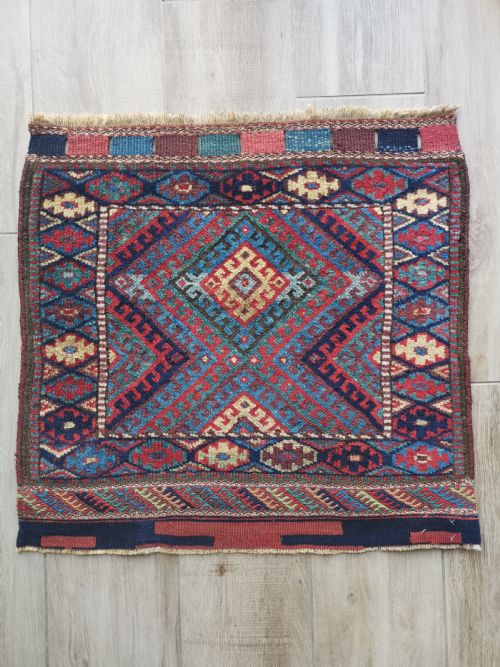
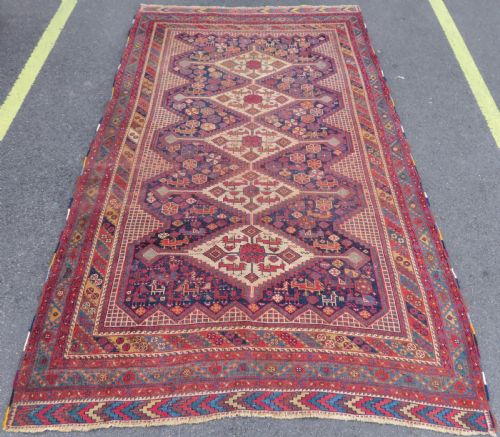
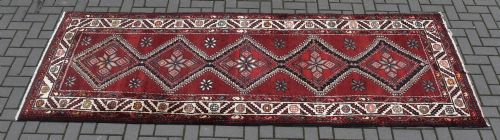


Geometric Diamond Carpet
These woven floor coverings bring distinct tribal patterns into a room, arranged around repeated angular motifs.
Geometric Diamond Carpet
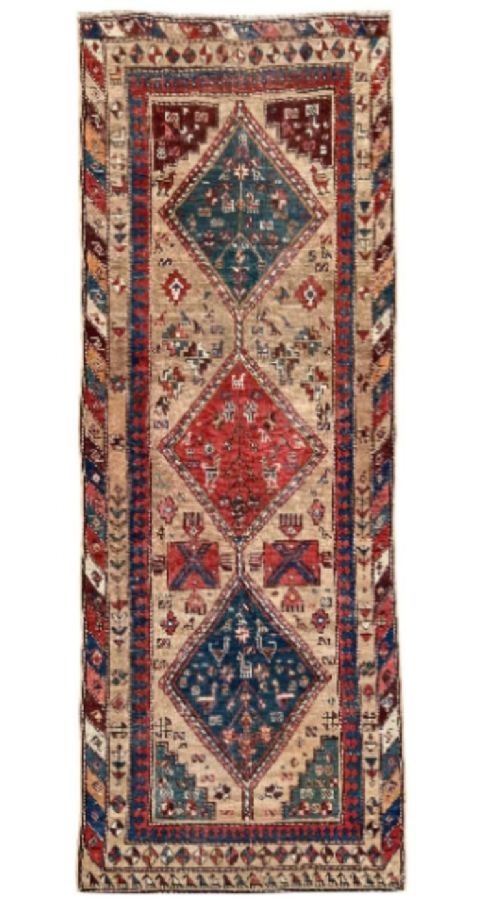
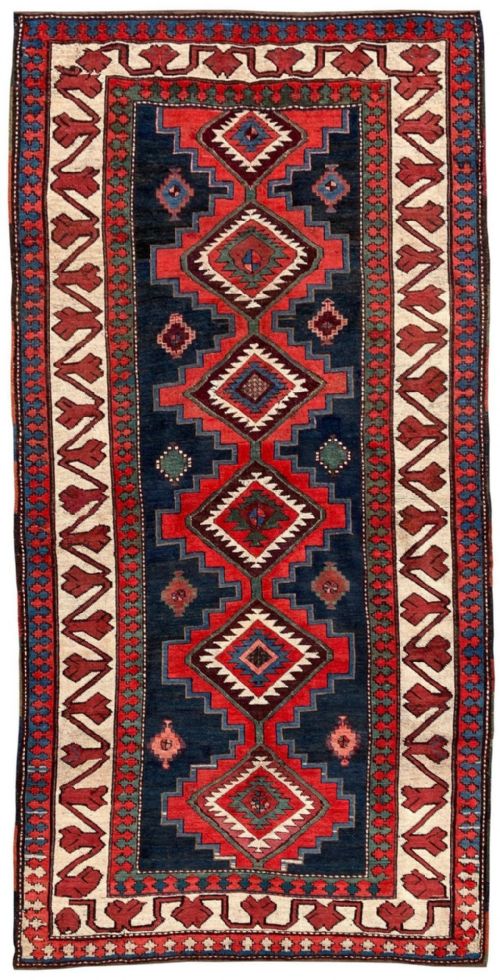
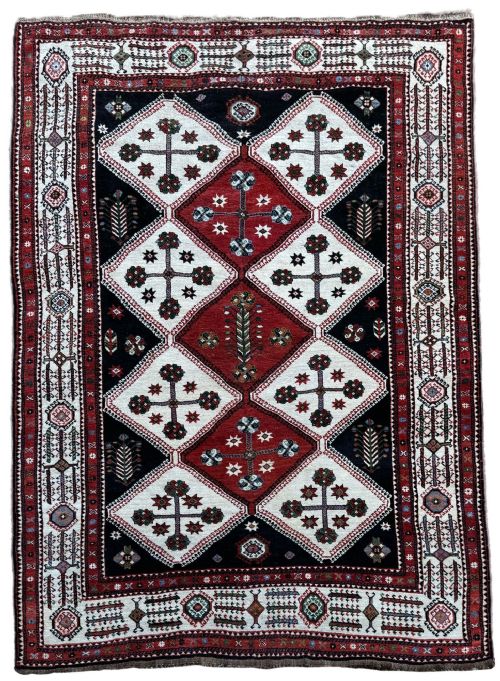
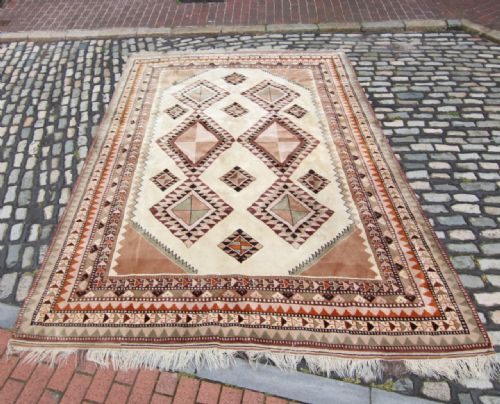
A geometric diamond carpet gathers traditional village and tribal weaving from regions including Persia, the Caucasus, and Anatolia. These pieces range from narrow hallway runners to room-sized carpets dating from the nineteenth century into the twentieth century.
Buyers encounter formats such as flatwoven kilims, pile rugs, and bagfaces produced by nomadic and settled tribal groups. The predominant forms reflect utilitarian village production adapted for domestic floor use.
Assessing the Weave
Quality rests on the precision of the knotting and the clarity of the geometric drawing across the field. Tighter structures and well-balanced proportions separate standard village items from finer tribal examples.
The consistency of the natural dyes and the preservation of the original outer borders also influence the overall standard of the piece.
Some weavers included accidental crooked lines in their diamonds, proving human hands guided the loom rather than a machine.
The Geometric Diamond Carpet Glossary
- Kilim
- A flatwoven carpet or rug produced without a pile. These pieces rely on interlocking weft threads to form flat geometric patterns.
- Runner
- A long, narrow carpet format designed primarily for hallways and corridors. Dimensions typically stretch significantly in length compared to width.
- Warp
- The vertical threads stretched tightly on the loom that form the structural skeleton of the rug. Weft threads pass across these to secure the knots.
- Soumak
- A flatweaving technique that wraps weft threads over and under the warp to create a textured surface resembling braids. This method provides extra durability to the textile.
- Bagface
- The decorated front panel of a storage sack made by nomadic weavers, repurposed as a small collector rug. These items display condensed tribal motifs.
Geometric Diamond Carpet: Frequently Asked Questions
How do I clean an old wool rug?
Gentle surface sweeping and occasional professional specialist cleaning preserve the natural wool fibres and dyes.
Avoid aggressive scrubbing or harsh chemical detergents that strip moisture from the material.
Can these carpets handle heavy foot traffic?
The dense wool construction and sturdy hand-knotted pile make many of these vintage runners and carpets suitable for hallways and living spaces.
Using a quality underlay prevents slipping and cushions the foundation against hard floors.
How do I identify a tribal design?
Tribal designs feature repetitive geometric medallions, hooked diamonds, and abstracted animal or plant motifs. These patterns stem from traditional weaving practices passed down within specific communities rather than urban workshops.
The absence of complex curves and the presence of asymmetrical tribal symbols indicate rural or nomadic origins.
Why do the colours look different in daylight?
Natural dyes react to light sources, shifting in tone depending on whether they sit in direct sunlight or dim interior spaces. The variation comes from the organic plant and insect sources used to dye the wool.
This characteristic gives the surface a dynamic visual depth that synthetic dyes rarely match.