
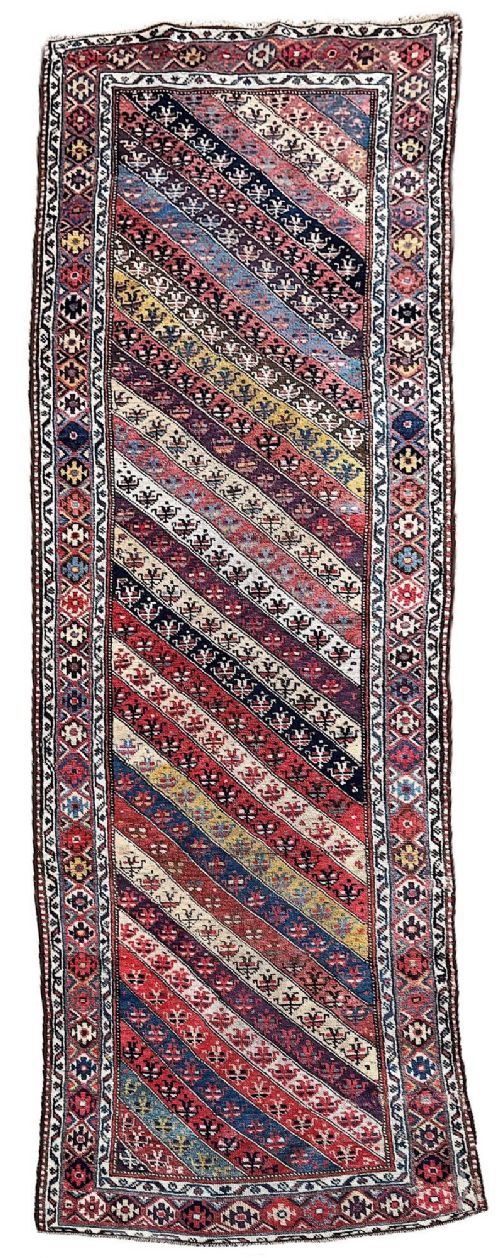


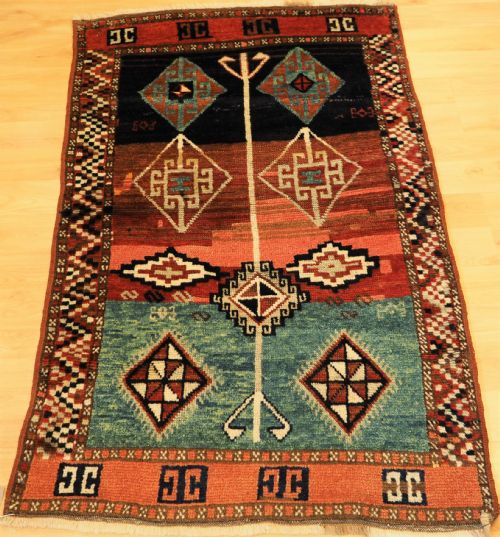
Multicoloured Hand Knotted Rug
A multicoloured hand knotted rug brings rich geometric patterns and varied regional designs directly into a hallway or living space.
Multicoloured Hand Knotted Rug
A multicoloured hand knotted rug spans traditional village and tribal weaving traditions from the Caucasus, Persia, Turkey, Morocco, and Scandinavia. These floor coverings arrive in diverse formats, ranging from long narrow runners and hallway runners to room-sized carpets and smaller area rugs.
The pieces on this page originate from the late nineteenth and early twentieth centuries, specifically drawing from periods between 1870 and 1930. Buyers encounter distinct regional styles such as Caucasian, Kashgai, Yalameh, Gabbeh, Lesghi, Berber, Gendje Kazak, Baktiari, Talysh, Moghan Kazak, Karabagh, Konya, Shirvan, Yuruk, Shekarlu, and Shassavan.
Makers within these groups constructed formats suitable for specific domestic tasks, producing everything from compact entrance mats to expansive floor coverings. The designs often incorporate classical motifs like boteh, cloud bands, and Memling guls executed across varied dimensions.
Materials and construction
Weavers relied primarily on wool, cotton, and linen to build the pile and foundation of each textile. Many examples utilise hand-spun wool, which imparts a distinct texture and absorbs natural dyes with subtle tonal variations across the surface.
The manual knotting process requires careful placement of individual tufts onto a warp and weft grid, secured by hand before finishing the edges. This traditional method ensures structural integrity, allowing the pile to withstand decades of foot traffic while maintaining flexibility.
Early twentieth-century weavers occasionally incorporated charming minor irregularities into geometric borders, reminding admirers that every knot was tied by hand.
Evaluating the standard
The grade of wool and the consistency of the hand-spun yarn dictate the fundamental resilience of the pile. Tighter knot density allows intricate motifs like boteh and geometric guls to remain sharp and well-defined over time.
Dye absorption and the harmony of the palette distinguish finer examples, as natural colour variations create depth across the field. The precision of the foundational weave and the preservation of original selvedges also separate standard pieces from superior specimens.
The Multicoloured Hand Knotted Rug Glossary
- Boteh
- A traditional pear-shaped or almond-shaped motif incorporating a curved upper end, frequently seen filled with floral or geometric patterns in oriental weaving.
- Rya
- A traditional Scandinavian piled rug style featuring a deep, plush wool pile originally developed for warmth in northern climates.
- Runner
- A long, narrow carpet format specifically designed for placement in hallways, corridors, or alongside beds.
- Warp
- The stationary vertical threads stretched onto a loom that form the structural skeleton of the textile.
- Weft
- The horizontal threads passed alternately over and under the warp threads to bind the knots in place.
Multicoloured Hand Knotted Rug: Frequently Asked Questions
Where should I place a runner rug?
These narrow formats work best in hallways, corridors, and entryways where foot traffic benefits from a durable wool covering. They also serve well alongside furniture or in transitional spaces between rooms.
Ensure the dimensions match the clear floor space, leaving a modest border of bare flooring visible around the edges to frame the piece properly.
How do I care for antique wool rugs?
Regular gentle vacuuming without a rotating brush roll prevents dust accumulation within the pile. Professional cleaning suited for antique textiles preserves the integrity of the natural wool fibres.
Keep the textile out of direct, harsh sunlight to maintain the vibrancy of the multi-coloured dyes over the years.
What is a Memling gul?
A Memling gul is a distinct octagonal geometric medallion featuring hooked or stepped outlines. It appears frequently in Caucasian and tribal rug designs.
Weavers arranged these motifs in rows or central columns to create structured patterns across the field of the rug.
How do I identify a tribal rug style?
Tribal pieces display bold geometric layouts, repeating symbols, and regional motifs rather than elaborate court-style florals. Characteristics vary by origin, such as the distinct coloration of Caucasian runners or the shaggier pile of Moroccan Berber examples.
Comparing the specific border designs and structural weave helps attribute the piece to regions like Shirvan, Karabagh, or the Caucasus.