
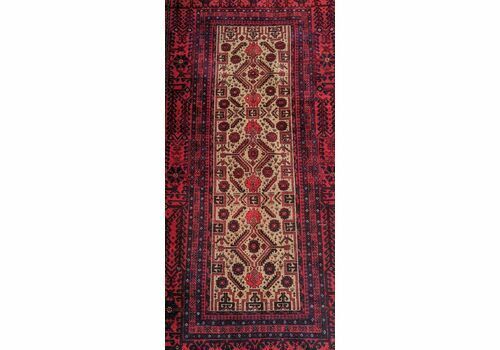
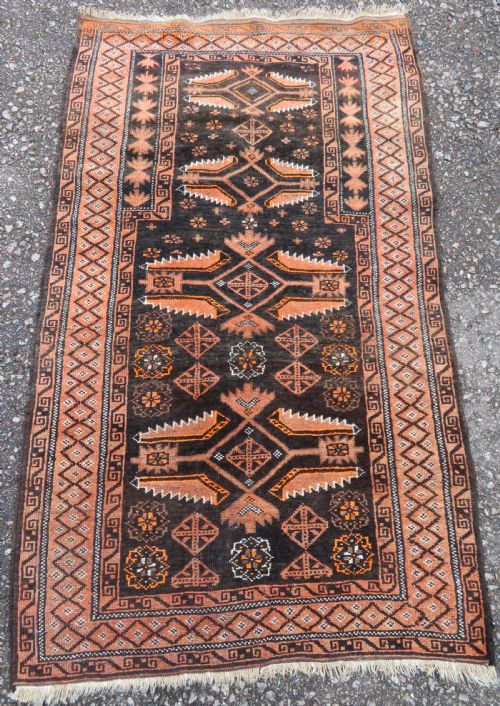


Balouch Tribal Runner Rug
These balouch tribal runner rug examples bring nomadic artistry directly to your hallway, offering rich wool textures and distinct geometric patterns.
Balouch Tribal Runner Rug
A balouch tribal runner rug represents nomadic weaving traditions originating from tribal groups spanning regions of Afghanistan, Persia, and Khorasan. When searching for a balouch tribal runner rug, collectors encounter hallway runners and rugs displaying traditional motifs such as guls, Herati designs, and Mina Khani variants. These pieces span periods from the nineteenth century through the early twentieth century, specifically including dates from 1880, 1900, 1910, 1920, and 1930.
The aesthetic is distinctly tribal and nomadic, categorised under styles like Persian Tribal, Afghan Tribal, Baluch Tribal, and Balouchi Tribal. Pieces vary in scale, from compact prayer rugs and smaller formats to longer hallway runners measuring up to 2.80 metres in length. Buyers looking at this selection find items defined by wool construction and traditional tribal iconography rather than court workshop precision.
The most typical examples met here include nineteenth-century works and pieces from the first three decades of the twentieth century. Salar Khani Baluch rugs and Khorasan Baluch rugs appear among the selections, demonstrating specific regional designs like large guls. Each balouch tribal runner rug serves as a functional floor covering that carries centuries of weaving heritage into domestic spaces.
Assessing quality in tribal weaving
Quality in these textiles depends on the density of the knotting and the precision of the tribal motifs. Tighter structures and well-defined geometric layouts indicate superior craftsmanship by the weaver.
The depth and preservation of the wool pile dictate the longevity and visual impact of the piece. Examples with intact borders, clear medallion structures, and rich coloration stand at the upper end of the range.
Nomadic weavers often worked from memory around a campfire, meaning pattern symmetries occasionally shift slightly as daylight faded.
Salar Khani Baluch·Khorasan Baluch
The Balouch Tribal Runner Rug Glossary
- Gul
- A repeating medallion motif often found in tribal rugs. This octagonal design element serves as the primary focal point for many Salar Khani and Baluch pieces.
- Herati
- A popular floral and leaf pattern arranged around a central rosette. This classic design frequently fills the field of antique tribal rugs.
- Mina Khani
- A repeating grid pattern composed of four-flower motifs connected by stems. Variations of this design appear in Khorasan Baluch weaving.
- Prayer rug
- A small format rug featuring a mihrab or arch design used for daily prayers. These portable textiles reflect personal devotion and nomadic lifestyle.
- Hallway runner
- A long, narrow carpet format designed specifically for corridors and passage spaces. These pieces combine practicality with distinct tribal aesthetics.
Balouch Tribal Runner Rug: Frequently Asked Questions
What is a balouch tribal runner rug?
A balouch tribal runner rug is a long, narrow floor covering woven by nomadic tribes using traditional wool materials and geometric patterns. These textiles reflect the cultural heritage of weavers from regions including Persia and Afghanistan.
Created in formats suited for hallways, these rugs feature distinctive motifs such as guls and Herati designs. They date from the nineteenth century through the early twentieth century.
How do I date an antique balouch tribal runner rug?
Dating these rugs involves examining the materials, structural wear, dye types, and stylistic characteristics. Pieces from the nineteenth century often display distinct regional wool textures and hand-spun yarns.
Comparison with documented examples from 1880, 1900, 1910, 1920, and 1930 helps establish a chronological window. Structural analysis of the foundation also provides clues to the era of manufacture.
Where were these rugs made?
These textiles originate from tribal groups inhabiting border regions between Persia, Afghanistan, and Khorasan. Nomadic and village weavers produced them for both domestic use and local trade.
The specific tribal affiliations, such as Salar Khani or Khorasan Baluch groups, dictate the regional variations in design and coloration found across the pieces.
How do I care for a wool tribal runner?
Caring for a wool runner requires gentle cleaning methods, regular light vacuuming without a rotating brush, and professional textile cleaning when necessary. Placing the rug in a hallway with an appropriate underlay prevents excessive friction and slippage.
Minimising direct, prolonged exposure to harsh sunlight protects the natural wool fibres and dyes from fading over time. Proper maintenance preserves the structural integrity of the weave.
What are tribal guls?
Tribal guls are repeating medallion motifs characteristic of Central Asian and Baluch weaving traditions. These octagonal or rounded geometric shapes often hold symbolic or familial meaning for the weavers.
In pieces like Salar Khani rugs, large guls form the dominant pattern across the central field. They distinguish tribal carpets from urban workshop productions.