
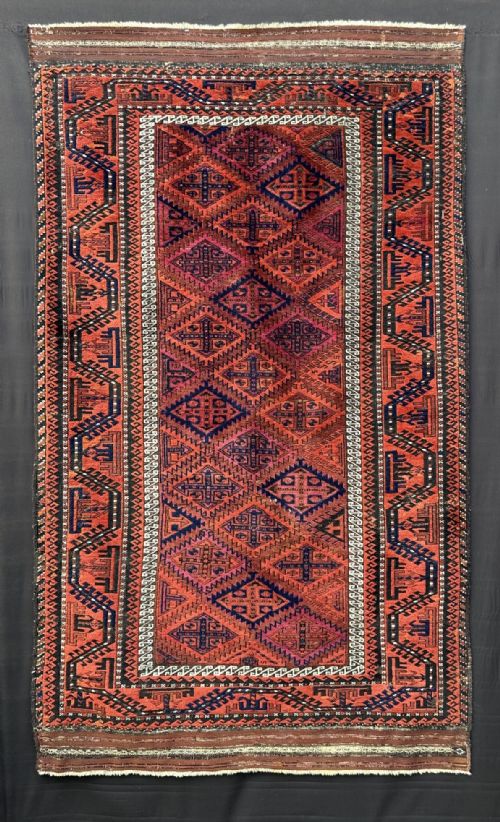
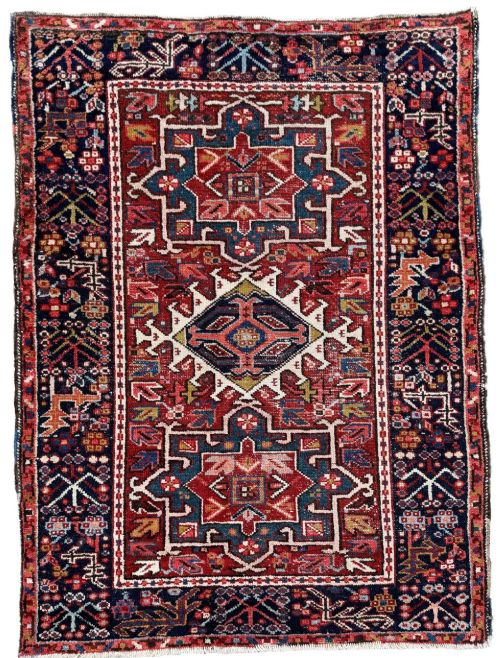
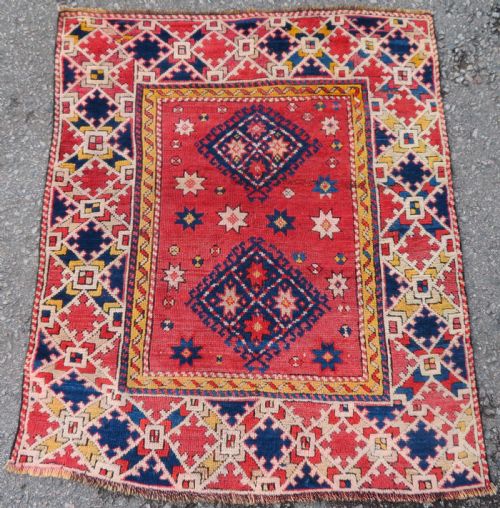
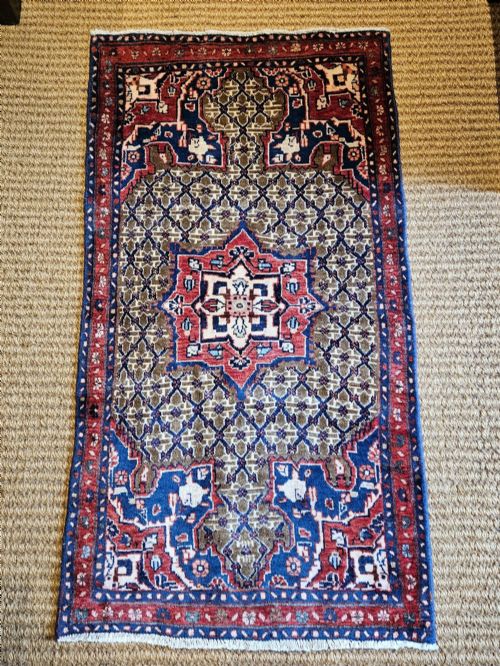

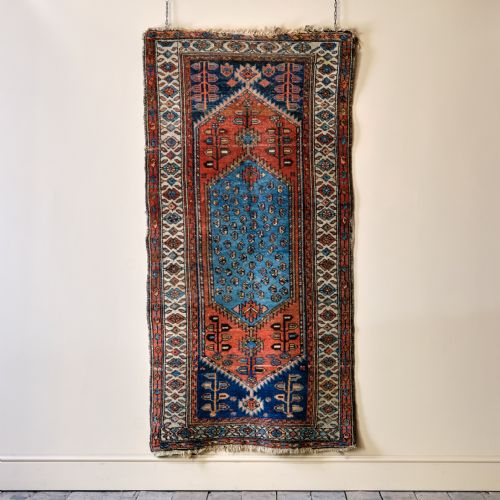


Geometric Oriental Hearth Rug
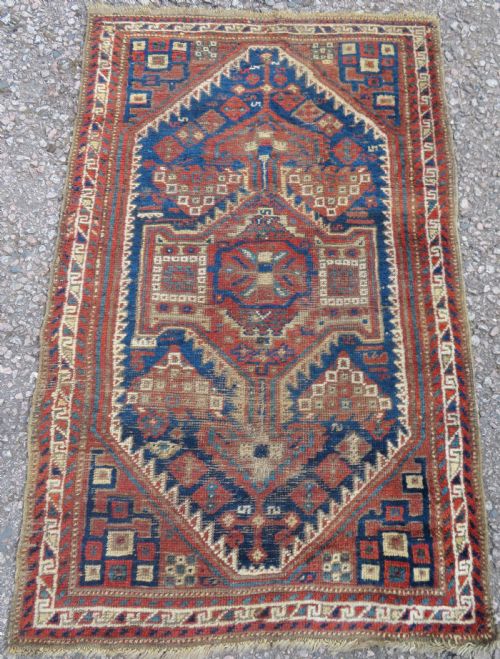
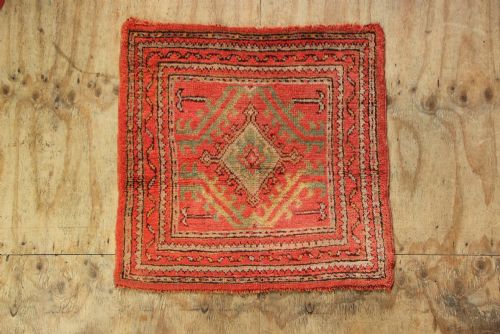
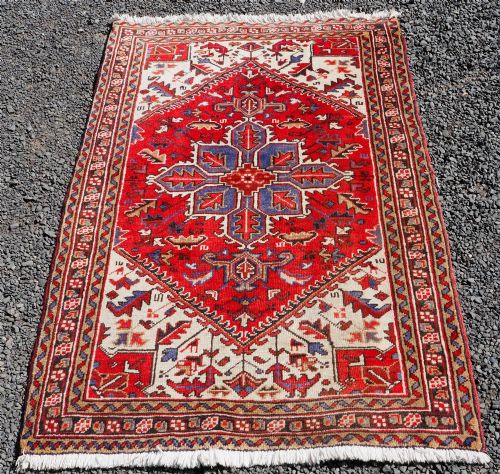
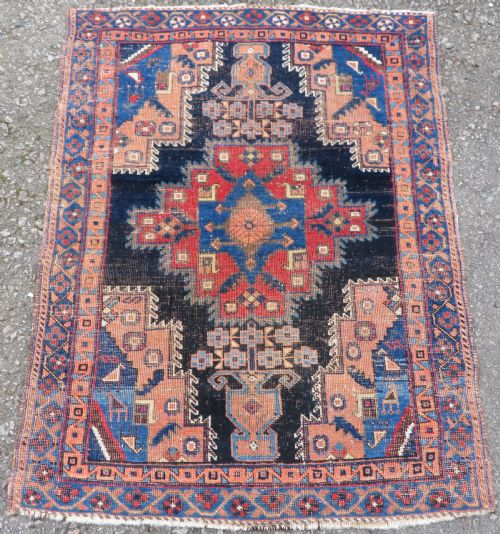
These pieces are geometric oriental hearth rugs, woven by tribal and village makers to bring warmth and pattern to domestic firesides.
Geometric Oriental Hearth Rug
A geometric oriental hearth rug brings together tribal and village weaving traditions from Persia, Anatolia, the Caucasus, and Afghanistan. When searching for a geometric oriental hearth rug, you encounter smaller formats designed for hearths and firesides, spanning the nineteenth century through the early twentieth century. These pieces display distinct tribal motifs, medallions, and lattice patterns rather than sweeping floral court designs.
The selection here draws heavily from Persian tribal groups, Anatolian village workshops, and Turkmen weavers. You will find square formats, small runners, and compact sizes well suited to placement in front of a fireplace. Each piece reflects the specific regional palette and knotting style of its maker.
Materials and technique
Makers utilised durable sheep wool, occasionally incorporating camel wool for natural undyed brown tones, set upon sturdy cotton warps or wool foundations. Hand-knotting secures the dense pile, creating a resilient surface designed to withstand regular foot traffic by the hearth.
Natural dyeing methods yielded deep reds, indigos, and earth tones that soften gracefully over decades. The reliance on hand-spun wool gives the pile a tactile variation and a rich texture that machine methods cannot replicate.
The inventory spans the nineteenth century through the 1930s, featuring wool, cotton, and camel wool across Persian, Anatolian, and Caucasian traditions.
Factors of quality
Quality rests in the integrity of the foundation, the crispness of the geometric drawing, and the depth of the wool pile. A superior rug maintains secure side cords and minimal restoration, allowing the original tribal design to read clearly.
The choice of dyestuffs and the quality of the wool dictate how the surface ages under light and wear. Tighter knotting and disciplined symmetry distinguish finer village and tribal pieces from simpler utility work.
Karaja·Bergama·Khamseh·Oushak·Heriz·Ersari
The Geometric Oriental Hearth Rug Glossary
- Medallion
- A central decorative motif placed in the field of the rug. It often takes a geometric, diamond, or star shape in tribal weaving.
- Warp
- The stationary vertical threads stretched upon the loom before knotting begins. Cotton warps provide a stable, rigid foundation.
- Pile
- The upright cut ends of the knotted yarn that form the usable surface of the rug. Thick pile offers greater physical cushioning.
- Lattice
- An interlocking grid pattern covering the central field. It is frequently populated with small geometric filler motifs.
Geometric Oriental Hearth Rug: Frequently Asked Questions
Where should I place a hearth rug?
These smaller formats sit naturally directly in front of an open fireplace or wood burner, protecting flooring from sparks while adding texture to the room.
They also function effectively as accent pieces in hallways, studies, or beside a bed where full-sized carpets are impractical.
How do I care for an old wool rug?
Regular gentle vacuuming without a rotating brush roll keeps dust from settling into the wool pile. Professional cleaning by a specialist in antique textiles preserves the natural lanolin and dyes.
Rotating the rug every year ensures even exposure to sunlight and foot traffic across the surface.
How do I distinguish a tribal rug from a city piece?
Tribal rugs display geometric forms, hooked polygons, and asymmetrical details derived from local tradition rather than formal cartoon designs. Their colour palettes tend to be more earthy and saturated.
City carpets often show curved floral vines and precise symmetry drawn by master designers in urban workshops.
Why do some rugs use camel wool?
Unbleached camel wool provides a naturally warm, honey-brown shade that requires no artificial dyeing. Weavers utilised it for its distinct tactile softness and durability.
It appears frequently in specific regional pieces, adding subtle tonal variety to the background fields.