


Moulded Panel Chest Drawers
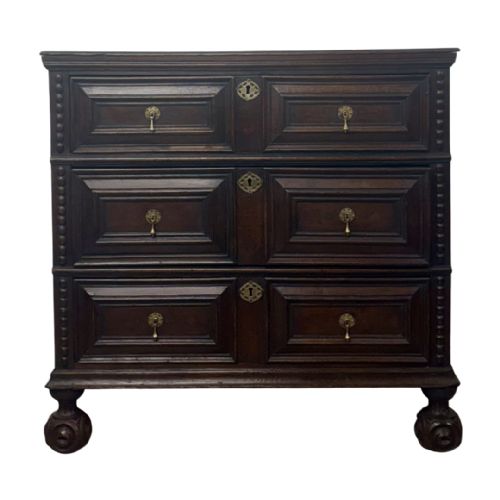
These moulded panel chest drawers are substantial seventeenth and eighteenth century pieces built from oak, walnut and fruitwood to last generations.
Moulded Panel Chest Drawers
A moulded panel chest drawers brings heavy timber construction and distinct period presence into a room. These pieces span the seventeenth and eighteenth centuries, originating from English workshops alongside French and Italian makers.
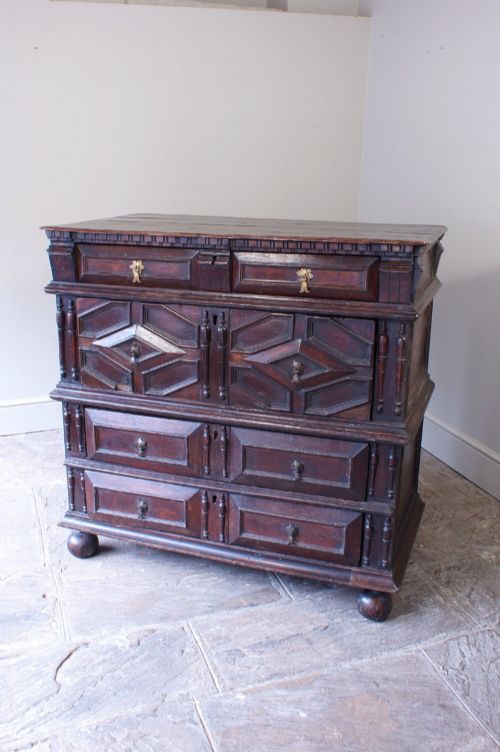
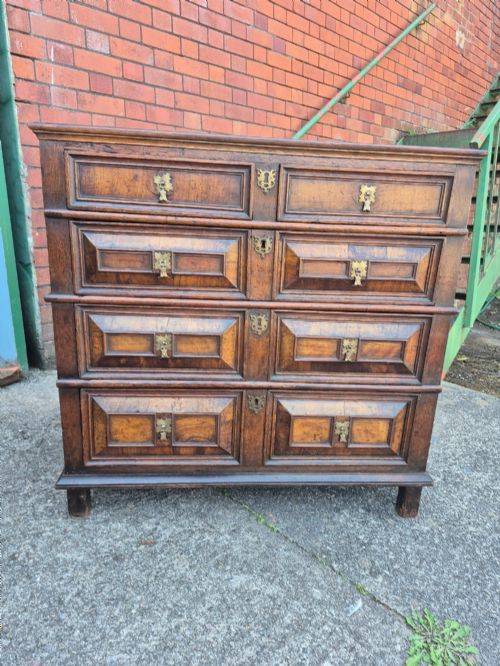
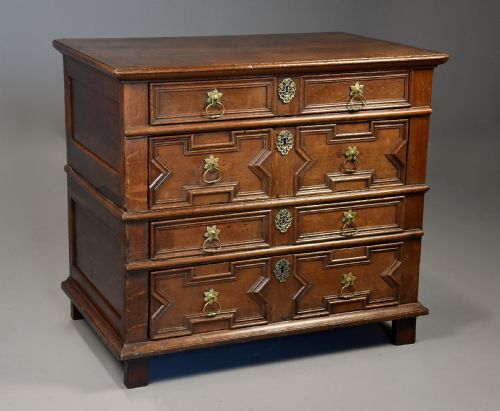
Most examples found here are constructed in oak or walnut, often featuring two-part configurations and panelled sides. The form relies on geometric moulding across the drawer fronts rather than delicate marquetry.
Buyers encounter sturdy oak chests dating from the Carolean and William and Mary eras, as well as continental commodes topped with marble. Their generous proportions and deep drawers serve practical storage needs with period authority.
Materials and construction
Joiners built these chests primarily from solid oak and walnut, frequently incorporating fruitwood, snakewood, and cedar for decorative contrast. Timber was selected for durability and grained character, providing structural strength for heavy drawers.
Drawer fronts display elaborate geometric mouldings applied to panels, demanding precise carpentry skills. Iron and brass hardware, including drop handles and escutcheons, secure the structure and complete the joinery.
Early pieces utilise two-part frames to ease transport up stairways and through historic doorways. Panelled sides and robust backboards stabilise the heavy timber carcass against seasonal movement.
The listings span the seventeenth and eighteenth centuries, uniting English oak joinery with continental walnut and marble-topped commodes.
What separates the grades
Quality rests in the crispness of the applied geometric mouldings and the complexity of the timber combinations. Pieces incorporating snakewood or contrasting fruitwoods sit above plain single-wood constructions.
The integrity of the original panelled sides and the survival of period brass or iron hardware dictate upper tiers. Untouched surfaces displaying faded patination command greater interest than heavily restored timber.
The Moulded Panel Chest Drawers Glossary
- Geometric moulding
- Raised wooden strips applied in repeating geometric patterns across drawer fronts. This technique defined late seventeenth century decoration.
- Two-part chest
- A cabinet constructed as separate upper and lower carcases stacked together. This method aided transport in large country houses.
- Commode
- A low French or Italian chest of drawers, frequently fitted with a marble top. These items emerged in continental interiors during the eighteenth century.
- Panelling
- Framework constructed with grooved stiles and rails holding fitted wooden inserts. This method added rigidity to the carcase and sides.
- Patina
- The surface sheen and colour acquired by wood over centuries of handling and light exposure. Fine examples show deep, untouched tonal variation.
Moulded Panel Chest Drawers: Frequently Asked Questions
How do I date a moulded panel chest?
Dating relies on timber choices, construction methods, and hardware styles. Seventeenth century pieces frequently employ oak with geometric mouldings and two-part frames, while eighteenth century examples introduce walnut, fruitwood, and marble tops.
Examining drawer linings, backboards, and joining techniques reveals the period of manufacture. Earlier items display hand-split timbers and pegged joints rather than modern fasteners.
Were these chests used in bedrooms?
These chests originally served in various rooms of grand houses, including chambers, hallways, and parlours, storing textiles, documents, and valuables. Their robust build suited daily service across multiple generations.
Today, their generous proportions make them practical for modern bedrooms and living spaces, offering substantial storage capacity combined with historic character.
How do I care for historic oak and walnut?
Preserving these surfaces requires stable environmental conditions away from direct heat sources and strong sunlight. Natural waxes applied sparingly maintain the timber without sealing the grain.
Cleaning should involve only a soft, dry cloth to remove dust. Avoiding moisture and synthetic polishes protects the historic patina from degradation.
What is the difference between English and continental pieces?
English examples from this era typically feature solid oak construction with stark geometric panels and brass drop handles. They reflect domestic seventeenth century cabinet-making traditions.
Continental pieces from France and Italy often utilise walnut and fruitwood, sometimes incorporating marble surfaces. Their proportions and decorative elements align with provincial commode designs.