

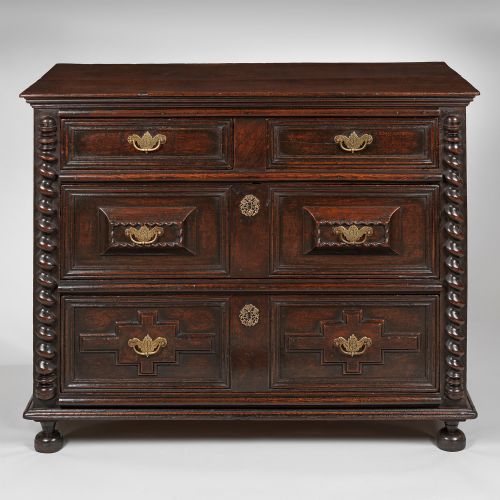


Moulded Oak Tallboy
Moulded oak tallboy pieces are sturdy storage chests built from solid timber with distinctive decorative framing, offering robust utility and characterful period presence.
Moulded Oak Tallboy
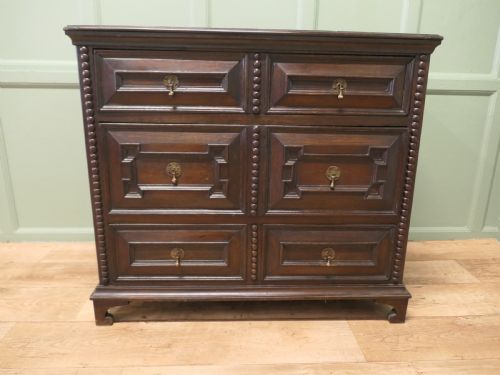
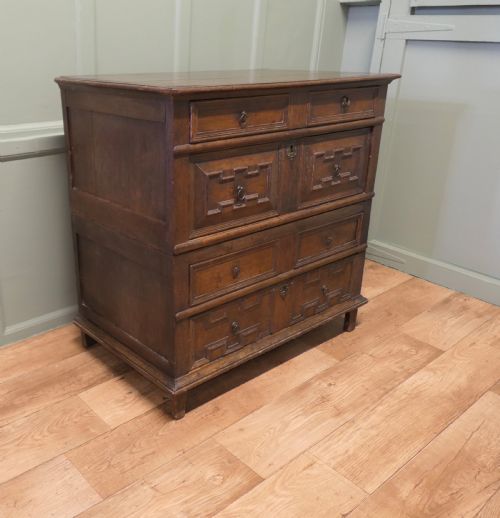
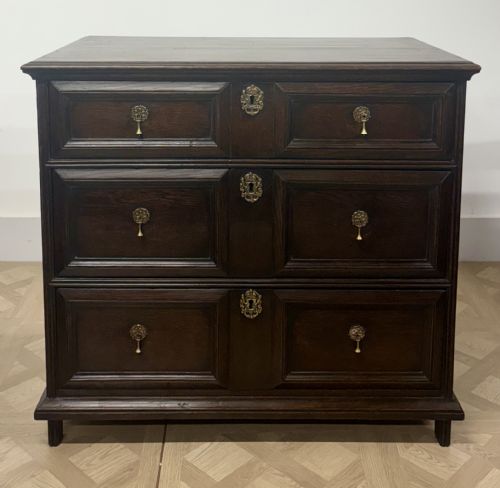
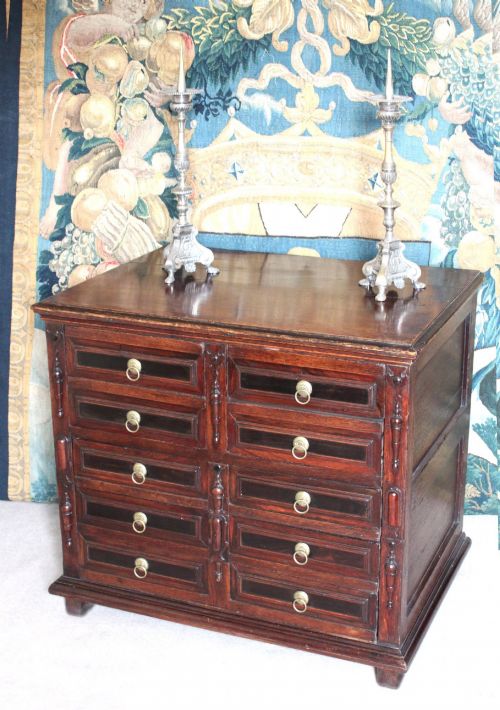
When you search for moulded oak tallboy furniture, you are looking at substantial timber storage units designed to hold clothing and household goods in early domestic interiors. The pieces gathered here predominantly span the seventeenth and eighteenth centuries, with notable examples from the Charles II, Jacobean, and Georgian periods.
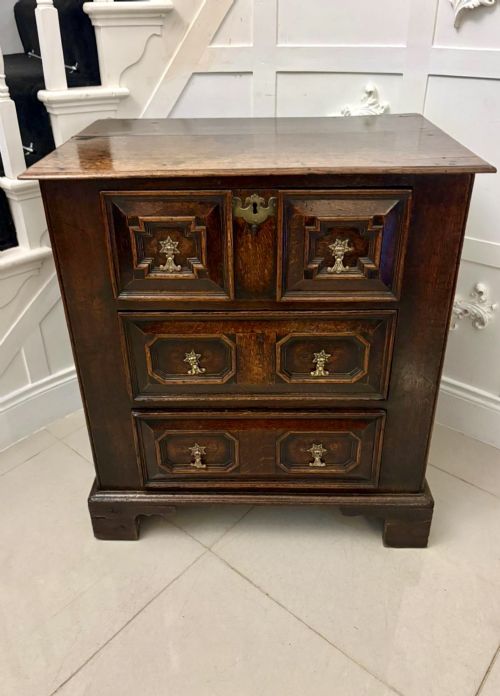
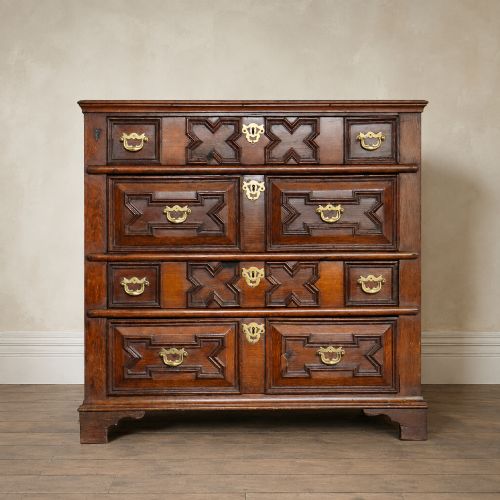
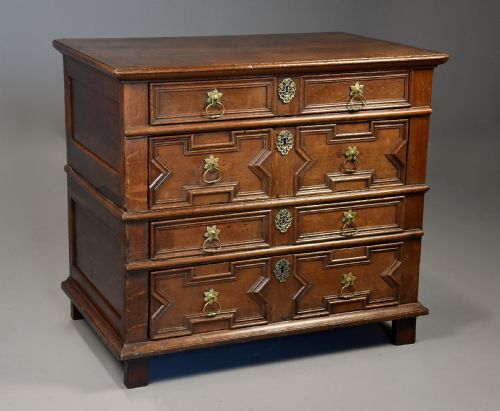
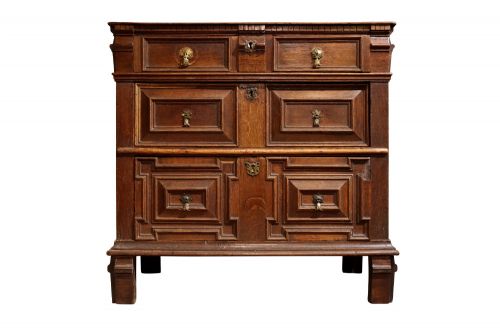
Most entries take the form of chests of drawers, frequently constructed as two-part items or incorporating geometric mouldings across the drawer fronts. You will also encounter variations in oak combined with walnut, fruitwood, or brass, reflecting the shifting construction methods of seventeenth-century and eighteenth-century joiners.
Materials and construction
Joiners built these items primarily using solid oak, occasionally combining it with walnut or fruitwood for secondary timbers and decorative veneers. Iron and brass hardware, such as original brasses and drop handles, secured the functioning parts while adding metallic contrast to the dense wood grain.
Mouldings were meticulously shaped directly from the timber or applied in geometric patterns across the drawer fronts to create depth and shadow. Many seventeenth-century versions utilised a two-part construction method, making the heavy carcasses easier to transport within large houses.
Listings feature periods ranging from the 17th century through the Georgian era to the 1920s, employing oak, walnut, fruitwood, brass, iron, and paint.
Judging quality and character
Quality rests upon the crispness of the geometric mouldings and the integrity of the primary timber. Pieces displaying well-preserved patination and original brasses command closer attention from collectors than those altered by later restorations.
The sophistication of the joinery marks the difference between standard utilitarian containers and exceptional cabinetwork. Balanced proportions, careful timber selection, and intact period hardware elevate the standing of any individual chest.
The Moulded Oak Tallboy Glossary
- Moulding
- A shaped strip of timber fixed to a surface to create decorative relief and shadow. On these chests, they often form geometric panels across the drawer fronts.
- Patina
- The surface sheen and colour developed by wood over centuries of handling, exposure to light, and waxing. A fine patina indicates honest age and careful maintenance.
- Two-part chest
- A tall storage form built in upper and lower sections stacked together. This method assisted portability for heavy seventeenth-century furniture.
- Geometric
- A decorative style utilising intersecting straight lines and repeated polygons. Joiners applied this vocabulary to drawer fronts during the seventeenth century.
Moulded Oak Tallboy: Frequently Asked Questions
How old are these chests?
The examples on this page date mainly from the seventeenth and eighteenth centuries, spanning the Charles II, Jacobean, and Georgian periods. Some later nineteenth-century and twentieth-century revival pieces also appear.
Joinery techniques, timber selection, and hardware styles help distinguish seventeenth-century production from later interpretations.
How were they used historically?
Households utilised these chests of drawers to store garments, linens, and personal valuables safely away from dust and dampness. Their robust construction suited the heavy demands of early domestic life.
Two-part variants allowed owners to manoeuvre the heavy wooden carcasses more easily between rooms or during household relocations.
How do I live with one?
Position your chest away from direct heat sources and strong sunlight to protect the aged oak timber and its natural patination. Maintain a stable room temperature to prevent the wood from drying out.
Treat the surfaces with simple beeswax rather than modern silicon polishes to preserve the historical finish and depth of colour.