

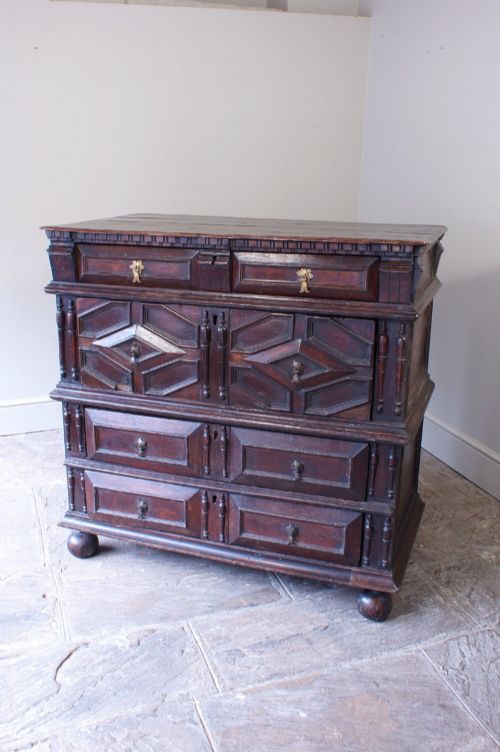
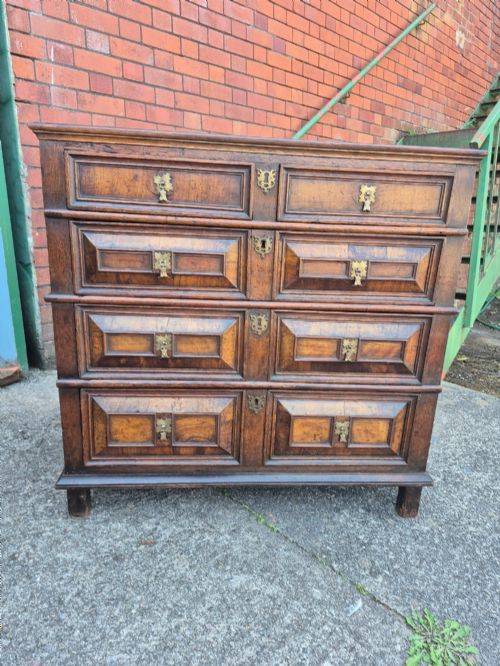


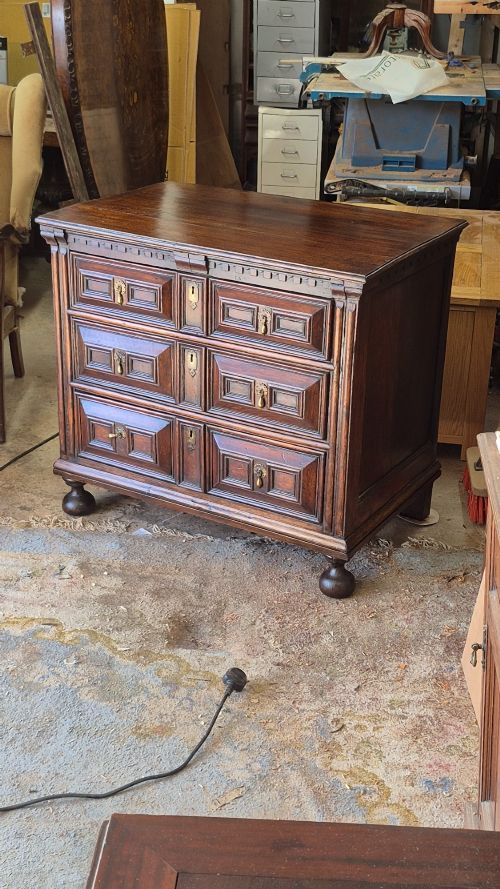
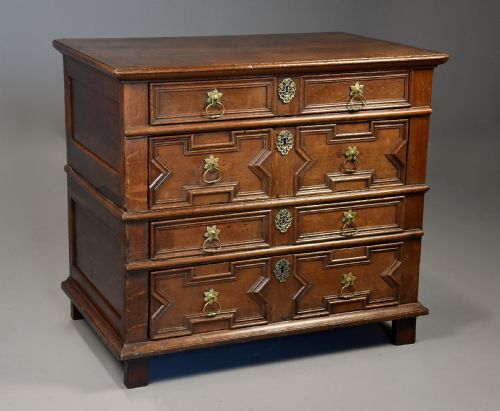
Moulded Drawer Chest
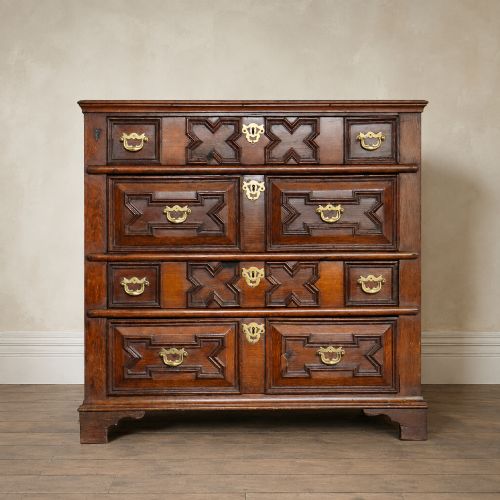
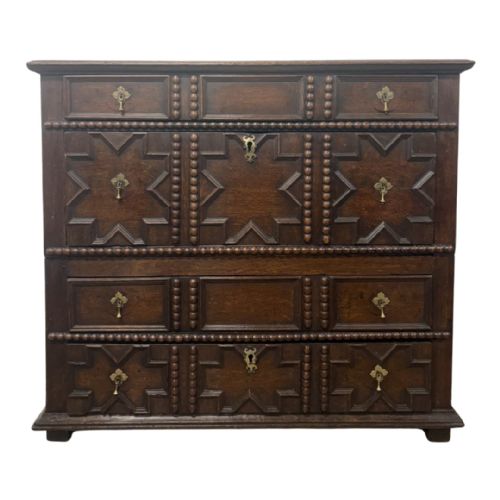
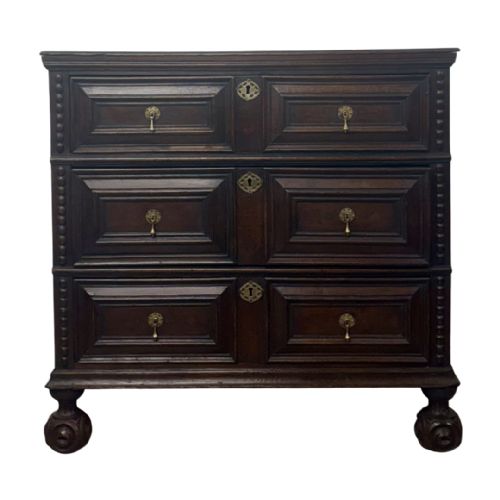
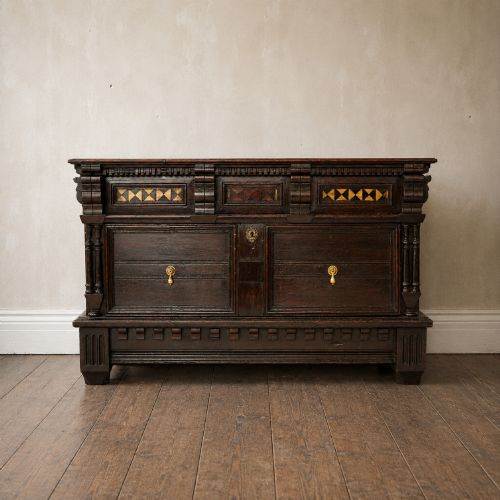
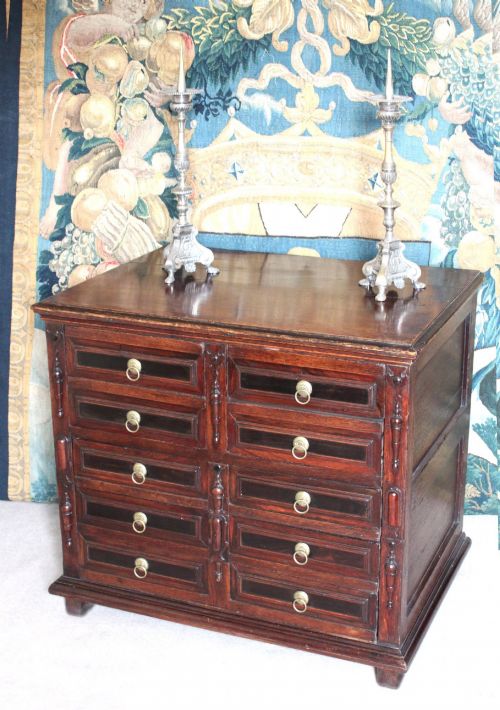
A moulded drawer chest brings tactile depth and early craftsmanship into a room through geometric drawer fronts.
Moulded Drawer Chest
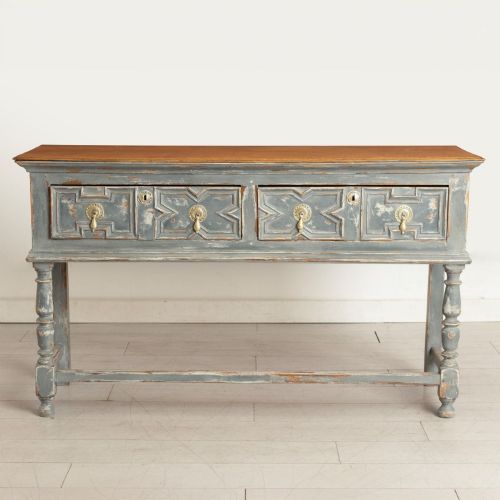
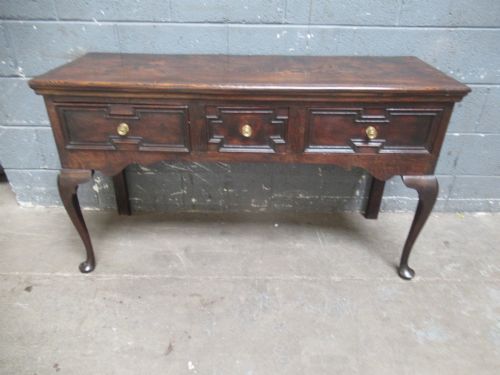
The form typically divides into a two-part or multiple-drawer structure, originating in periods such as the Charles II, Jacobean, and Georgian eras. Alongside standard chests of drawers, buyers encounter related formats like dresser bases, cabinets on chests, and commodes featuring marble tops or serpentine outlines.
What varies in quality
The sophistication of the geometric moulding arrangement sets finer examples apart, where intricate cross-grain or cushion profiles require exceptional carpentry skill. The choice of primary timber and secondary woods, such as elm or fruitwood used for secondary drawer linings, also dictates the calibre of the construction.
Original surface preservation heavily influences desirability, with untouched waxed finishes and period brass hardware holding greater integrity than heavily restored or replaced elements. Proportions, crispness of the applied mouldings, and the harmony between the upper and lower sections distinguish workshop standards.
Listings span from the seventeenth century through the Victorian era, utilising oak, walnut, fruitwood, marble, and brass.
The Moulded Drawer Chest Glossary
- Geometric moulding
- Applied strips of timber arranged in raised panels, rectangles, or octagons across drawer fronts. This technique created rich surface texture during the late seventeenth century.
- Oyster veneer
- Thin slices cut horizontally from small branches or roots to reveal circular growth ring patterns. Cabinetmakers laid these in intricate arrangements across the drawer faces.
- Cushion moulding
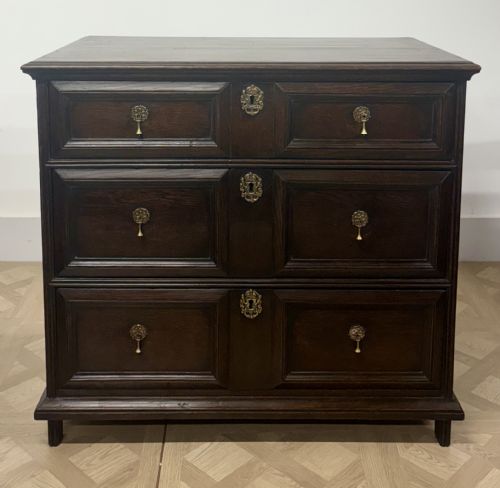
- A rounded, convex profile projecting forward from the drawer edge. It gives the front a padded or pillowed appearance.
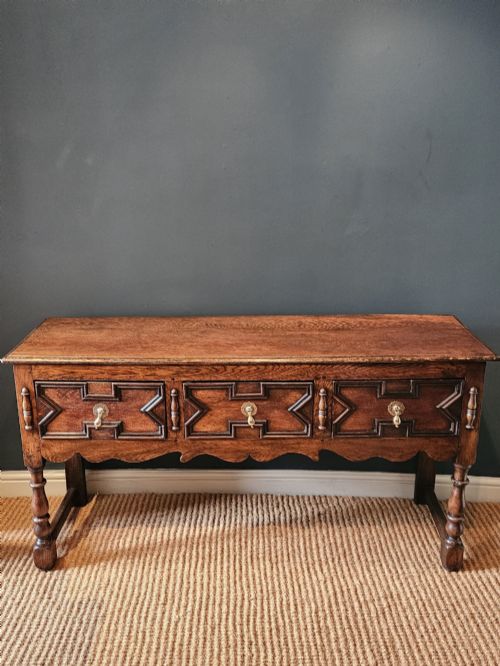
- Dresser base
- A low utilitarian table fitted with drawers, often sharing the construction traits and era of the moulded chest. These pieces served domestic storage needs in early kitchens and living spaces.
- Commode
- A low chest of drawers originating in continental Europe, frequently topped with marble. Louis Philippe examples often utilise this form.
Moulded Drawer Chest: Frequently Asked Questions
What is a moulded drawer chest?
A moulded drawer chest is an early storage piece featuring raised geometric wooden mouldings applied directly to the drawer fronts. These designs create strong shadow and texture across the timber surface.
Most surviving examples date from the seventeenth and eighteenth centuries. They reflect the joinery methods and regional styles of the Jacobean, Charles II, and Georgian periods.
How do I identify a 17th century chest?
Seventeenth-century pieces typically feature solid oak construction, hand-split panels, and pegged joinery. The presence of applied geometric mitred mouldings is a primary indicator of this era.
Inspect the backboards and drawer interiors for tool marks and traditional construction methods. Later revivals often display different timber selections and mechanical fastenings.
Where were these chests used?
These chests served practical storage roles in bedrooms, hallways, and living quarters of early homes. Their deep drawers held textiles, clothing, and household valuables.
Today, they function well as focal storage points in traditional or contemporary interiors. Their flat tops also accommodate lighting or decorative objects.
What woods were used?
Oak is the predominant timber found in these pieces, particularly from the seventeenth century. Walnut, fruitwood, and elm also appear in primary frames or secondary drawer linings.
Exotic veneers such as oyster cut walnut added decorative contrast on high-status commissions. Pine appears more frequently in later nineteenth-century iterations.