





Mother of Pearl Seat
A mother of pearl seat brings an intricate geometric shimmer into a room, combining exotic woods with iridescent shell inlay.
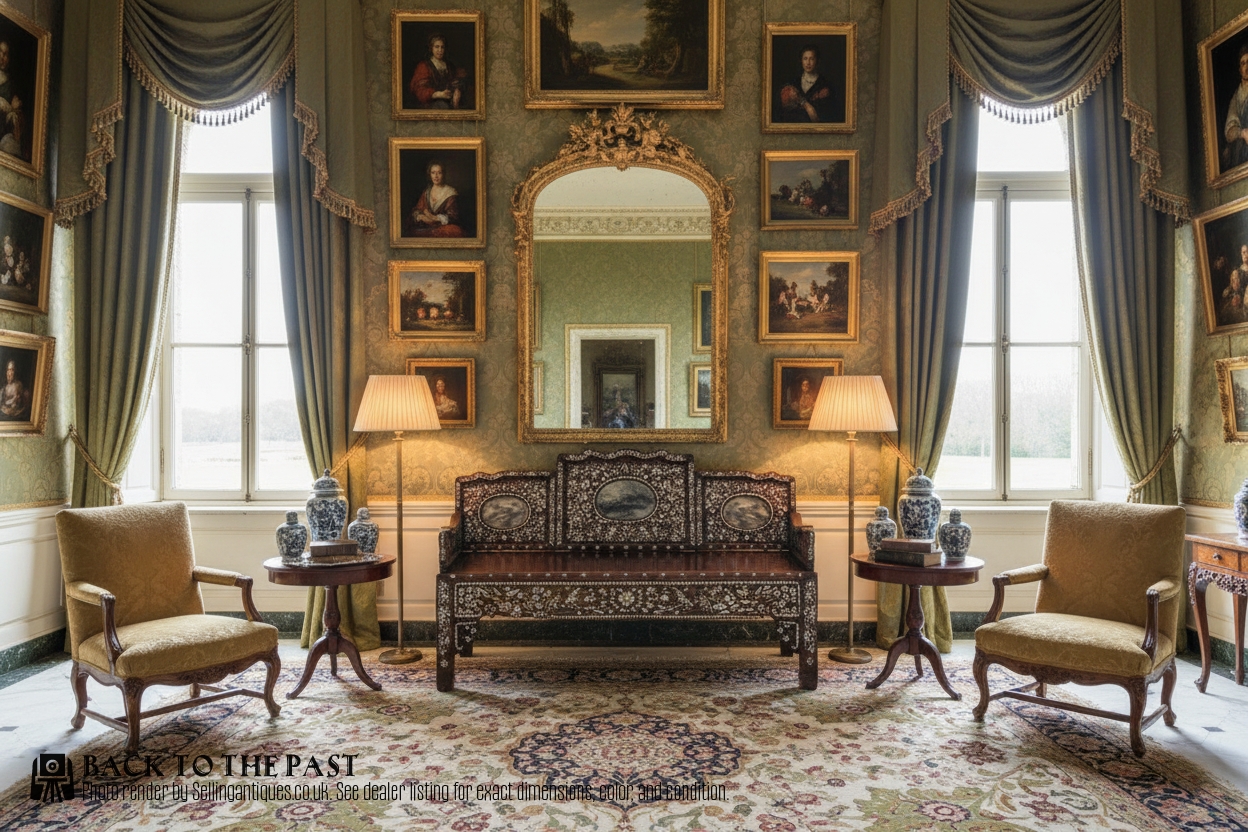
Mother of Pearl Seat
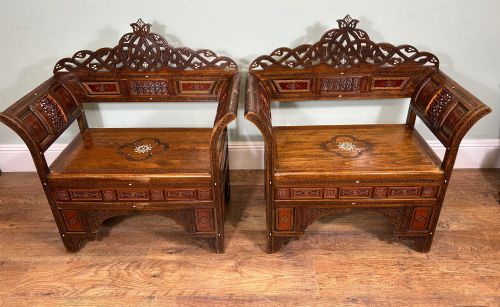
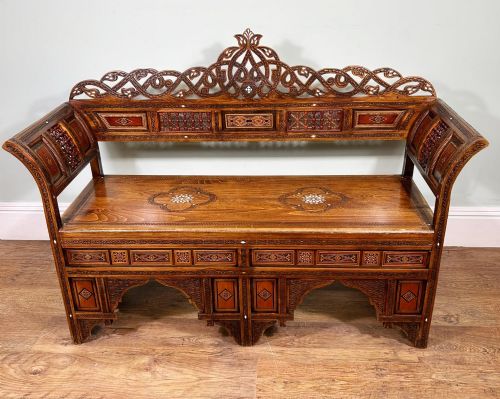
A mother of pearl seat encompasses armchairs, side chairs, benches, window seats, and full seating suites adorned with luminous shell work. These pieces emerge from diverse traditions, including Syrian, Levantine, Moorish Revival, Chinese Export, and Victorian workshop practices.
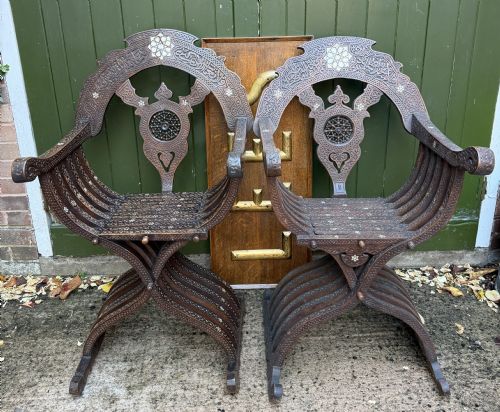
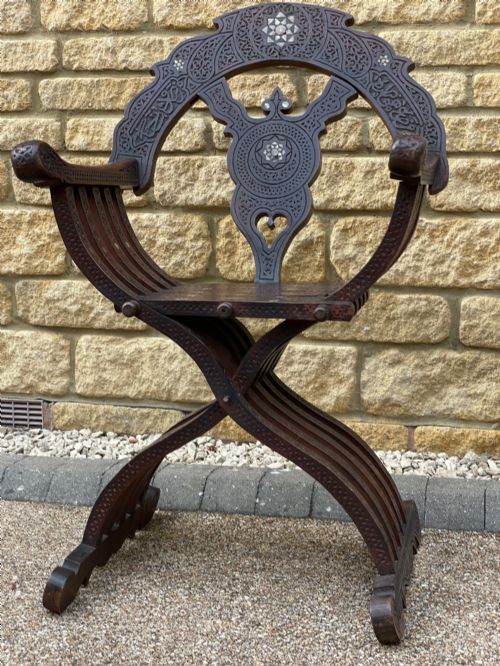
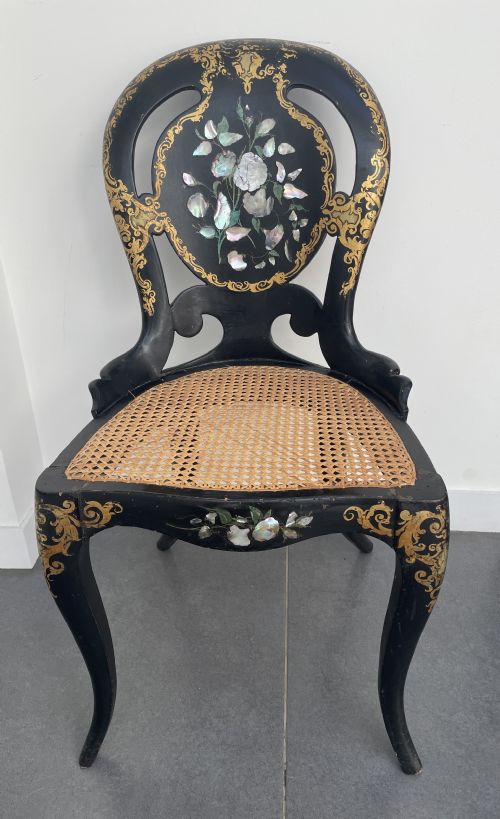
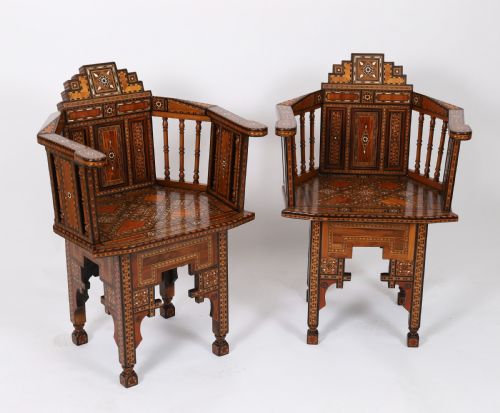
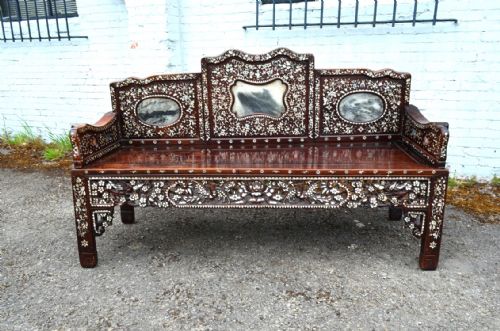
The most common examples on this page are intricately inlaid Syrian and Middle Eastern armchairs or X-frame forms dating from the late nineteenth and early twentieth centuries. Alongside these, buyers encounter Victorian papier-mâché chairs and Chinese hardwood benches featuring dense shell decoration.
How they were made
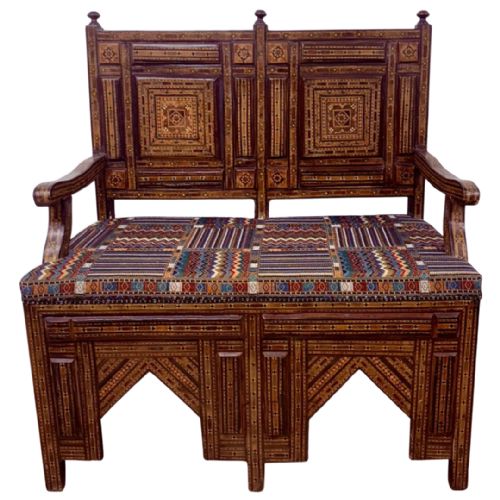
Artisans built these forms using dense timbers such as walnut, fruitwood, hardwood, and ebonised or papier-mâché foundations. Workers shaped small geometric pieces of nacre shell and bone, pressing them tightly into hand-cut channels within the wood.
Makers utilised parquetry techniques alongside intricate carving and Mashrabiya panels. Some examples combine the shell inlay with canework, fabric upholstery, or parcel gilt decoration.
Mother of Pearl Seat Retail Price Guide 2026
Typical asking prices for mother of pearl seat among the pieces listed under this phrase on Sellingantiques today, from the lower quarter to the upper quarter. They describe what is for sale here now, not the wider market.
Some chairs fold up entirely like giant wooden scissors, ready to be packed away after a sultan's afternoon tea.
What varies in quality
The distinction between ordinary and exceptional work lies in the density and precision of the inlay. Finer examples display tightly fitted geometric patterns across the entire frame without gaps in the shell fragments.
Structural complexity also defines the tier of a piece. Armchairs featuring comprehensive parquetry, turned spindles, and intact shell elements stand apart from simpler single-material forms.
Liberty and Co
The Mother of Pearl Seat Glossary
- Nacre
- The iridescent internal layer of mollusc shells used for inlay. It creates the characteristic shimmer found on these chairs.
- Mashrabiya
- An architectural wooden lattice screenwork. Pieces incorporating these panels display intricate turned-wood geometric grilles.
- Parquetry
- A geometric mosaic of wood or shell pieces used for decorative surfaces. Artisans apply this method to create patterned frames.
- X-frame
- A chair construction shaped like an intersecting X when viewed from the side. This folding or Savonarola form has ancient roots.
- Bergere
- A type of enclosed upholstered armchair with wooden framing. Some Victorian examples incorporate canework alongside shell decoration.
Mother of Pearl Seat: Frequently Asked Questions
Where were these inlaid chairs made?
The pieces originate from various distinct workshops across Syria, the Levant, China, and Victorian Britain.
Craftsmen in Damascus and Cairo produced the heavily inlaid Middle Eastern forms, while Victorian makers utilised papier-mâché.
How do I care for shell inlay?
Keep the wood and shell away from direct heat sources and excessive moisture to prevent warping. Dust the intricate geometric surfaces gently with a soft dry cloth.
Applying specialised wax occasionally helps maintain the lustre of the timber without disturbing the shell fragments.
Can I use these seats daily?
Many of these pieces serve primarily as decorative accent chairs, window seats, or side chairs due to their delicate inlay. Careful daily use is possible on sturdier hardwood frames.
Fragile X-frame chairs and heavily detailed Syrian armchairs suit lighter sitting duties to preserve the nacre panels.
How do I distinguish regional styles?
Syrian and Levantine pieces typically display dense geometric parquetry, Mashrabiya panels, and intricate bone or shell work on walnut. Chinese Export examples feature dark hardwoods carved with floral or barrel-shaped motifs.
Victorian papier-mâché chairs rely on dark lacquered surfaces combined with flat mother-of-pearl accents.