




Dark Wood Chinese Bench
A dark wood chinese bench brings tactile warmth and carved depth to a hallway or living space through solid timber construction.
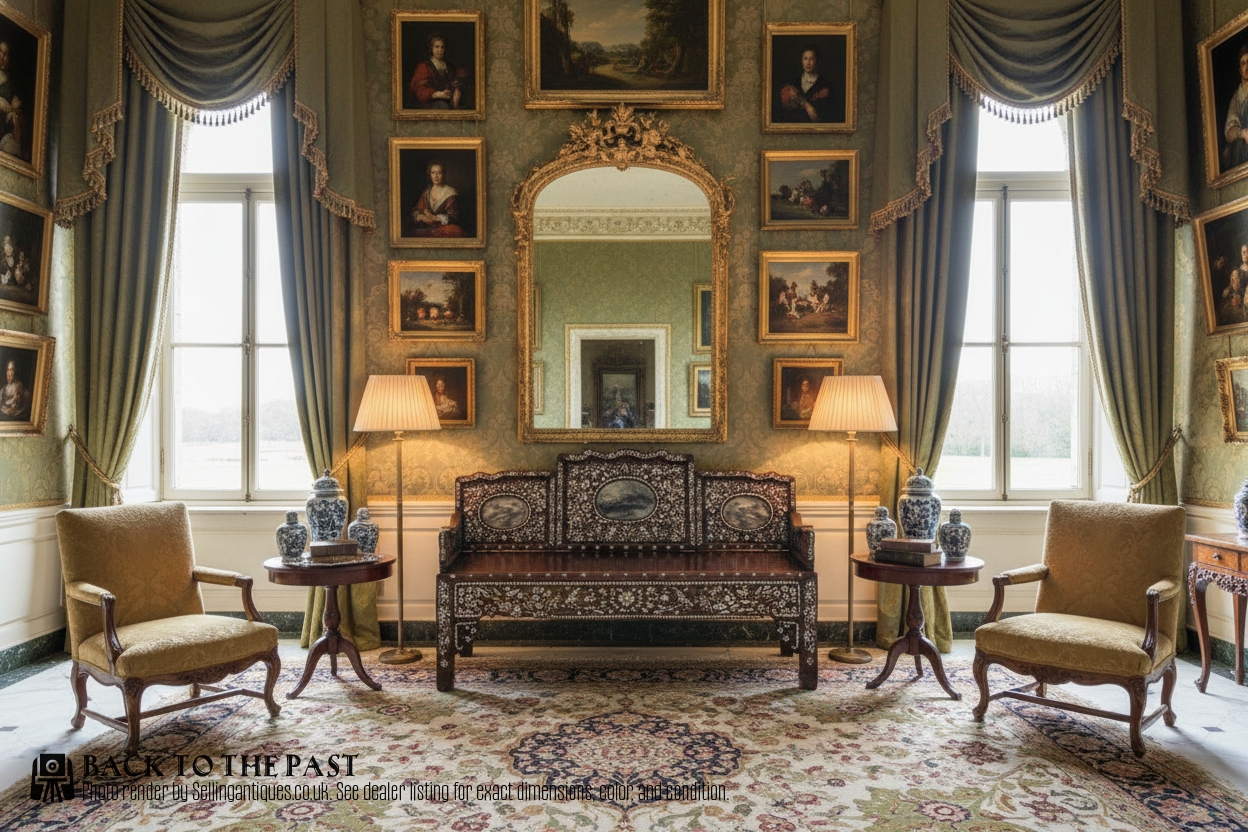
Dark Wood Chinese Bench
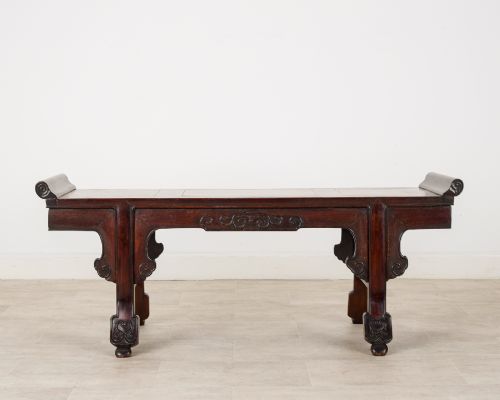
A dark wood chinese bench encompasses seating forms such as hall benches, window seats, settees, day beds, and corner seats spanning the nineteenth century through the Edwardian period. These pieces originate from regional Chinese traditions, Qing Dynasty aesthetics, and Chinese export workshops, carrying practical seating designs shaped by local craftsmanship.
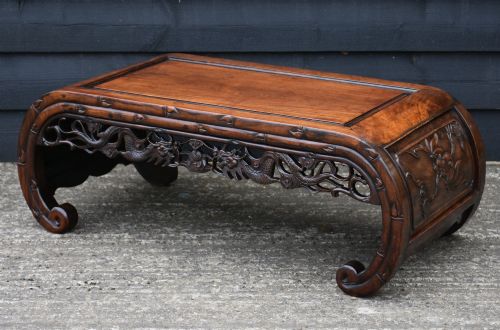
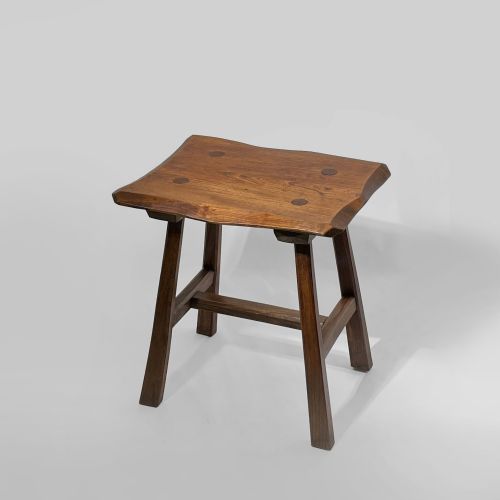
The selection on this page relies heavily on hardwood, elm, rosewood, and huali wood, alongside related low tables and stools sharing similar timber properties. Buyers will encounter rustic vernacular forms alongside more formal carved hall seats featuring dragon details.
Materials and construction methods
Construction relies on dense timbers such as rosewood, huali wood, hongmu, and elm, providing structural integrity for benches, day beds, and low tables. Artisans shaped these heavy woods using traditional joinery methods suited to plank-top trestles and framed seating.
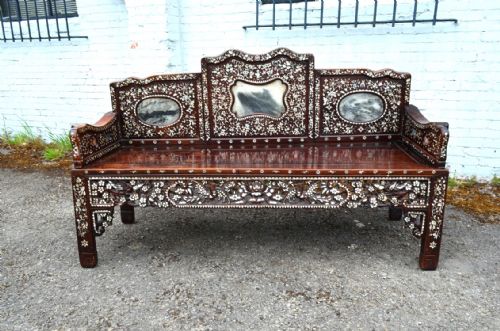
Surface ornamentation incorporates carved dragon details, mother of pearl inlay, bone inlay, and lacquer work. These decorative techniques sit directly within the timber structure of Qing Dynasty and export pieces.
Current listings feature items from the nineteenth century, Edwardian period, and nineteen hundred, utilising elm, rosewood, huali wood, and hongmu.
Distinguishing quality in timber seating
Quality rests in the crispness of the carved wood details, such as dragon motifs, and the integration of inlays like mother of pearl or bone. Dense timbers like rosewood and huali wood display different levels of figuring and natural grain depth depending on the original selection.
Structural execution separates utilitarian items from finer examples, showing in the tightness of joints across plank-top trestles, hall benches, and day beds. The handling of rustic elm versus formal Qing Dynasty hardwood dictates the overall refinement of the piece.
The Dark Wood Chinese Bench Glossary
- Hongmu
- A dense, dark tropical hardwood used in traditional Chinese furniture making. It translates literally to red wood and provides heavy, durable framing.
- Huali wood
- A prized fragrant hardwood utilised in Qing Dynasty seating and tables. It exhibits distinct grain patterns and resilience.
- Opium table
- A low table form designed for use while seated on cushions or platforms. These pieces share materials with matching benches.
Dark Wood Chinese Bench: Frequently Asked Questions
How do I use a Chinese bench today?
These benches function well as window seats, hallway seating, or low furniture accents within modern rooms. Their sturdy hardwood construction supports everyday placement.
Placing a bench in a hallway or living space allows the carved timber and inlay details to serve as a focal point.
What woods are typical for these benches?
Common timbers include dense hardwoods like rosewood, huali wood, and hongmu, alongside robust elm. Each material contributes a different weight and grain pattern to the seating.
Dark hardwoods hold deep patination from age, while elm examples often lean towards a more rustic vernacular appearance.
How do I date a Chinese bench?
Dating relies on stylistic markers from the nineteenth century, Qing Dynasty aesthetics, and Edwardian influences. Construction methods and joinery types also offer clues to the period.
Comparing carved motifs, such as dragon details, against known regional styles helps narrow down the age of the piece.
What is an export bench?
Export pieces were created specifically for international markets outside China during the late nineteenth and early twentieth centuries. They often incorporated decorative elements like mother of pearl inlay.
These items blend traditional Chinese forms with design preferences popular among foreign buyers of the period.