
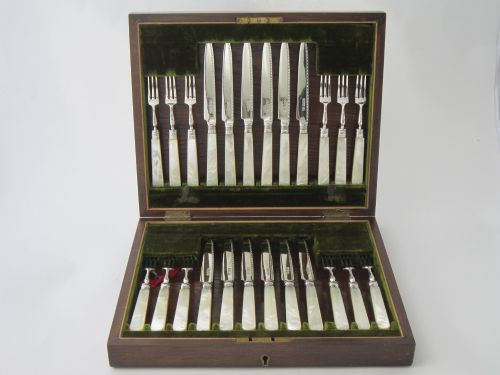
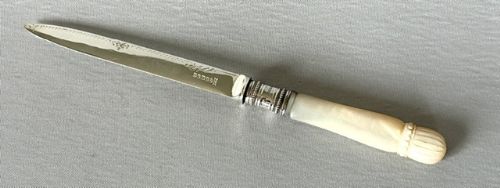


Mother of Pearl Knife
A mother of pearl knife brings natural iridescence and refined metalwork to the table, offering a tactile piece of history for daily use or display.
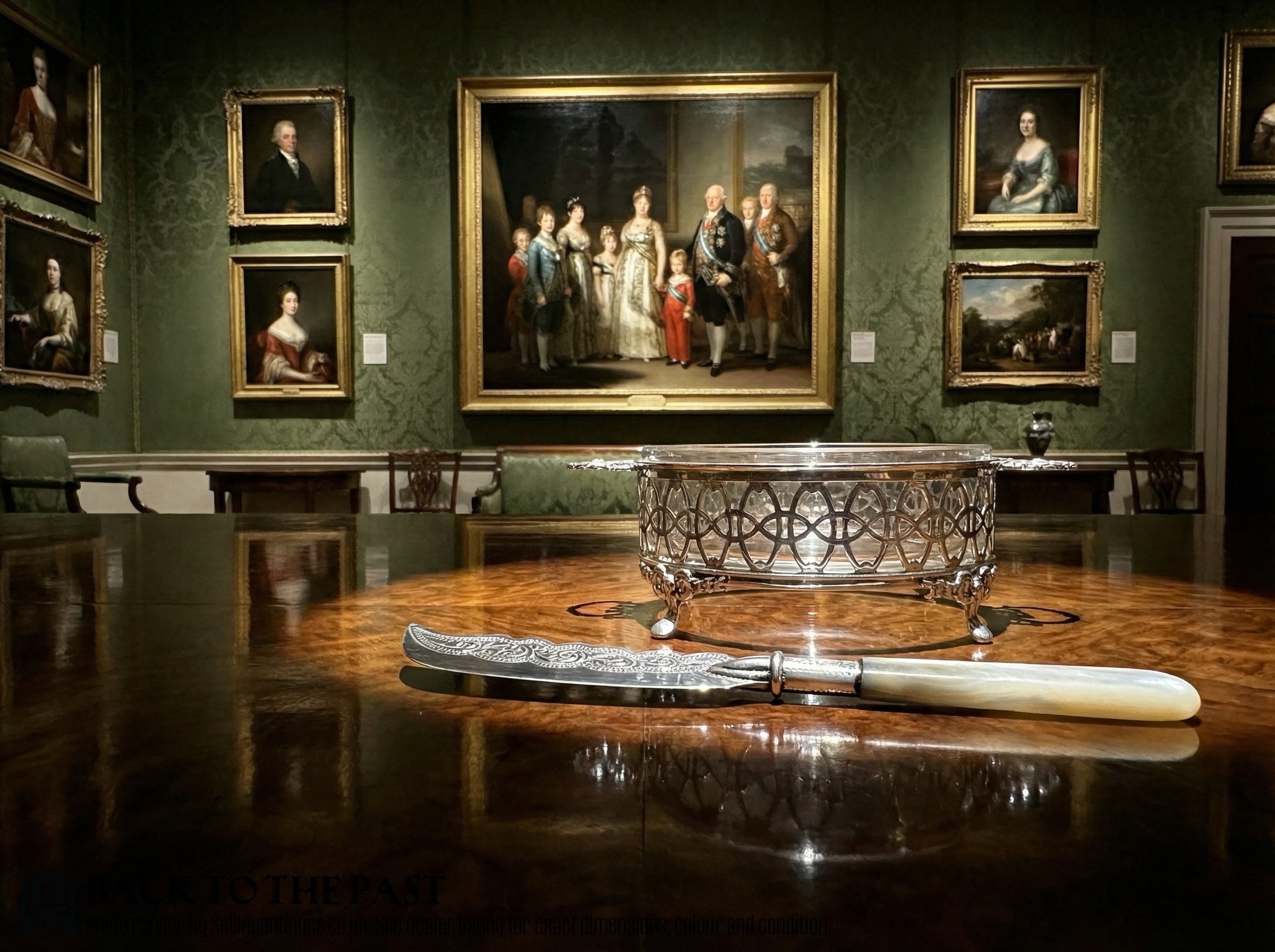
Mother of Pearl Knife
When you search for a mother of pearl knife, you encounter a specialised piece of cutlery designed for specific dining tasks, desk duties, or travel. The pieces on this page span the 18th century, Victorian, Edwardian, and George V periods, representing diverse craftsmanship.
You are most likely to meet fruit knives, butter knives, cake knives, and folding pocket pieces alongside desk accessories such as letter openers. Many survive within fitted presentation boxes lined with velvet, often paired with matching forks or as part of larger cutlery sets.
How they were made
The construction unites organic shell handles with metal blades fashioned from sterling silver, silver gilt, silver plate, or steel. Craftsmen shaped the lustrous nacre into scaled handle plates, securing them tightly to metal tangs with tiny pins.
Blades frequently received delicate engraved decoration or pierced work, particularly on fruit and cake knives produced in centres like Sheffield and Birmingham.
Mother of Pearl Knife Retail Price Guide 2026
Typical asking prices for mother of pearl knife among the pieces listed under this phrase on Sellingantiques today, from the lower quarter to the upper quarter. They describe what is for sale here now, not the wider market.
What varies in quality
Quality rests in the depth of iridescence and the integrity of the mother of pearl handle plates, alongside the crispness of the blade's engraved or pierced ornamentation. Superior examples maintain unblemished shell surfaces free from deep hairline cracks.
The presence of an original fitted case or a matched pairing with a fruit fork elevates the piece, as does clear silversmith hallmarking denoting the assay office and date of manufacture.
Hilliard & Thomason·Allen & Darwin·The Atkins Brothers
The Mother of Pearl Knife Glossary
- Mother-of-pearl
- The hard, iridescent internal layer of certain mollusc shells. It provides a shimmering, durable handle material for fine cutlery.
- Tang
- The extension of the metal blade that runs into or through the handle. In these pieces, small pins typically secure the handle scales to this metal spine.
- Nacre
- An alternative term for mother-of-pearl, describing the organic-inorganic composite material secreted by oysters and other molluscs.
- Assay mark
- A stamp indicating the purity of the precious metal and the office where it was tested. British pieces often display these symbols on the silver blade.
- Pierced work
- Metal cutting technique creating openwork designs on the blade or mount. This decorative method appears frequently on fruit and cake servers.
Mother of Pearl Knife: Frequently Asked Questions
What were mother of pearl fruit knives used for?
These utensils were created to slice acidic fruits like peaches and citrus without causing the metallic discolouration that steel blades inflicted upon the flesh.
The natural shell handle and silver blade resisted fruit acids, keeping both the food tasting fresh and the cutlery looking pristine during formal dining.
Can I use these knives for daily dining?
Many people enjoy using antique fruit and butter knives for light daily meals, though their delicate construction requires mindful handling.
Hand washing and careful storage in fitted boxes or lined drawers will preserve the materials for future generations of collectors.
How do I date an antique knife?
Dating relies heavily upon the maker marks, town hallmarks, and monarchical duty stamps struck directly into the metal blades.
Stylistic cues such as the shape of the handle, the box lining materials, and the engraving style also point towards specific eras like the Victorian or Edwardian periods.