


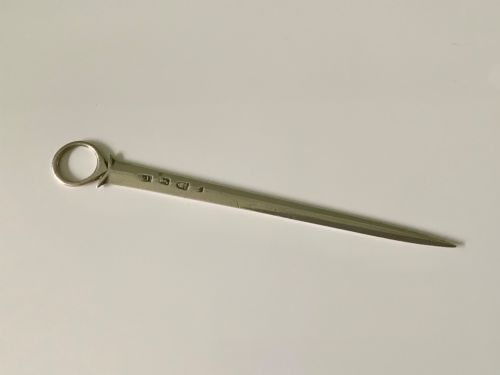


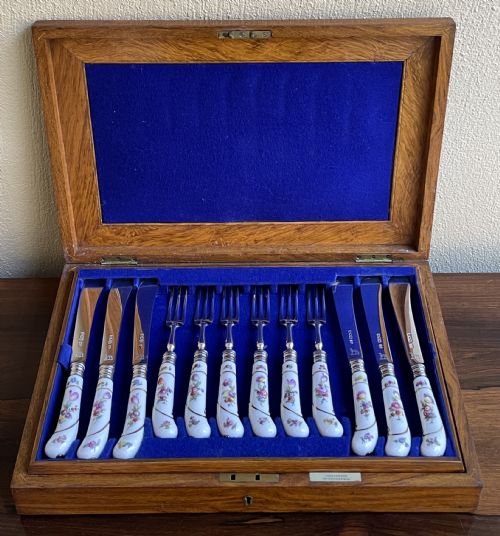


Hallmarked Silver Knife
When you search for a hallmarked silver knife, you look for a piece of historic tableware or desk ware carrying official assay office marks.
Hallmarked Silver Knife
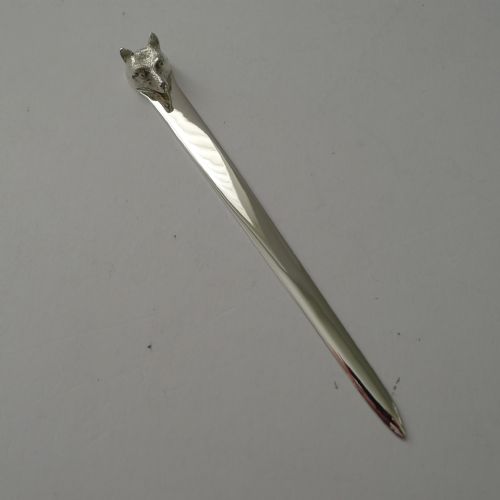
A hallmarked silver knife encompasses various forms of cutlery and desk accessories found across this selection. Buyers find functional pieces like fruit knives, butter knives, and desk letter openers produced during different historical eras.
The most common iterations on this page include Victorian and Edwardian fruit knives with mother of pearl handles, alongside Georgian cutlery and letter openers. These items served dining tables and writing desks in past centuries.
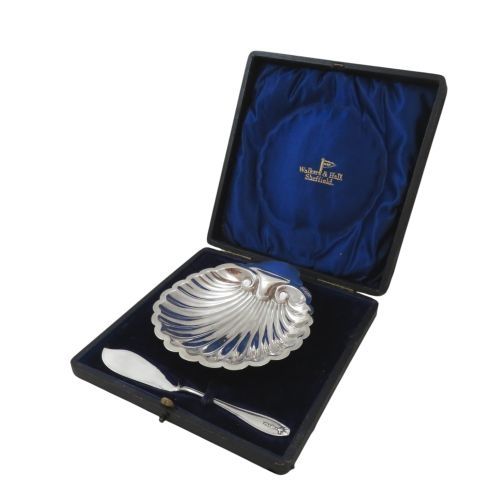
Pieces range from single pocket knives to cased sets for butter and dessert, reflecting the formal dining and correspondence habits of Georgian, Victorian, and Edwardian households.
How they were made
Silversmiths utilised sterling silver and solid silver for blades, handles, and mounts, frequently combining the metal with organic materials such as mother of pearl, tortoiseshell, agate, and ivory.
Blades and implements often incorporated steel for cutting edges, while handles were shaped, carved, and riveted to tangs by hand in manufacturing centres like Sheffield, Birmingham, and London.
Assay offices struck official hallmarks directly onto the silver components to guarantee metal purity, recording the year, town mark, and maker's stamp.
Several folding fruit knives still conceal tiny hidden picks alongside their blades for spearing elusive segments at the Victorian dessert table.
What varies in quality
Quality depends on the crispness of the original chasing, engraving, and piercing on the silver blade or handle, alongside the preservation of the assay marks. Sharper, deeper decorative details indicate superior initial craftsmanship.
The condition and snugness of fitted presentation cases, combined with the integrity of organic handle materials like mother of pearl or tortoiseshell, separate standard examples from finer collector pieces.
Asprey·The Goldsmiths & Silversmiths·Moses Brent·A. Barrett·Adie Brothers·Charles Boyton·Allen & Darwin·Mappin & Webb·Henry Holland·Hilliard & Thomason·Yapp and Woodward
The Hallmarked Silver Knife Glossary
- Hallmark
- A series of official marks stamped on precious metal items to show the standard of purity, the assay office, and the date letter.
- Sterling silver
- An alloy of silver containing 92.5 percent by mass of silver and 7.5 percent by mass of other metals, usually copper.
- Assay office
- A body responsible for testing the purity of precious metals and stamping items with hallmarks.
- Mother of pearl
- An iridescent organic layer forming the inner shell layer of pearl oysters, commonly used for knife handles.
- Letter opener
- A knife-like tool used to open envelopes, frequently matched with desk sets and silver handles.
Hallmarked Silver Knife: Frequently Asked Questions
How do I read a silver hallmark?
A standard British hallmark consists of a sequence of stamps including a maker's mark, a purity standard mark such as a lion passant for sterling, a town mark indicating the assay office, and a date letter.
Matching the date letter against official assay tables reveals the exact year the item was tested and certified.
Were silver knives used for eating fruit?
Victorian and Georgian households used specialised fruit knives because standard steel cutlery reacted unfavourably with the acid in fresh fruit, causing unpleasant metallic tastes and staining.
Silver and mother of pearl avoided this chemical reaction, preserving both the flavour of the food and the appearance of the blade.
How should I clean antique silver?
Use a soft microfiber cloth and a mild, non-abrasive silver polish formulated specifically for antique metalwork to remove tarnish gently.
Avoid harsh scrubbing or chemical dips that can strip away original patination and damage organic handle materials like mother of pearl or tortoiseshell.
Can I use these knives daily?
Many antique silver knives remain structurally sound for occasional contemporary use at the dining table or desk.
Hand washing is essential, as modern dishwashers use harsh detergents and high temperatures that ruin antique silver and loosen handle adhesives.