



Antique Silver Fruit Knife
An antique silver fruit knife brings a touch of pocketable nineteenth-century elegance to the table, and collectors prize them for their ingenious folding mechanisms and engraved blades.
The Nature of Antique Silver Fruit Knives
When you search for an antique silver fruit knife, you are looking at pocket-sized folding utensils designed specifically for slicing fruit during the Victorian and Edwardian eras. These portable pieces allowed diners to enjoy citrus and stone fruits without the acid tarnishing a standard steel table blade.
The versions you are most likely to meet on this page span the Victorian and George V periods, featuring compact folding mechanisms that tuck safely into a pocket or original case. Many examples combine precious metal with carved handles, bridging the gap between personal accessory and dining tool.
Makers utilised sterling silver for the blades and matched them with tactile handle materials. Forms range from straightforward folding pocket knives to ornate fish-shaped designs and combination tools incorporating nut picks.
Materials and Construction
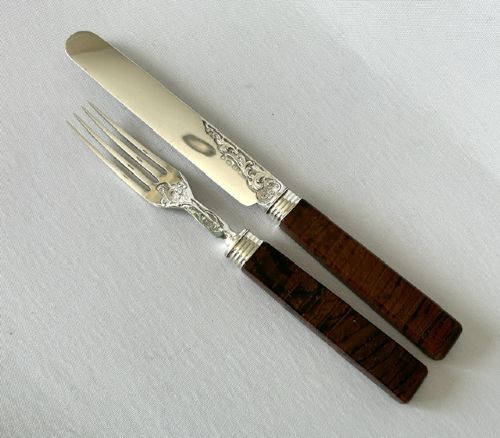
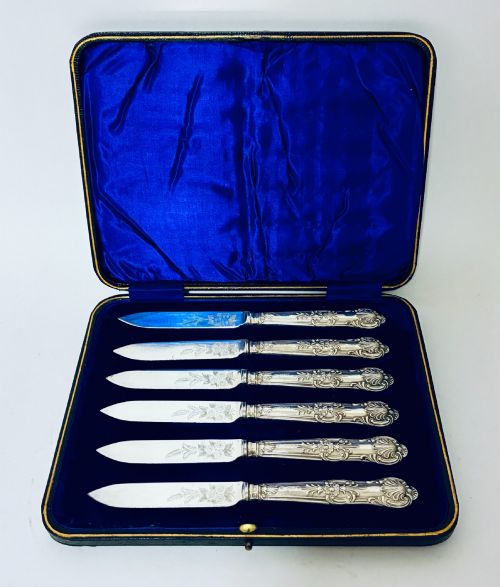
The construction of these pieces relies on solid sterling silver, often hallmarked for Sheffield to indicate the provenance of the blade. Silversmiths engraved these metallic surfaces with floral motifs, scrolls, or geometric patterns to catch the light.
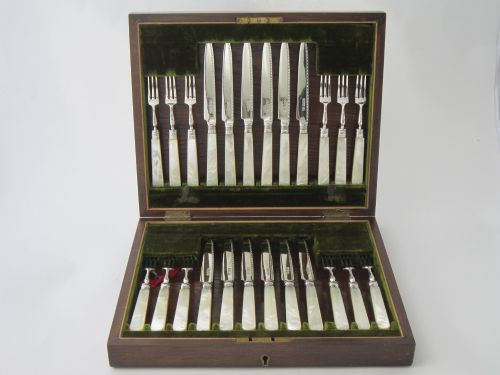
Handles are predominantly formed from mother of pearl, though tortoiseshell also appears among the recorded examples. These organic materials were shaped and riveted to the silver frame to create a comfortable, smooth grip for the user's hand.
Listings feature sterling silver and mother of pearl across Victorian and George V periods.
Assessing Quality and Distinction
The distinction between standard examples and the top of the range lies in the crispness of the blade engraving and the complexity of the handle silhouette. Fish-shaped profiles and combination tools with integrated nut picks represent a higher tier of design ambition.
The survival of an original case elevates a piece by showing how the item was kept and protected over the decades. Furthermore, the iridescence and smoothness of the mother of pearl handle panels contribute significantly to the visual appeal of the upper tier.
William Needham·George Unite
The Antique Silver Fruit Knife Glossary
- Sterling silver
- A silver alloy containing 92.5 percent pure silver by mass, providing the durable metal standard used for these blades.
- Mother of pearl
- The iridescent internal layer of mollusc shells, carved into scales to form the decorative grip panels of the knife.
- Hallmark
- A series of official marks stamped onto precious metal objects to certify the standard of purity and the assay office.
- Folding knife
- A pocket implement with one or more blades that pivot into the handle for safe carriage.
Frequently Asked Questions
Why did people use special fruit knives?
Victorian diners used sterling silver fruit knives because standard steel cutlery reacted poorly to the acids in fresh fruit, leaving an unpleasant metallic taste on the food.
Silver remained chemically stable against fruit juices, making these dedicated pocket utensils essential for polite dining during the period.
How do I date these folding knives?
Dating relies heavily on the hallmarks stamped directly onto the silver blade, which indicate the assay office and the year of manufacture.
Stylistic clues such as the handle shape and the complexity of the blade engraving also help narrow down whether a piece originates from the early Victorian era or the Edwardian period.
Were these items meant to be carried?
These pocket knives were designed to be portable personal accessories, often slipped into a waistcoat pocket or carried within a fitted leather case.
Their folding nature ensured the sharp edge remained safely tucked away until it was time to peel an apple or slice an orange.