


Mother of Pearl Furniture
Mother of pearl furniture brings iridescent geometric patterns into a room through intricate craftsmanship spanning Victorian, Syrian, and Japanese workshops.
Mother of Pearl Furniture
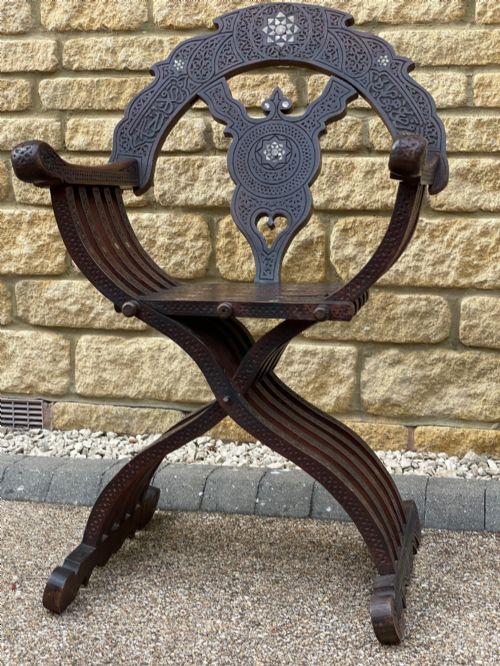
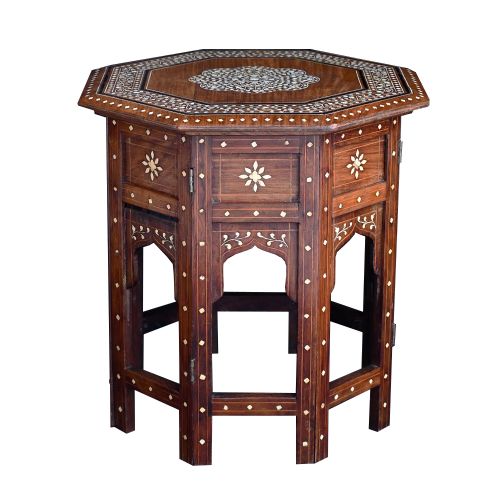
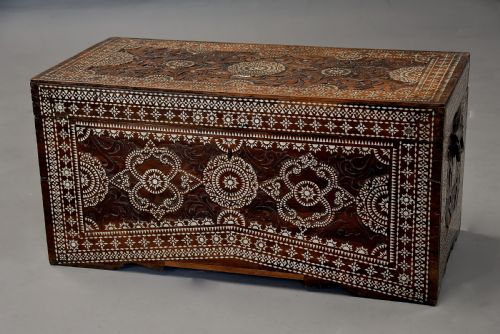
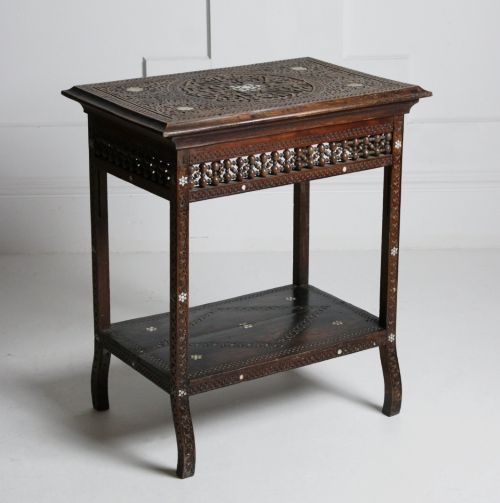
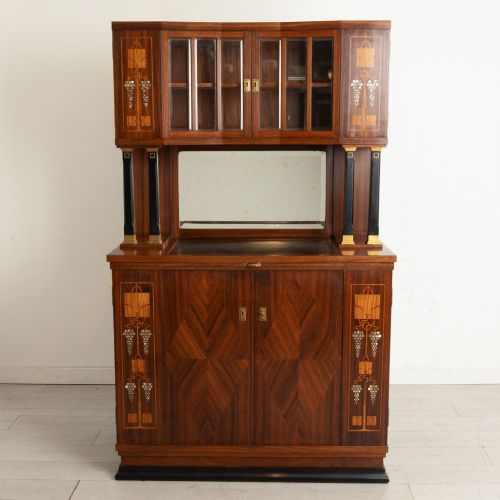
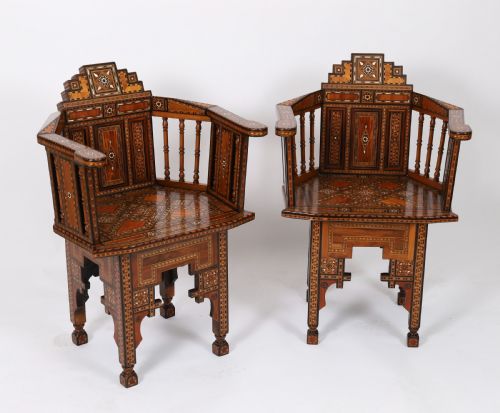
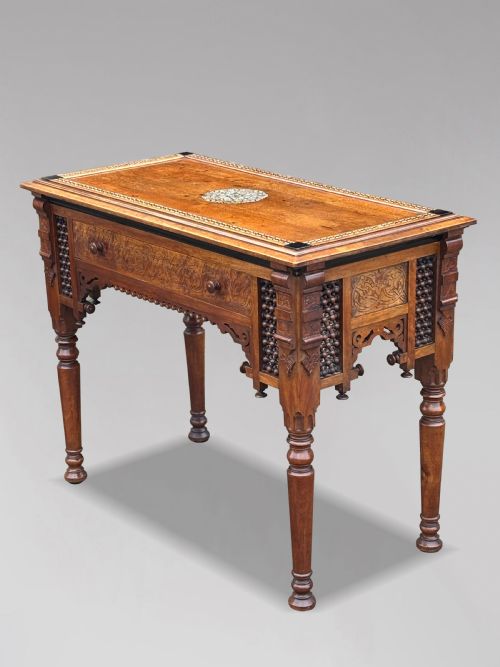
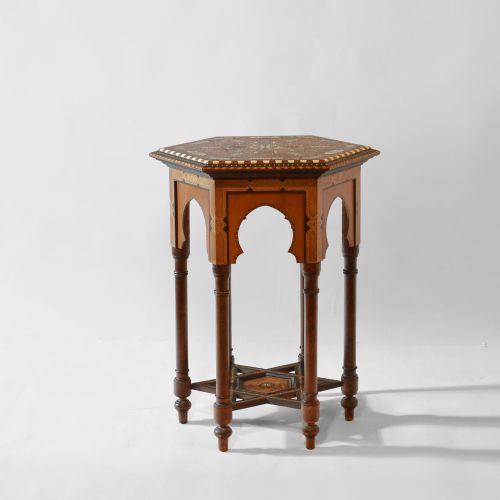
Mother of pearl furniture encompasses a diverse selection of decorative items designed for domestic use, ranging from occasional tables and display cabinets to armchairs and writing desks. When exploring mother of pearl furniture, buyers frequently encounter pieces originating from Syrian, Moorish, Anglo-Indian, and Japanese Meiji traditions.
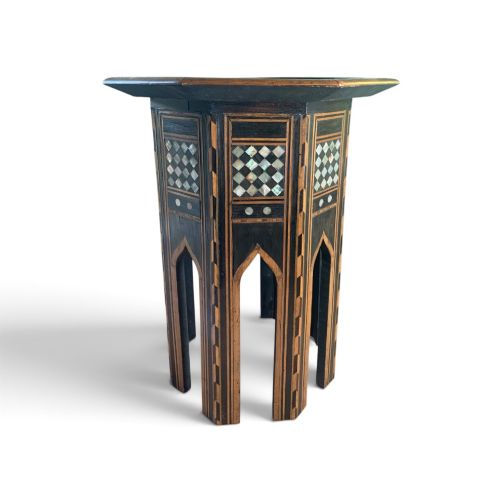
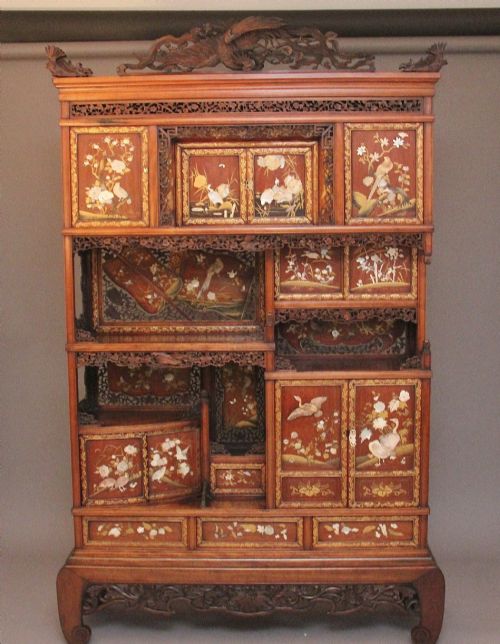
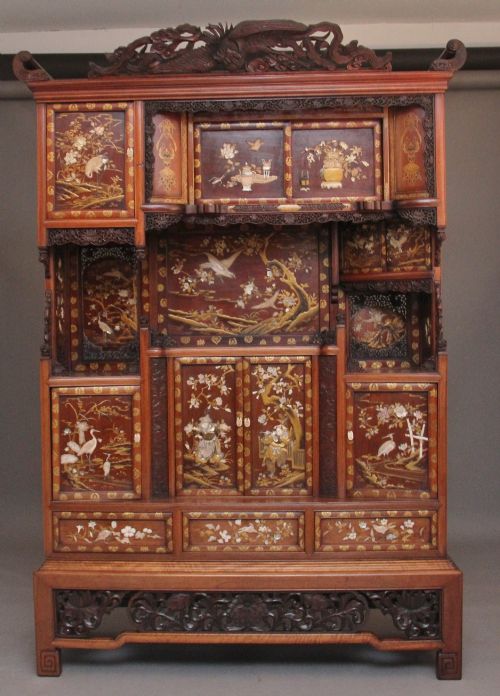
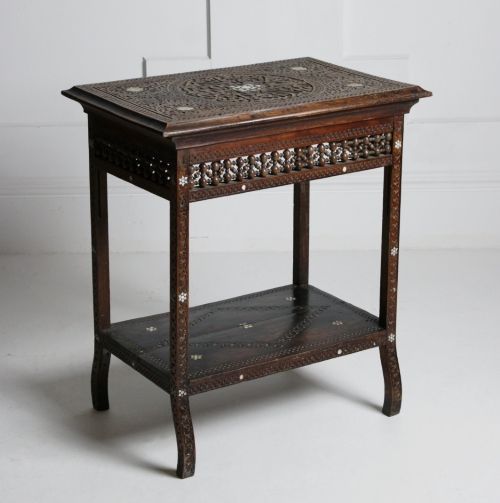
The regional origins dictate the physical form and ornamental vocabulary of the object. Syrian and Moorish examples often take the shape of hexagonal side tables and window seats, whereas Japanese pieces emerge as elaborate shodona cabinets.
How they were made
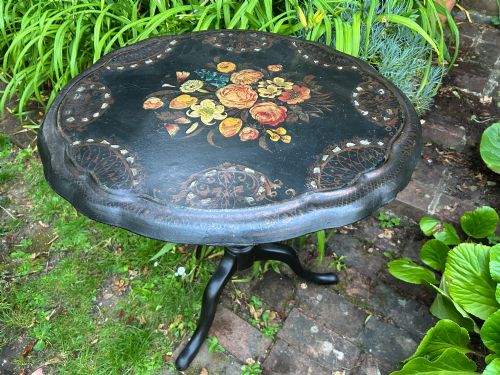
Craftsmen built these items using dense timbers such as walnut, mahogany, rosewood, ebony, and assorted hardwoods, alongside papier-mâché for specific European and Victorian wine or tilt-top tables. They set thin sections of iridescent shell and bone into carved recesses within the wooden base.
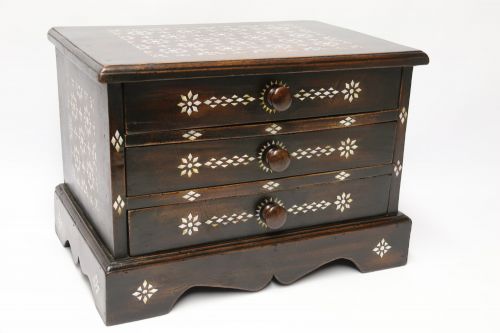
Makers secured the luminous inlay using traditional adhesives and surrounded the mother of pearl with geometric parquetry and intricate wooden or wire stringing. This meticulous method created a striking visual contrast between the dark timber and the shimmering natural material.
Current listings feature hardwood, walnut, rosewood, ebonised wood, bone, and lacquer.
What varies in quality
Quality rests upon the density and precision of the inlay work across the surface. Finer examples display tight, complex geometric tessellation with minimal gaps between the individual shell fragments and the surrounding wood.
The choice of primary timber and the structural integrity of the joinery further separate standard items from superior pieces. Workshop execution determines whether the piece retains its decorative coherence over decades of daily use.
Liberty and Company·August Ungethüm
The Mother of Pearl Furniture Glossary
- Parquetry
- Geometric mosaic woodwork formed by fitting small pieces of veneer together on a structure. It provides the patterned background that frames mother of pearl inlay on tables and cabinets.
- Shodona
- A Japanese Meiji period display cabinet featuring asymmetrical shelving and sliding doors. These large storage pieces often incorporate elaborate inlay work.
- Moorish Revival
- An architectural and decorative style popular in the nineteenth century that draws on Islamic design motifs. Items in this style typically utilise hexagonal forms and intricate surface patterns.
- Papier-mâché
- A composite material made from paper pulp or layers of paper bound with glue. It serves as a smooth black-lacquered base for painted and inlaid mother of pearl decoration on Victorian tables.
Mother of Pearl Furniture: Frequently Asked Questions
How do I care for inlaid furniture?
Keep these pieces away from direct sunlight and extreme humidity fluctuations to protect the delicate shell and timber.
Dust gently with a soft dry cloth and avoid harsh chemical polishes that can dislodge small pieces of inlay.
Where were these pieces made?
Production centres span across Syria, India, Japan, China, Austria, and Britain during the nineteenth and early twentieth centuries.
Each region applied distinct construction techniques and ornamental motifs to the wooden frames.
How do I distinguish regional styles?
Syrian and Moorish items frequently feature hexagonal geometries and intricate bone or pearl parquetry.
Japanese Meiji pieces present dark lacquered cabinetry with asymmetrical shelving, while Victorian examples often utilise papier-mâché.
What materials are used alongside pearl?
Craftsmen combined mother of pearl with animal bone, ebony, walnut, rosewood, and lacquered paper composites.
These contrasting materials accentuated the iridescent quality of the shell inlay.