
Monks Bench Seating
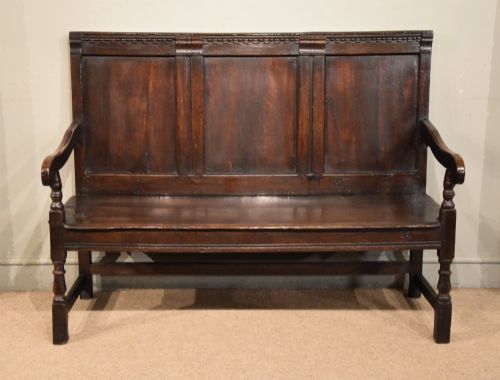
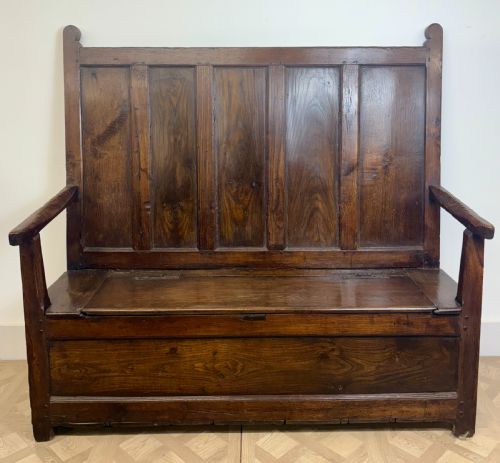
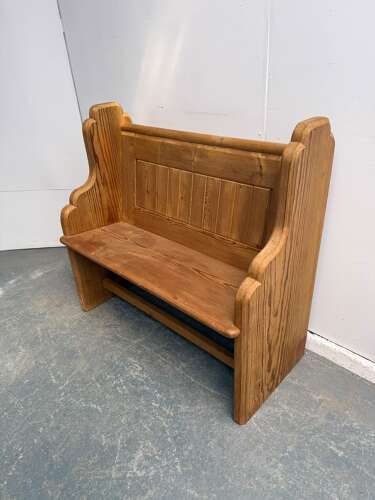
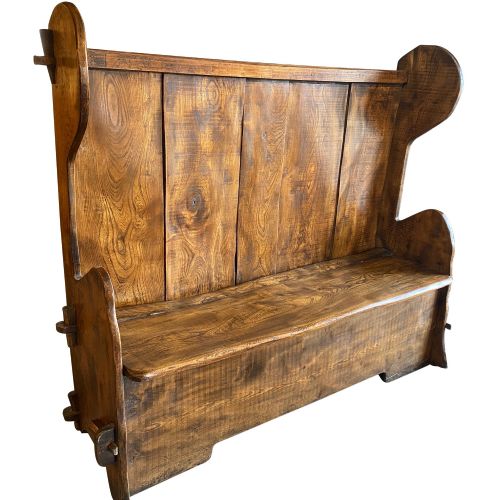
Monks bench seating brings sturdy timber utility and practical hallway storage together in traditional oak and pine forms that ground an interior.
Monks Bench Seating
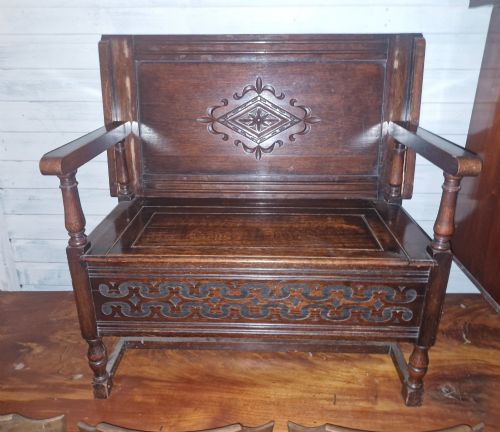
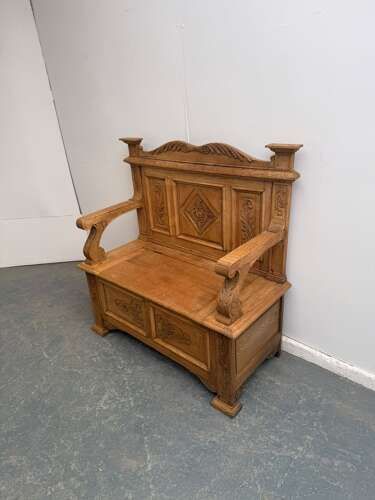
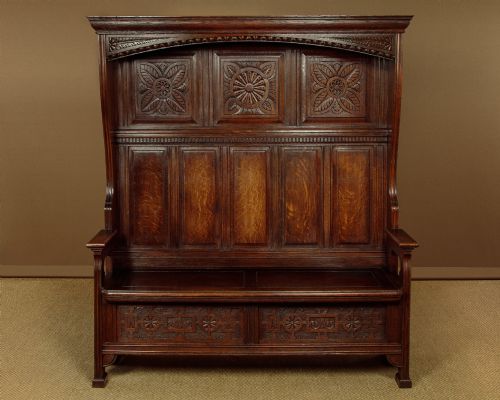
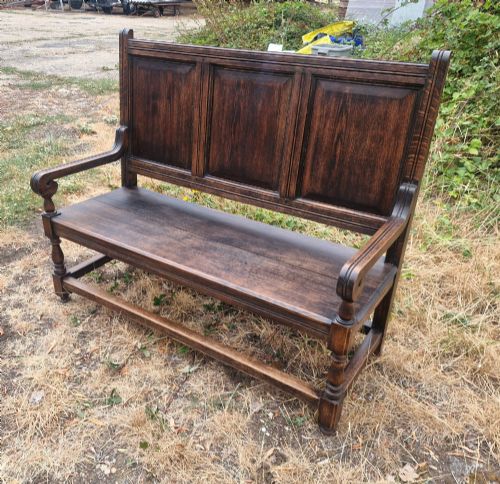
Monks bench seating encompasses heavy timber settles, hall benches, and convertible seats designed for entryways and living spaces. Buyers search for these pieces to gain enclosed storage beneath a seat while retaining a high panelled back that keeps draughts at bay.
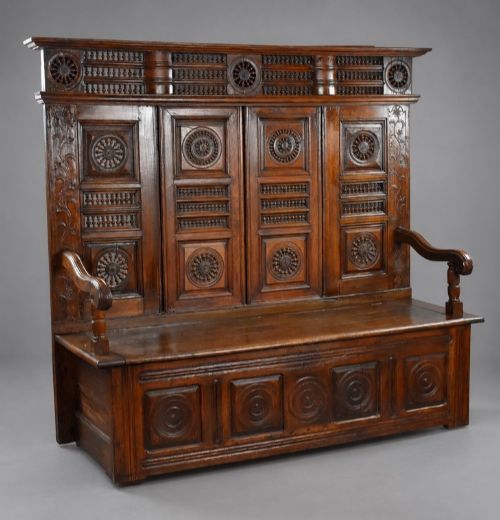
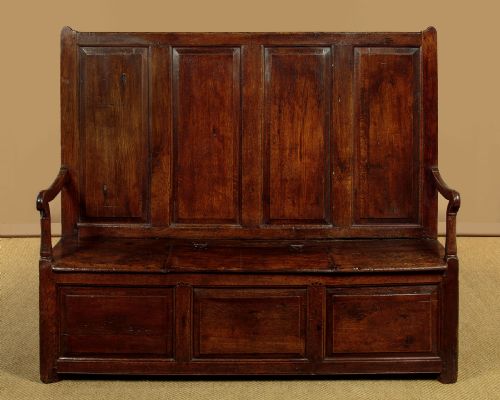
The versions met most frequently on this page date from the seventeenth century through to the nineteen-twenties, built predominantly in solid oak or pine. Forms range from compact hall seats with fold-over tops to large country house box settles with carved panelling.
How they were made
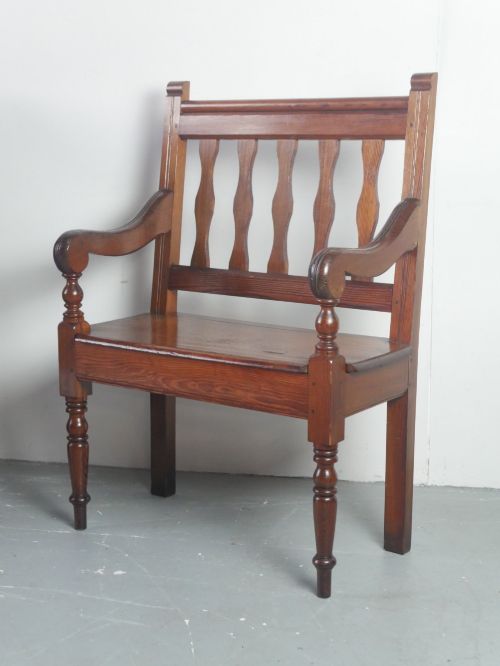
Joiners constructed these pieces using heavy timbers of oak, ash, elm, and pitch pine, joined with mortise and tenon joints to withstand decades of daily use. Surfaces received wax finishes, paint layers, or simple polish to protect the wood grain.
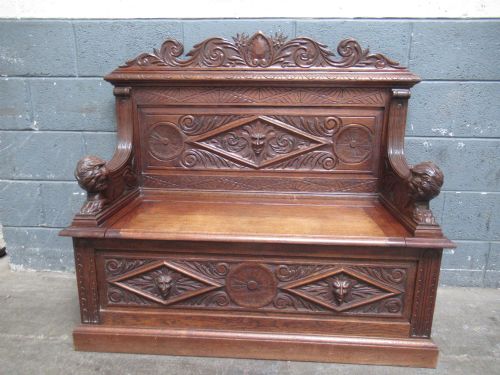
Carving, panel moulding, and turned spindle work decorated the backrests and arms, reflecting Jacobean revival, Gothic, or Arts and Crafts movements. Iron and brass hardware provided hinges and latches for the lift-up seats and storage compartments.
Listings feature pieces spanning from the seventeenth century through to the nineteen-twenties, constructed in oak, pine, elm, and ash.
What varies in quality
Timber selection and structural integrity define the distinction between standard country pieces and exceptional workshop examples. Heavy gauge oak with deep, crisp relief carving sits at the upper end, whereas standard pine or later utility builds represent simpler domestic craftsmanship.
Proportion and originality of components dictate overall merit. Pieces retaining their original hinges, unblemished box storage bases, and untouched patina command greater regard than those with extensive timber replacement.
Liberty·Shapland and Petter
The Monks Bench Seating Glossary
- Box settle
- A wooden bench featuring a closed storage compartment beneath the seat and a high panelled back. This form sheltered occupants from cold draughts in older homes.
- Fold-over top
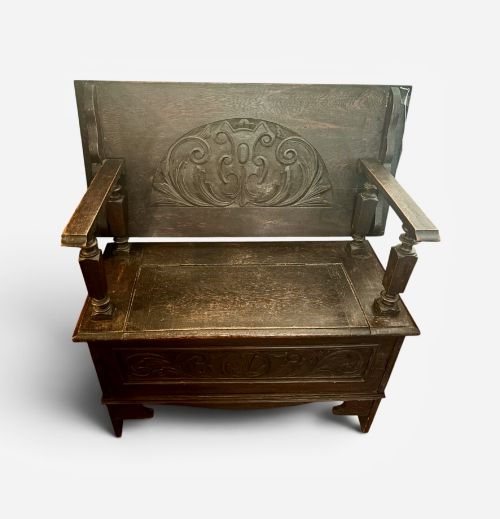
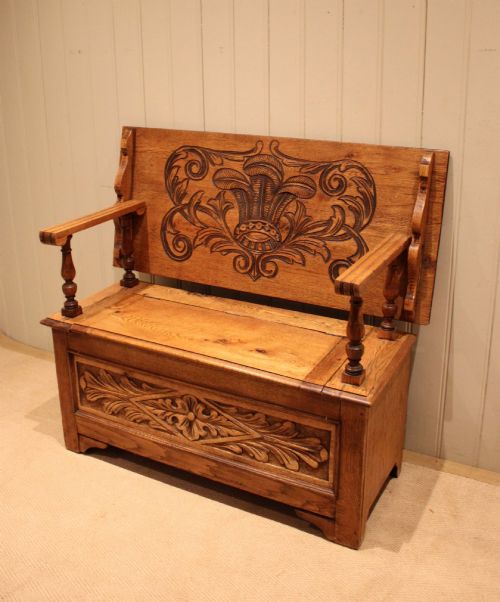
- A hinged backrest mechanism that tips forward over the arms to form a table surface. This dual-purpose design defines the traditional monks bench.
- Panel-back
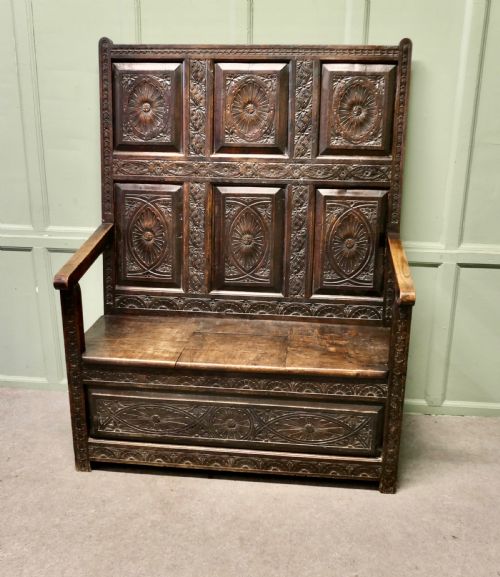
- A backrest constructed from fitted wooden panels within a frame, often decorated with carved motifs. It provides rigid structural support and insulation.
- Pitch pine
- A resinous softwood utilised for robust nineteenth-century domestic furniture. It yields a strong grain pattern when waxed or polished.
- Settle
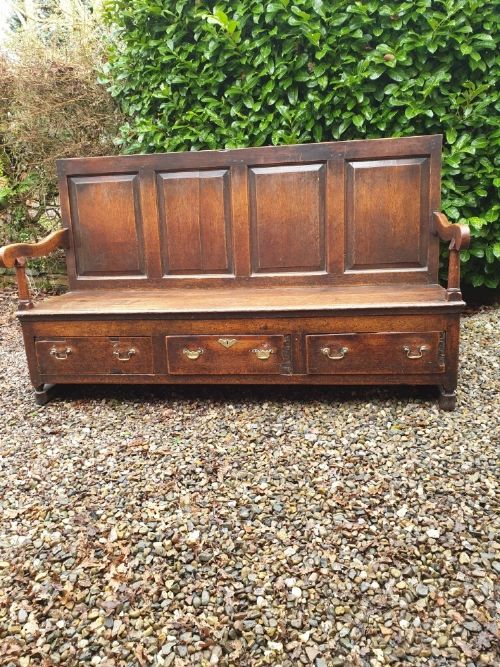
- A long wooden bench with solid arms and a high back designed to seat multiple people. It serves as a principal seating form in historical domestic interiors.
Monks Bench Seating: Frequently Asked Questions
What is a monks bench?
A monks bench is a convertible wooden seat featuring a backrest that folds down to create a flat table surface. The base typically incorporates a box compartment with a lift-up lid for storage.
These versatile items served dual functions in historical hallways and living spaces where floor space was at a premium.
How do I tell an 18th century settle apart from a Victorian one?
Seventeenth and eighteenth-century examples generally display pegged mortise and tenon construction, hand-split oak panels, and deep patination acquired through centuries of wax and handling. Victorian pieces often show machine-sawn timber and revival carving styles.
Examining the underside, nail types, and hinge fixings helps reveal the true period of construction.
Where should I place a hall bench?
Hall benches suit entryways, boot rooms, and wide corridors where their narrow depth allows them to sit flat against a wall. The enclosed seat provides practical storage for shoes and household items.
Keep solid timber away from direct heat sources to prevent the wood from splitting over time.
What woods were used for box settles?
Oak was the primary timber for early British settles, chosen for its strength and availability. Elm and ash also appeared in country builds.
Pine became widely utilised for nineteenth-century painted and waxed pieces, particularly in regional European variations.