




Modern British Still Life
Modern British still life works capture domestic objects and flowers through mid-century styles ranging from oil paintings on canvas to wartime watercolours.
Modern British Still Life
When you search for a modern british still life, you encounter works spanning the decades from the 1920s through the 1960s. These pieces take the form of wall art, paintings, and oil paintings created by English and Cornish artists.
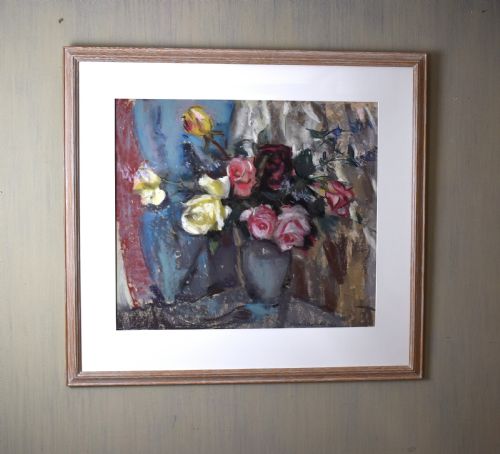
The subjects focus on domestic scenes, including cut flowers in pottery jugs, bowls of apples, kitchen geometry, and roses. You find both signed original studies and works attributed to specific artists or created in the manner of known painters.
How they were made
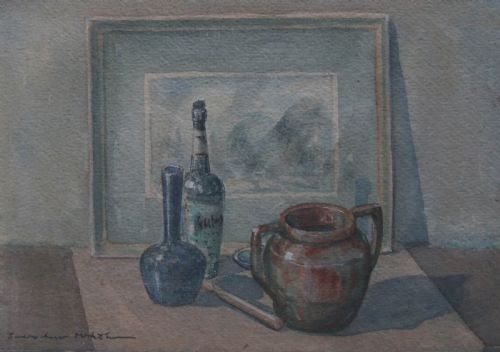
Artists executed these compositions using oil paint on canvas or board, watercolour on paper, ink, and pastel. Works frequently incorporate wood framing to present the flat art for interior display.
Techniques range from traditional painterly application to geometric explorations influenced by cubism. Painters deployed these mediums during the 1930s, 1940s, and 1950s to record everyday interior subjects.
One canvas comes complete with a painted lucky charm of lily of the valley flowers sent as a token of friendship.
What varies in quality
Quality rests in the sureness of the brushwork and the strength of the composition, where domestic objects gain weight and balance through deliberate handling of paint or watercolour. Stronger examples demonstrate confident command of form, whether exploring kitchen geometry or depicting flowers in a jug.
The distinction between works lies in the directness of execution and the clarity of provenance linking the piece to a named painter or regional school. Greater artistic conviction separates casual studies from finished paintings that define the style.
Denis Mitchell·James Tower·Sir Matthew Smith·Edward Carter Preston·Lena M Alexander·James Kerr McArthur·Mary Fedden·Mark Ingram
The Modern British Still Life Glossary
- Still life
- An artwork depicting inanimate subject matter, typically commonplace objects such as flowers, fruit, and tableware. This genre allows artists to focus on colour, texture, and spatial arrangement within a domestic setting.
- Cubism
- An early twentieth-century avant-garde art movement that revolutionized European painting and sculpture. It breaks down subjects into geometric planes and multiple viewpoints.
- St Ives School
- A group of artists living and working in and around the Cornish town of St Ives. Their output contributed significantly to the development of British modernism.
- Provenance
- The chronological documentation showing the custody, control, and ownership of an artwork. Clear records help establish authenticity and historical context.
Modern British Still Life: Frequently Asked Questions
What subjects appear in modern british still life?
These works typically depict cut flowers in pottery jugs, bowls of apples, roses, and domestic kitchen geometry.
Artists arranged everyday indoor items to explore form, colour, and composition.
Which materials did artists use?
Painters worked with oil paint on canvas and board, watercolour on paper, ink, and pastel.
Many examples retain their original wood frames.
When were these artworks produced?
The listings span from the 1920s through the 1960s, encompassing wartime periods and the mid-century modern era.
Several pieces date specifically from the 1940s.
How do I display a framed painting?
These wall art pieces suit domestic interiors when hung at eye level on stable walls away from direct sunlight.
Proper placement protects the canvas, paper, and wood components from environmental damage.