


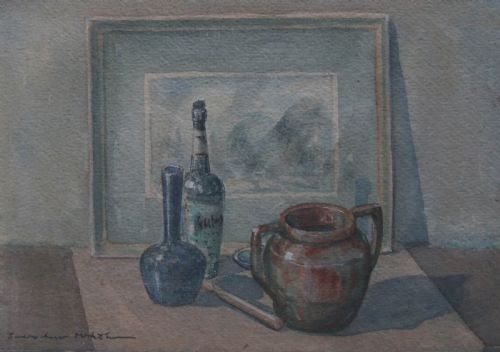

Tabletop Still Life Art
Tabletop still life art brings everyday objects like fruit, jugs, and baskets into focus through oil paint and canvas.
Tabletop Still Life Art
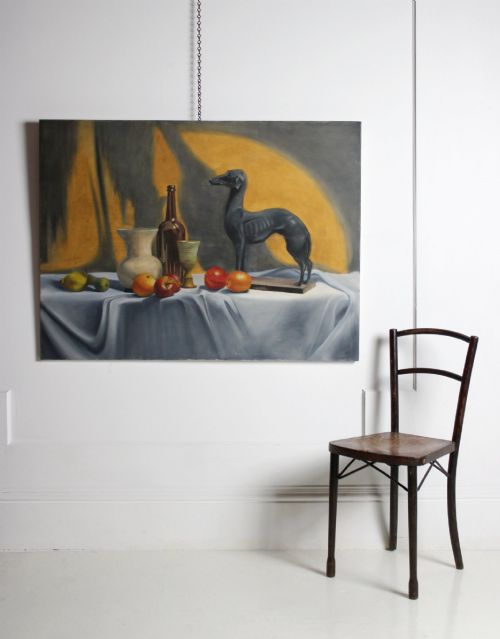
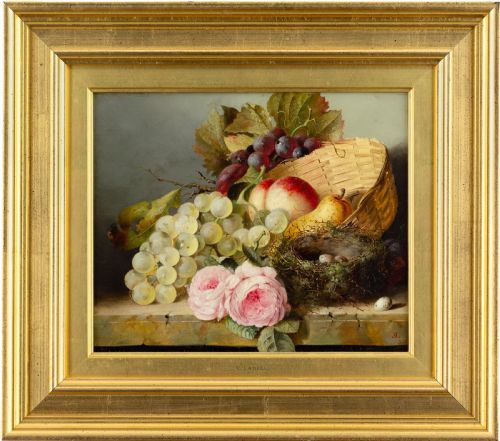
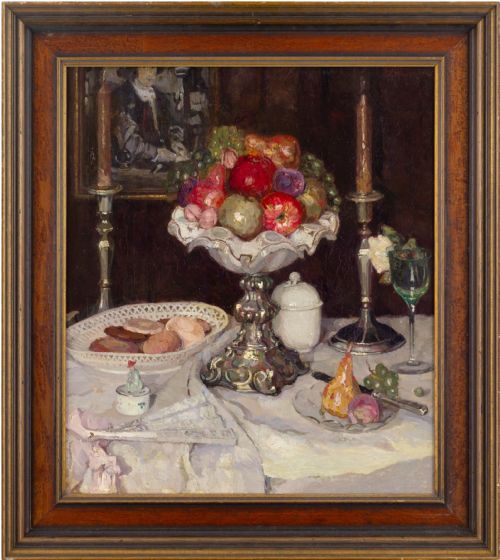
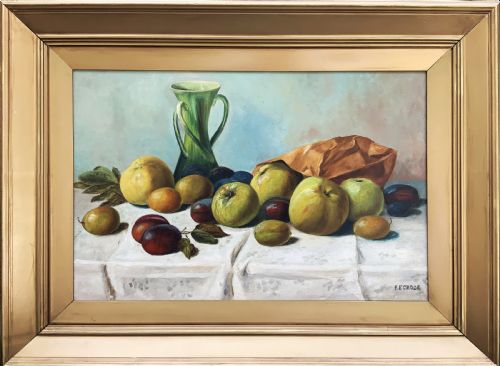
Tabletop still life art captures carefully arranged domestic subjects, most frequently featuring fruit, baskets, and vessels displayed on a surface.
The selections span from Victorian and Edwardian compositions to mid-century modern and post-impressionist interpretations.
Canvases in this selection originate from British, French, and broader European hands, utilising oil paint and watercolour across multiple decades.
Materials and construction
Makers build these works primarily using oil paint applied to woven canvas stretched over wooden supports.
Many of the paintings retain their original wooden frames, frequently enhanced with giltwood or gold leaf finishes.
This selection includes works from the Victorian, Edwardian, and mid-century periods, created using oil paint on canvas.
Distinctions in quality
Quality rests upon the confidence of the brushwork and the harmony of the palette, separating standard decorative studies from accomplished artistic interpretations.
The treatment of light on everyday objects reveals the depth of skill held by the painter at the time of execution.
Edward Ladell·Else Preußner·John Gilbey Bowles·James Kerr McArthur
The Tabletop Still Life Art Glossary
- Canvas
- A heavy woven fabric used as a surface for painting. It is typically stretched tightly across a wooden frame before work begins.
- Giltwood
- Wood that has been treated with a thin layer of gold leaf or metallic powder. It often appears on decorative framing.
- Post-Impressionism
- An art movement extending beyond impressionism that prioritises expressive forms and symbolic colour. It influences several pieces in this range.
- Watercolour
- A paint consisting of pigment suspended in a water-based solution. It offers a transparent medium distinct from oil paint.
Tabletop Still Life Art: Frequently Asked Questions
What periods do these paintings cover?
The works span from the Victorian and Edwardian eras through the 1930s, 1940s, 1950s, and mid-century modern period.
Each era brings distinct approaches to colour and composition within the tabletop genre.
What materials were used?
Painters relied predominantly on oil paint applied to canvas, supported by wooden frames.
A few pieces incorporate gold leaf or giltwood, and watercolour appears among the selection.
How should I display them?
These pieces suit traditional and mid-century interiors alike, anchoring dining rooms, studies, or living spaces.
Ensure they hang away from direct sunlight to protect the oil pigments and gilt frames.
Are these works signed?
Several pieces feature signatures from known painters, while others remain unsigned studies from European workshops.
Signatures help attribute works to specific creators active in the nineteenth and twentieth centuries.