
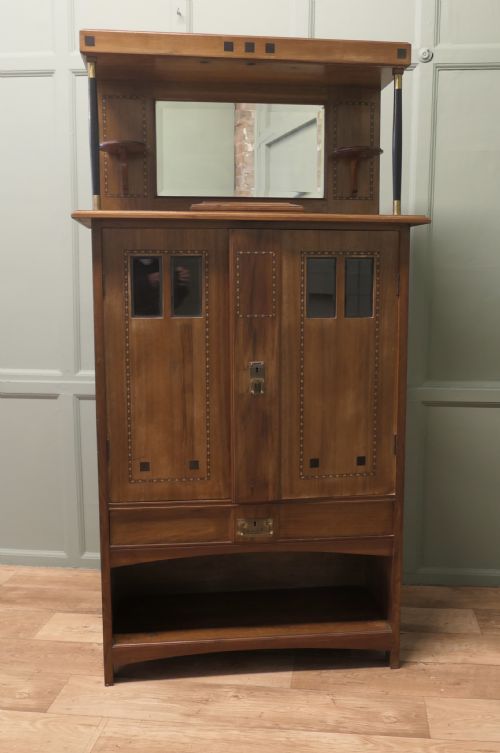
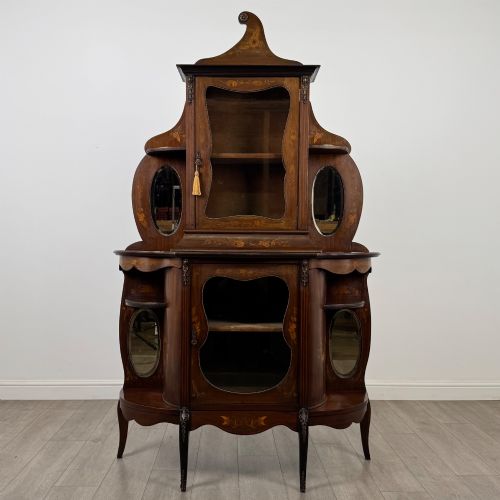
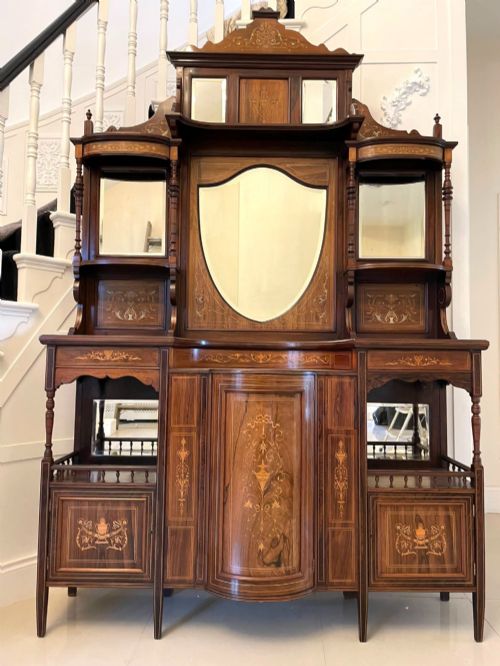
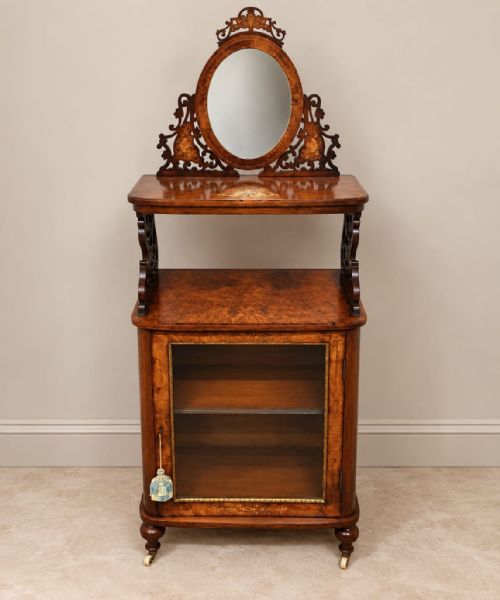

Mirrored Side Cabinet
A mirrored side cabinet brings light and polished timber into a room, offering both display space and concealed storage.
Mirrored Side Cabinet
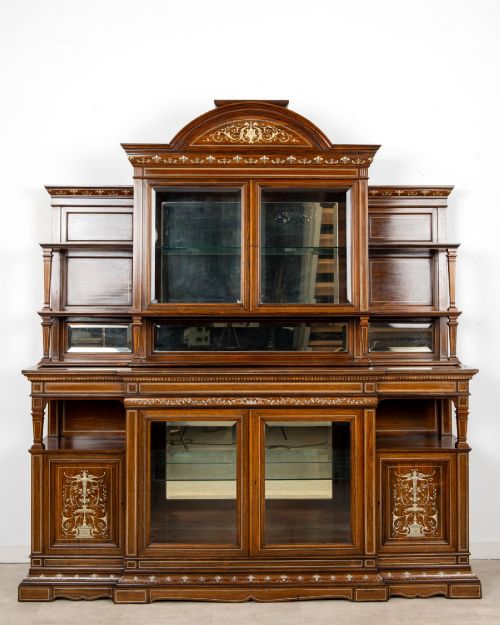
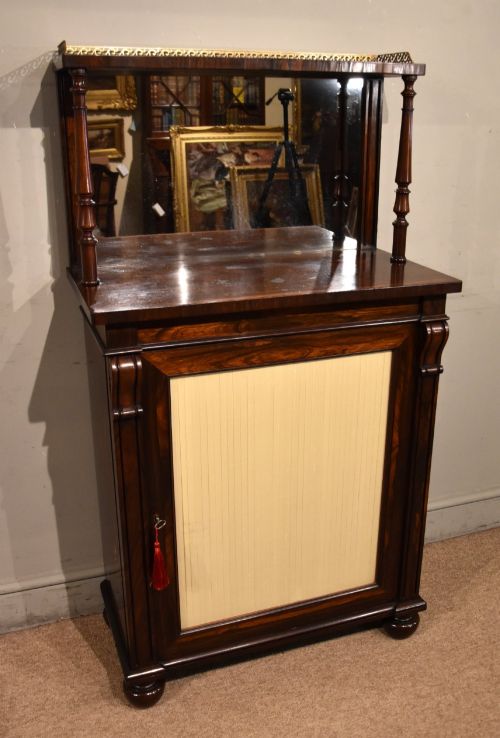
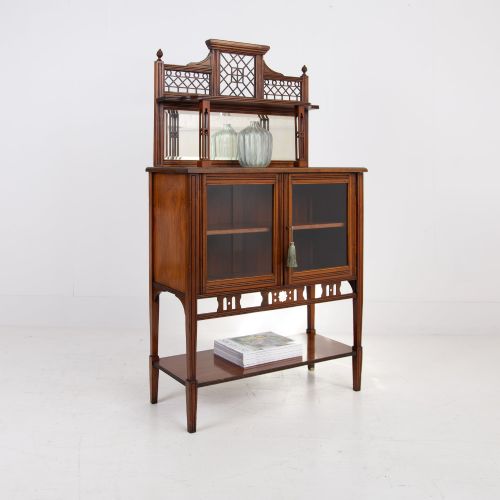
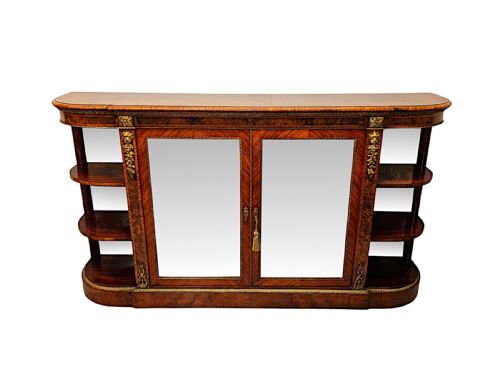
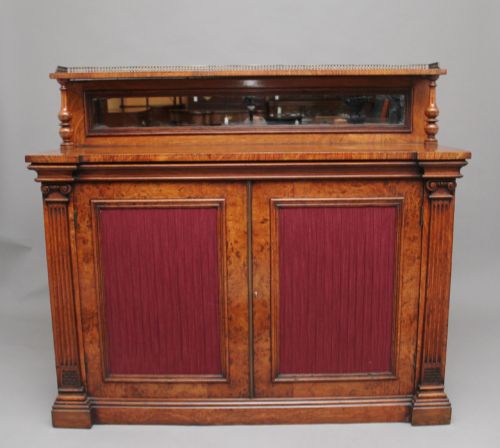
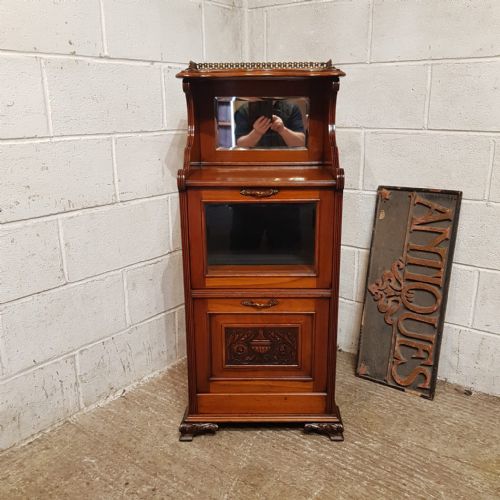
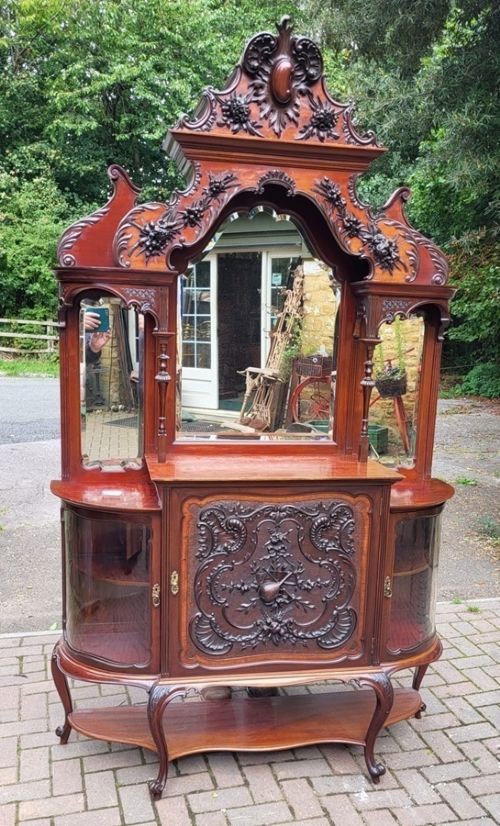
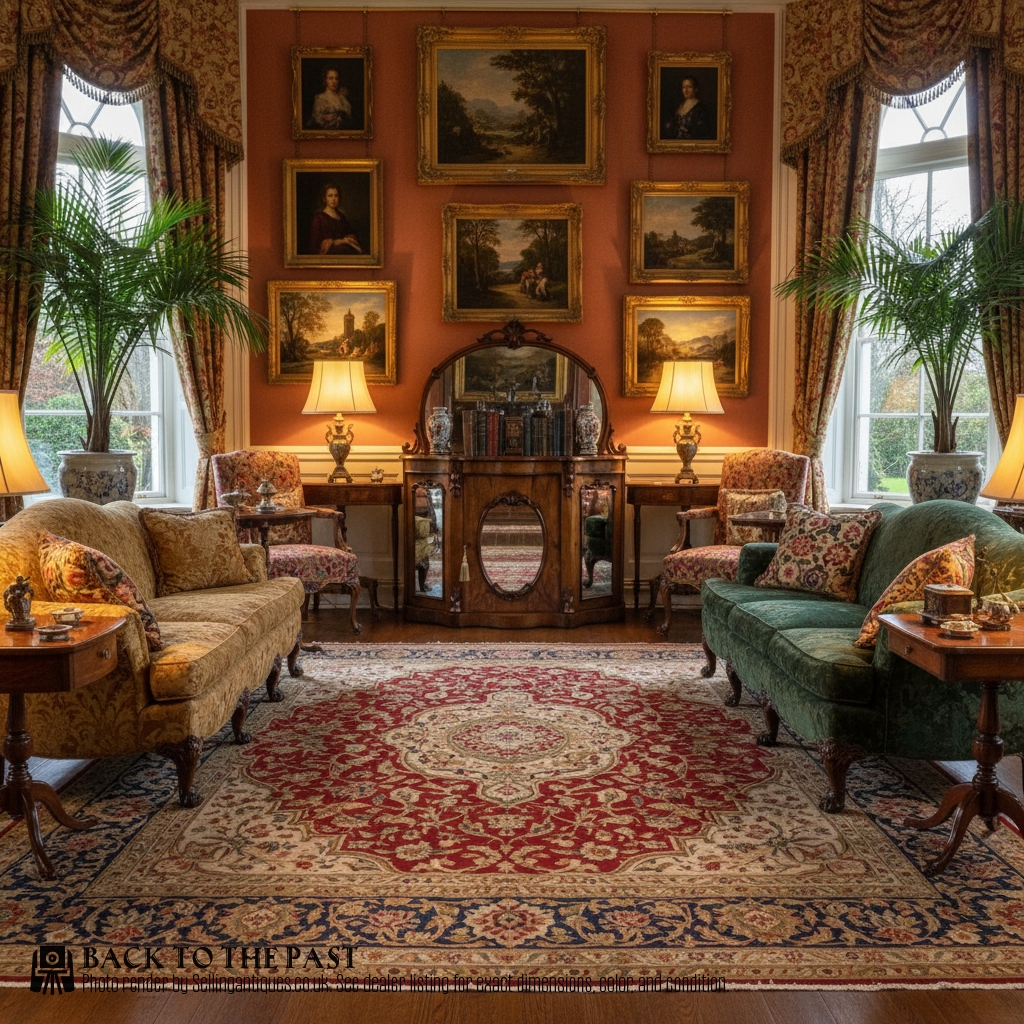
A mirrored side cabinet combines timber cabinetry with reflective glass panels, functioning variously as a chiffonier, credenza, or display piece. These items bridge the gap between practical storage and decorative display, often incorporating glass doors or mirrored backs.
Most examples encountered here originate from the nineteenth century, spanning Victorian, Regency, and Edwardian periods. Makers utilised rich timbers such as rosewood, mahogany, and burr walnut to construct these substantial items for domestic reception rooms.
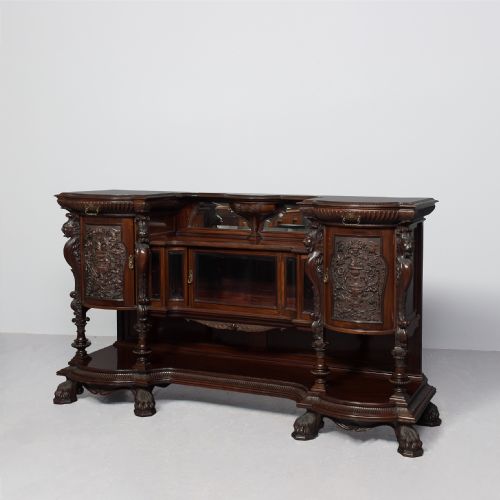
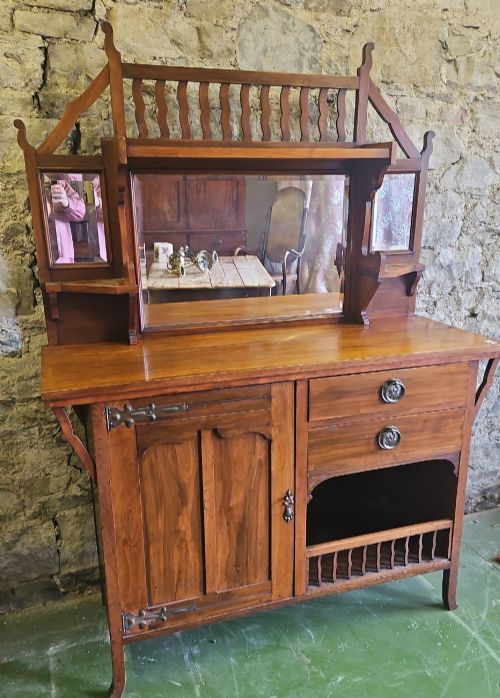
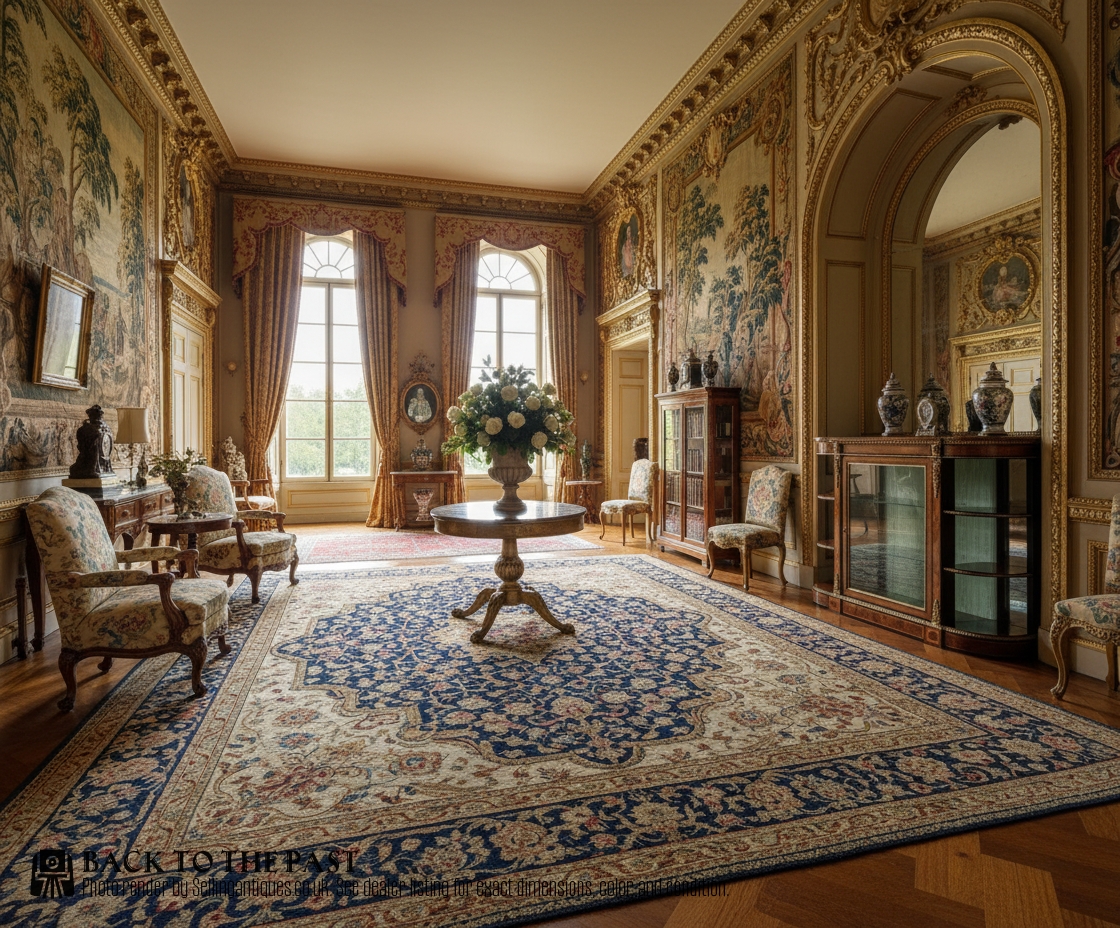
Forms range from compact side cabinets to expansive mirror-backed sideboards and credenzas. Buyers select these pieces to anchor a dining room or drawing room wall while reflecting natural daylight around the interior.
How They Were Made
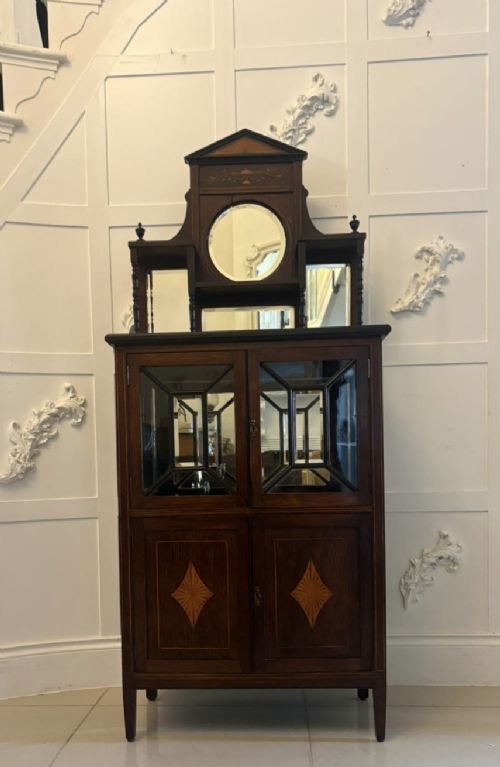
Craftsmen relied upon dense hardwoods like mahogany, rosewood, and walnut as structural carcases, frequently applying intricate marquetry and inlaid satinwood or brass details. These timbers provided a stable foundation for heavy mirrored glass and carved decorative elements.
Glass production yielded plate mirror and display glazing, secured within rebated frames and sometimes paired with ormolu mounts. Cabinetmakers combined traditional joinery with specialised mounting techniques to support the weight of integrated mirror backs and marble or timber tops.
Some nineteenth-century cabinets hide secret compartments behind their mirrored doors for confidential letters.
What Varies in Quality
The refinement of the timber selection and inlay work marks the distinction between standard production and top-tier cabinetmaking. Finely figured burr walnut, pollard oak, or kingwood paired with precise marquetry indicates superior workshop output.
Structural integrity rests upon the joinery of the carcase and the original quality of the mirror glass and brass or ormolu hardware. Pieces bearing maker attributions or stamps reflect higher standards of design execution and material preservation.
Collinson and Lock·Gillows·Holland and Sons·Pauly et Cie
The Mirrored Side Cabinet Glossary
- Chiffonier
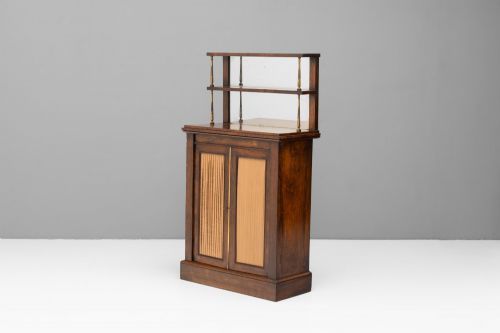
- A low sideboard or cabinet featuring a cupboard beneath, frequently surmounted by a mirrored back or shelf tier. This form evolved during the nineteenth century to serve dining and drawing rooms.
- Credenza
- A grand, low-profile cabinet intended for formal reception rooms, often flanked by curved glass display sections. These pieces frequently incorporate extensive marquetry and ormolu mounts.
- Marquetry
- Decorative woodwork where thin veneers of various coloured timbers are fitted into a ground design. It creates elaborate floral or geometric patterns across cabinet doors and panels.
- Ormolu
- Gilt-bronze mounts applied as decorative ornaments to furniture corners and borders. This technique adds metallic contrast to polished rosewood and walnut surfaces.
Mirrored Side Cabinet: Frequently Asked Questions
How are mirrored side cabinets cleaned?
Dust timber surfaces gently with a soft, dry cloth to protect the polished finish and aged veneers. Clean mirror glass with a minimal amount of neutral glass cleaner applied to a cloth rather than sprayed directly near the wood.
Avoid placing these cabinets in direct sunlight or near heat sources to prevent timber splitting and silver degradation on the mirror plates.
Where should I place a mirrored side cabinet?
Position the cabinet against a solid interior wall in a dining room, hallway, or drawing room where it receives indirect light. The integrated mirror helps bounce ambient daylight into darker corners of the space.
Ensure the floor is level so the heavy timber carcase and glass doors remain properly aligned and functional over time.
How do I identify a Victorian piece?
Victorian cabinets typically feature dense timbers like rosewood, walnut, or mahogany, often accompanied by heavy carving, mirrored backs, and elaborate brass or inlaid details. Construction methods show machine-sawn secondary woods combined with hand-cut dovetails.
Stylistic cues draw heavily from earlier Regency forms or later Aesthetic Movement and Arts and Crafts preferences as the nineteenth century progressed.
What is the difference between a chiffonier and a credenza?
A chiffonier is generally a more compact sideboard form developed in the nineteenth century, usually featuring enclosed lower cupboards and a superstructure with a mirror or shelf. They suit smaller reception spaces and intimate rooms.
A credenza is a longer, low-slung cabinet often lacking raised upper shelving, traditionally designed for grand display with central cupboards and curved lateral glass compartments.