


Brown Walnut Chiffonier
A brown walnut chiffonier is a low sideboard designed for display and storage, bringing rich grain and practical surface space into a room.
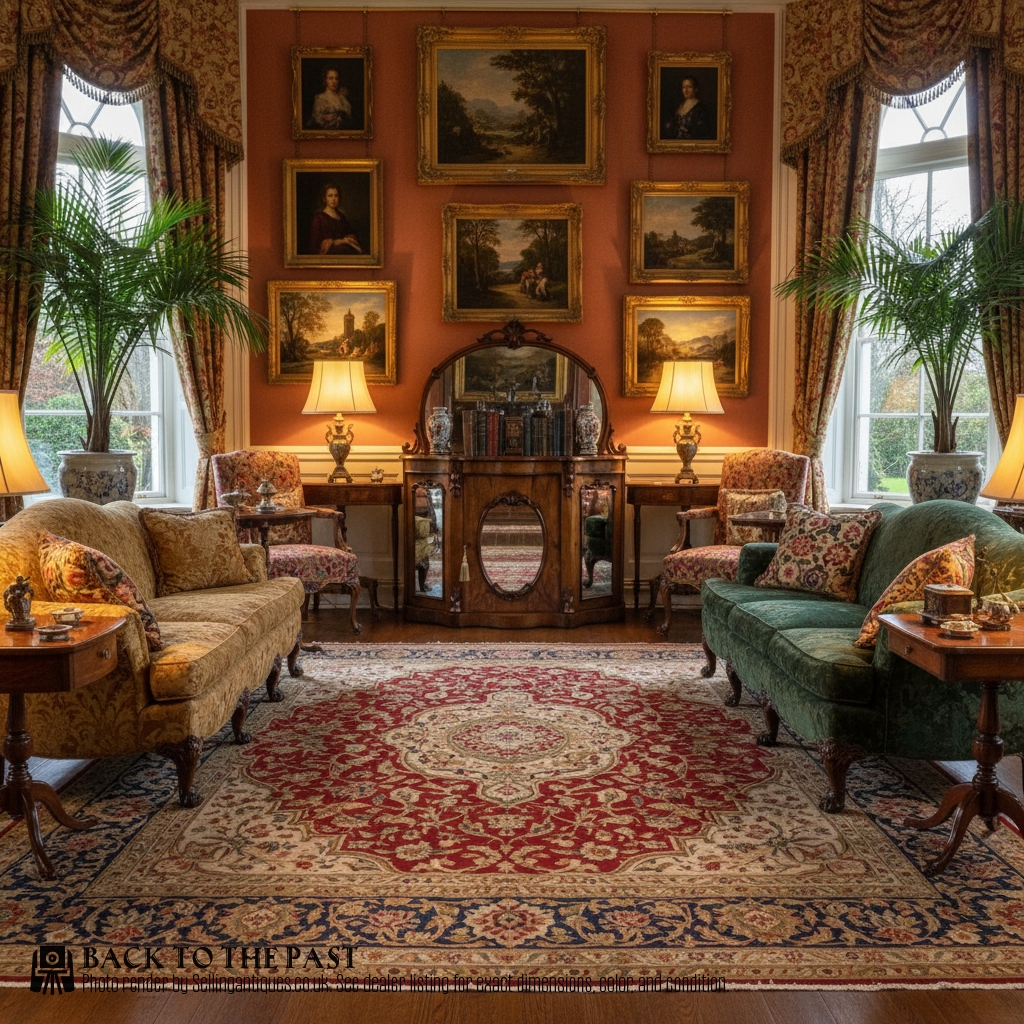
Brown Walnut Chiffonier
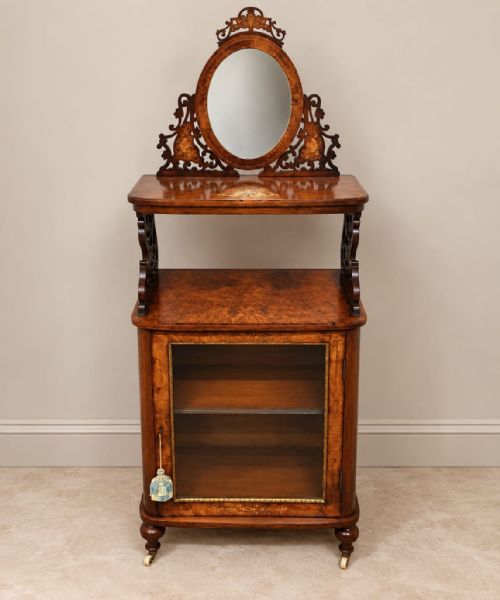
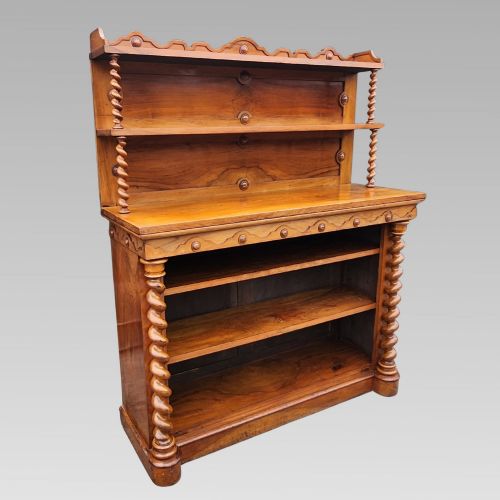
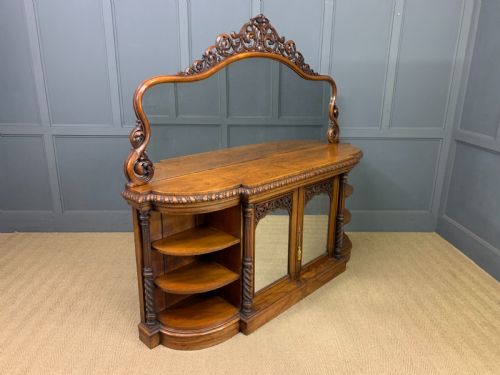
When searching for a brown walnut chiffonier, buyers encounter low storage furniture primarily originating from the Victorian period, alongside examples spanning from the 1850s to the Edwardian era. These pieces frequently incorporate cupboards, open shelving, and sometimes mirror backs or superstructure tops.
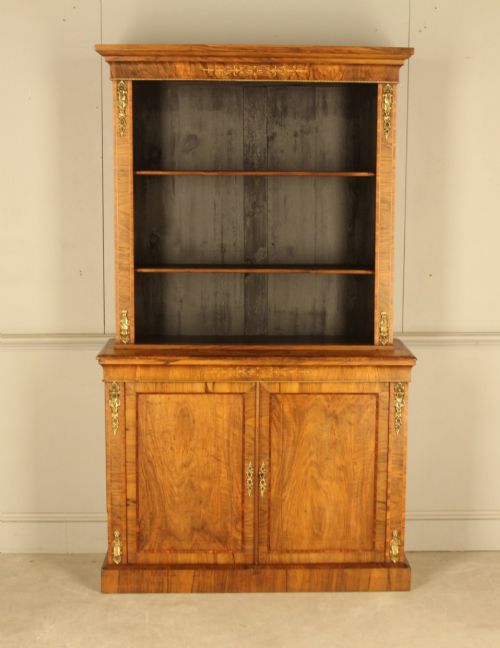
The versions most commonly met on this page are Victorian pieces fashioned from burr walnut, often featuring inlaid details or glass doors. Side cabinets and credenzas frequently overlap with these forms in the listed selection.
How they were made
Cabinet makers utilised walnut timber, frequently selecting burr walnut veneers to create highly figured grain patterns across the primary surfaces. Inlaid marquetry using contrasting materials such as boxwood added decorative geometric or floral motifs.
Structural elements incorporated glass for display doors, brass fittings for hardware, and occasionally marble tops or ormolu mounts. Mirror glass was integrated into backboards to reflect light and enhance the sense of space in nineteenth-century interiors.
Current listings feature walnut cabinets incorporating brass hardware, marble inserts, and mirrored glass panels across Victorian and Edwardian periods.
What varies in quality
The standard of execution is visible in the selection of the burr walnut veneer and the precision of any inlaid stringing or marquetry. Superior examples display seamless matching of wood grain across doors and drawers.
Carved wooden ornaments, gilt mounts, and the integration of mirror backs or marble tops distinguish workshop production levels. Finer pieces demonstrate careful timber selection and refined proportion in their architectural mouldings.
Gillows
The Brown Walnut Chiffonier Glossary
- Burr walnut
- A figured veneer taken from walnut tree growths, prized for its swirling grain patterns. It forms the primary decorative surface on many Victorian cabinets.
- Credenza
- A low sideboard or cabinet, frequently featuring glass doors and mounted decoration. It serves a similar display function to a chiffonier.
- Ormolu
- Gilded bronze ornamentation applied to furniture. It provides metallic contrast against dark walnut surfaces.
- Marquetry
- Decorative woodwork where pieces of contrasting veneer are fitted into a design. Boxwood is frequently used for this detailing on walnut furniture.
- Whatnot
- A set of open shelves for displaying small objects, often incorporated into the upper section of a chiffonier.
Brown Walnut Chiffonier: Frequently Asked Questions
What is a brown walnut chiffonier used for?
These pieces function primarily as low sideboards providing enclosed cupboard storage combined with surface display space.
In period interiors, they held tableware, books, or decorative objects while placing mirrors or shelves at counter height.
How do I date a walnut chiffonier?
Dating relies on observing structural characteristics, hardware styles, and wood selection methods typical of specific decades. Victorian pieces frequently employ heavy burr walnut veneers and mirror backs.
Later Edwardian examples tend to feature lighter proportions and simplified inlay work compared to mid-nineteenth-century items.
Are marble tops original to these cabinets?
Marble tops appear on specific cabinet forms, particularly French-influenced pieces and certain credenzas. They provided a durable, heat-resistant surface for serving or display.
Their presence depends entirely on the original design specified by the workshop.
How do I care for antique walnut furniture?
Maintenance involves keeping timber away from direct heat sources and sudden humidity changes to prevent veneer cracking. Regular dusting with a soft cloth preserves the polish.
Applying suitable wax sparingly maintains the lustre of the walnut grain without building up heavy residues.