
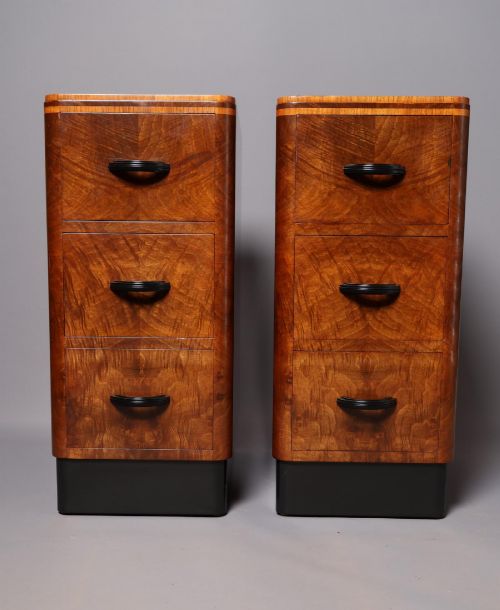


1930s Burr Walnut Drawers
These 1930s burr walnut drawers bring rich grain figures and geometric symmetry to the bedroom, offering warmth and utility.
1930s Burr Walnut Drawers
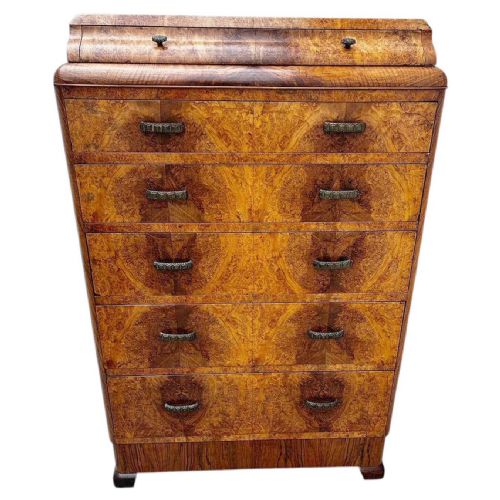
When you search for 1930s burr walnut drawers, you encounter bedroom furniture shaped by the Art Deco aesthetic. Pieces range from single chests of six or seven drawers to tallboys and bedside cabinets.
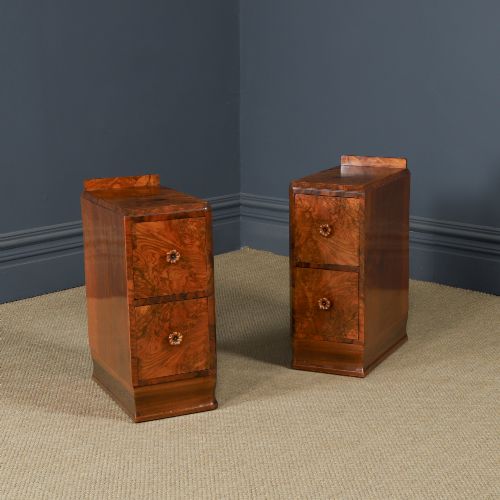
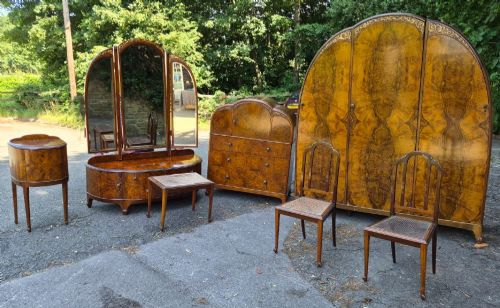
English workshops of the period produced much of this bedroom furniture. The selection on this page includes individual bedside tables and complete bedroom suites.
The dominant form is the chest of drawers, often constructed with multiple tiers and clean, architectural lines. Walnut and burr walnut veneer supply the primary visual impact across these pieces.
How they were made
Cabinet makers applied thin slices of burr walnut veneer over solid timber carcases to display the intricate swirls of the wood grain. This technique allowed workshops to cover broad drawer fronts and top panels with dramatic patterns.
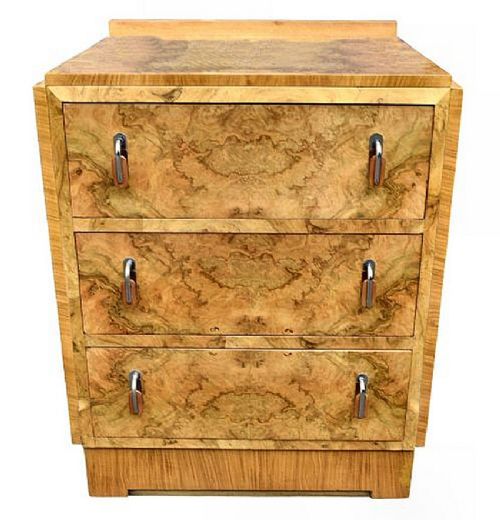
Makers integrated metal handles and fittings, occasionally utilising brass or chrome details typical of the era. Some items feature contrasting bleached blonde walnut finishes to alter the natural dark tone of the timber.
Some bedside cabinets feature clever hideaway surfaces, letting you slide out a little breakfast tray without leaving bed.
What varies in quality
The rhythm and book-matching of the burr walnut veneer set individual pieces apart. Superior examples display symmetrical grain patterns across multiple drawer fronts that flow seamlessly from top to bottom.
Construction methods and hardware choice distinguish workshop output. Robust timber carcases with fitted metal or bakelite handles reflect the higher tier of period production.
Frank Taylor & Co.
The 1930s Burr Walnut Drawers Glossary
- Burr walnut
- A thin slice of wood taken from a growth deformity on the walnut tree, prized for its swirling, mottled grain patterns. It creates a decorative surface when applied as a veneer.
- Tallboy
- A tall chest of drawers, often combining a wardrobe section or multiple smaller drawers above larger ones. This form maximises vertical storage space in the bedroom.
- Art Deco
- A design style spanning the 1920s and 1930s characterised by streamlined shapes, geometric ornamentation, and modern materials. It heavily influenced the silhouette of interwar furniture.
- Veneer
- A thin layer of choice wood applied over a base of cheaper timber to provide a decorative exterior. Cabinet makers used this method to showcase expensive burr walnut figures efficiently.
1930s Burr Walnut Drawers: Frequently Asked Questions
How do I clean burr walnut drawers?
Dust surfaces regularly with a soft, dry cloth to protect the delicate veneer. Avoid applying modern silicone polishes, which can build up and dull the finish over time.
Maintain low humidity in the room to prevent the timber from drying out or the veneer from lifting at the edges. Professional wax can be applied sparingly to nourish the wood.
Are these drawers suitable for daily use?
Interwar chests and tallboys provide robust storage for clothing and everyday items. The internal drawer construction handles standard modern loads easily.
Ensure drawers are pulled evenly from the centre rather than one side to prevent sticking. Placing felt pads underneath heavy items inside protects the original drawer bases.
How do I identify a 1930s piece?
Look for characteristic Art Deco proportions, stepped cornices, and waterfall edges on the cabinet top. Handles made from bakelite or chrome reinforce the interwar period origin.
Examine the construction of the drawer linings and the backboards for period timber milling signs. Burr walnut veneer patterns from this decade tend to favour bold, symmetrical book-matching.
What is a tallboy?
A tallboy is an elevated chest of drawers designed to provide substantial vertical storage with a minimal floor footprint. They became popular bedroom items during the interwar period.
These pieces often feature graduated drawer depths, starting smaller at the top and growing larger toward the base. Their height makes them a striking focal point in a bedroom.