
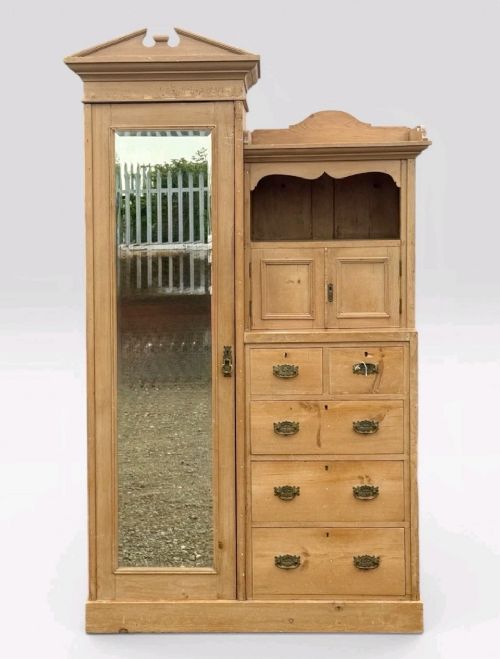


Vintage Compactum Chest
A vintage compactum chest combines hanging space and drawer storage in one substantial piece, offering serious utility without dominating the room.
Vintage Compactum Chest
A vintage compactum chest brings together multiple storage functions, typically uniting wardrobe doors, small drawers, and larger drawers within a single fitted frame. These pieces span from the late nineteenth century through to the interwar period, offering substantial capacity for clothing and linens.
The versions most commonly met on this page date from the nineteen thirties, following the clean lines of the Art Deco style in walnut or maple. Earlier examples appear from the Victorian and Edwardian eras, constructed in heavier timbers such as mahogany or pine with traditional panelled doors.
Forms overlap with tallboys, gentleman's chests, and chifferobes, but the defining trait of a compactum remains its internal division. One side houses hanging space or sliding trays, while the other provides stacked drawers, creating a complete wardrobe solution in a single footprint.
How they were made
Construction relies on solid hardwood carcasses faced with decorative veneers such as burr walnut, blonde bird's eye maple, and mahogany. Cabinetmakers applied these veneers to large surfaces to showcase striking natural grain patterns, often bordered by simpler framing timbers.
Internal fittings required careful joinery, incorporating solid pine or oak for drawer linings and sliding trays. Brass handles, bakelite pulls, and glass details complete the hardware, reflecting the shift from ornate Victorian metalwork to streamlined twentieth-century fixtures.
Gentlemen's chests offered Victorian gentlemen a dedicated place to store waistcoats and pocket watches without wrinkling.
What varies in quality
Quality shows in the selection and matching of wood veneers across the main doors and drawer fronts. Superior pieces display continuous grain patterns that flow evenly across multiple panels, whereas simpler items rely on plain timber or mismatched grain sections.
Internal construction dictates daily usability, particularly the smooth sliding of trays and the true closing of large doors. Better examples retain original fitted interiors with dividers and hooks intact, while simpler pieces may have lost their internal partitions over decades of use.
Maple and Co·Heal's
The Vintage Compactum Chest Glossary
- Compactum
- A fitted wardrobe cabinet that combines hanging space, drawers, and shelving within a single unit. It provides comprehensive clothing storage without requiring a full suite of bedroom furniture.
- Tallboy
- A high chest of drawers, or a chest placed on top of a lower base unit. These pieces maximise vertical storage space in rooms with limited floor area.
- Gentleman's chest
- A wardrobe and drawer combination historically designed for men's attire, typically featuring shirt drawers alongside a hanging section. They often include smaller compartments for accessories.
- Chifferobe
- A hybrid furniture piece combining characteristics of a wardrobe and a chiffonier or chest of drawers. The term frequently appears in relation to country pine storage pieces.
- Veneer
- A thin layer of decorative wood applied to a more stable foundational timber. Skilled makers used burr walnut and maple veneers to achieve striking visual patterns on large flat surfaces.
Vintage Compactum Chest: Frequently Asked Questions
What is a compactum chest?
A compactum chest is a multi-functional storage cabinet that brings together hanging space, shelving, and drawers in one frame. It serves as an all-in-one wardrobe solution for bedrooms.
These pieces vary from nineteenth-century mahogany designs to streamlined nineteen thirties walnut models. They suit rooms where space is at a premium but substantial storage remains necessary.
How do I date a compactum?
Dating relies on timber choices, hardware, and overarching architectural styles. Victorian and Edwardian pieces use heavier solid woods with traditional panel doors, while nineteen thirties examples feature blonde maples and burr walnut veneers.
Hardware provides another indicator, shifting from ornate brass mounts in the nineteenth century to bakelite and minimalist handles by the interwar period. Cabinet proportions also move from heavy cornices to clean geometric lines.
Where should I place it?
A compactum works best against a solid bedroom wall where its full height and depth can be accommodated comfortably. Because these pieces combine multiple storage functions, they often replace both a wardrobe and a chest of drawers.
Ensure adequate clearance in front of the cabinet for doors to open fully and internal trays to slide outward. Measuring ceiling height proves essential, as many vintage examples are exceptionally tall.
Are shelves adjustable?
Most vintage compactums feature fixed internal layouts, including permanent hanging rails, shallow trays, or stationary wooden shelving. Altering the interior configuration requires custom joinery work.
When assessing a piece, check whether the internal partitions and sliding trays remain present. Original fittings ensure the cabinet functions as the maker intended.