


Mirrored Cabinet Desk
A mirrored cabinet desk combines enclosed writing space with reflective glass, offering practical utility and period elegance.
Mirrored Cabinet Desk
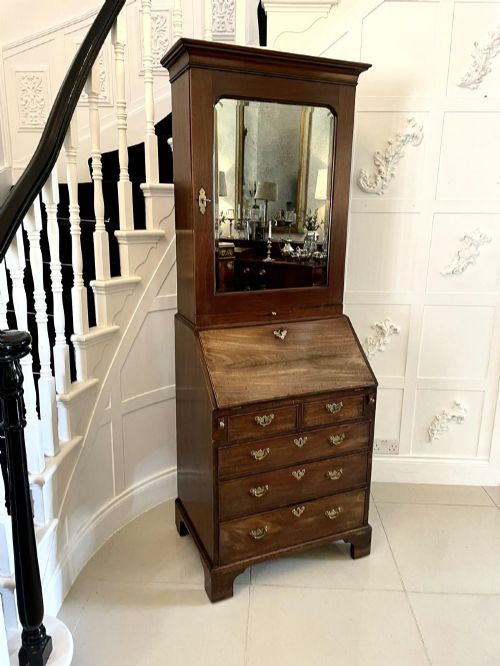
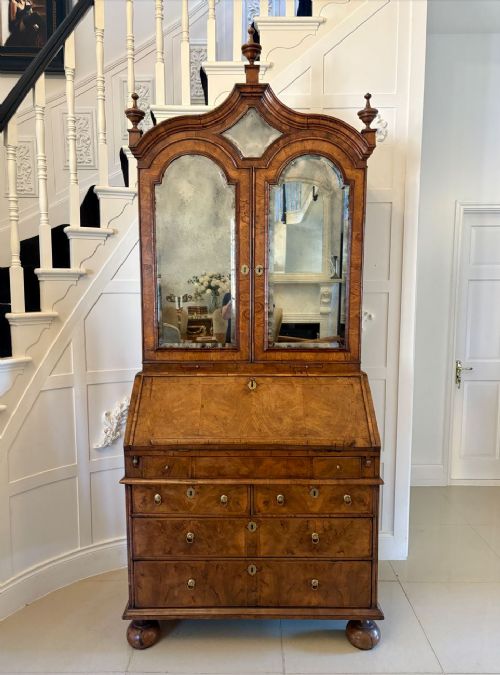
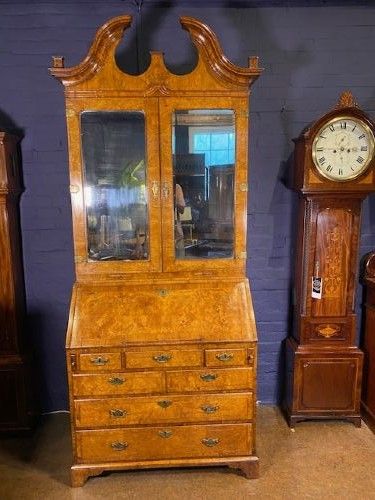
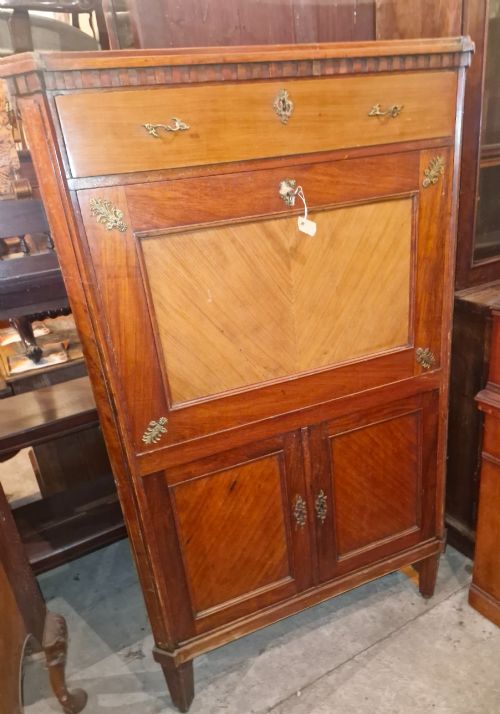
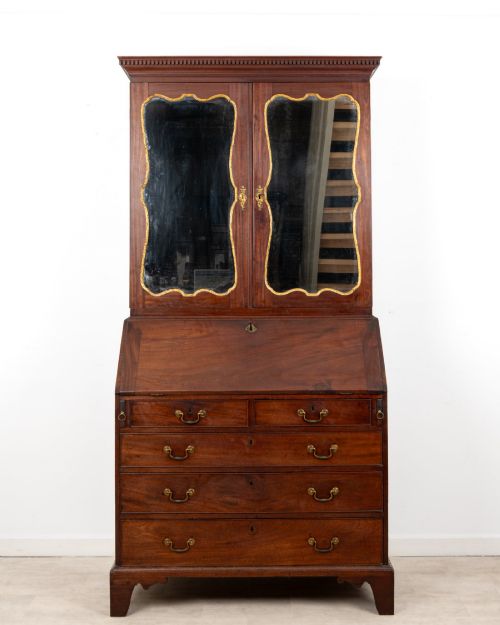
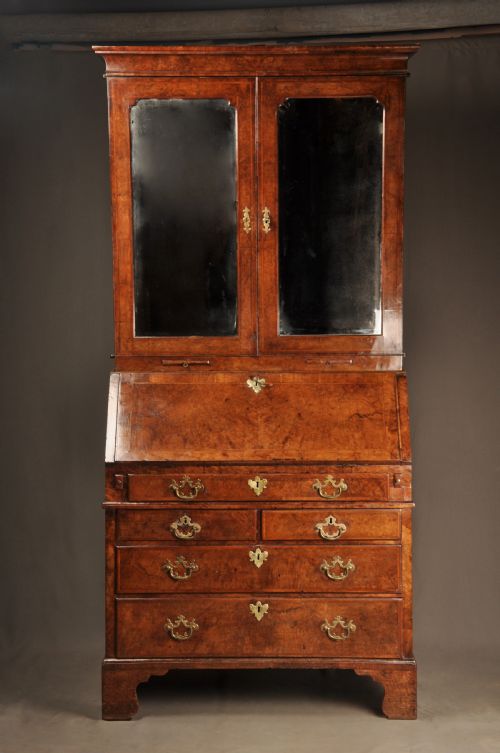
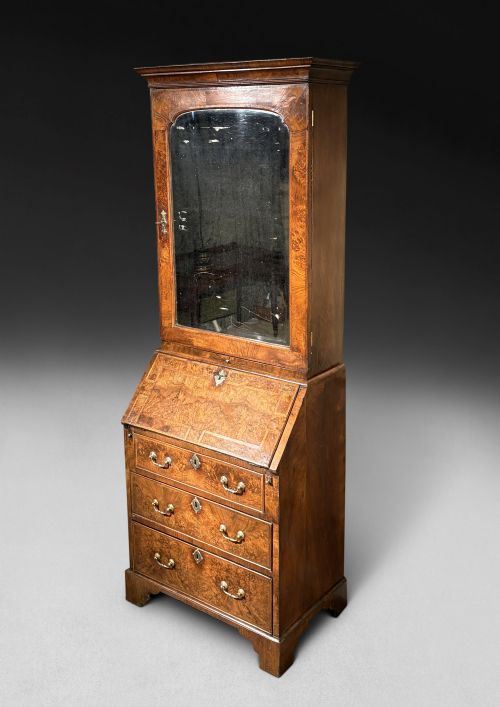
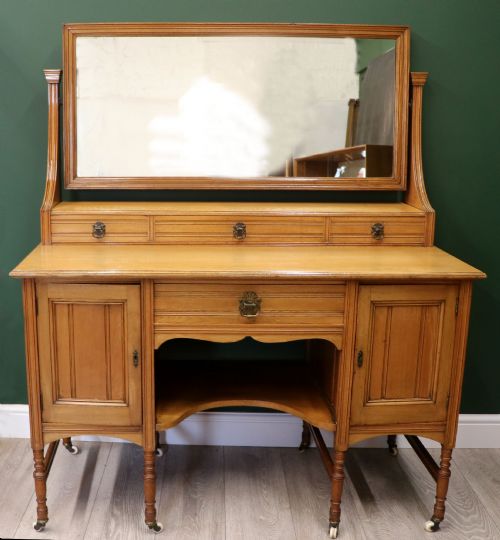
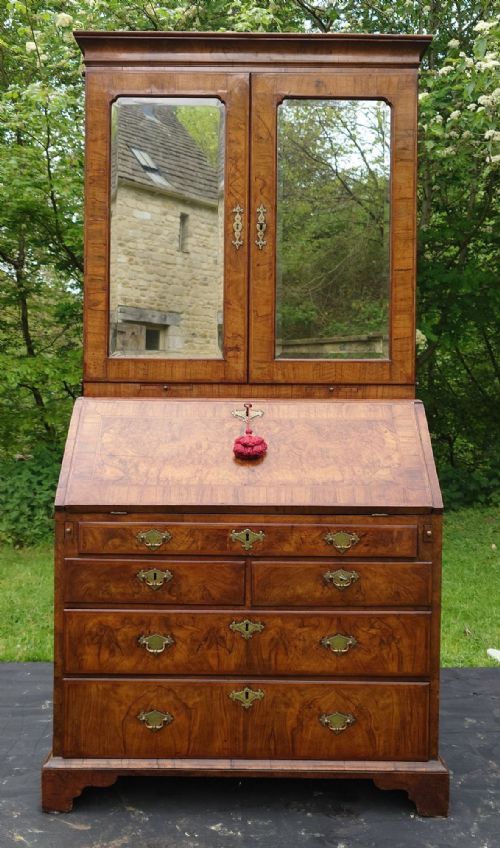
A mirrored cabinet desk primarily takes the form of a bureau bookcase, secretaire cabinet, or dressing table incorporating mirror glass within its design.
The pieces on this page span several centuries, with walnut bureau bookcases from the seventeenth and eighteenth centuries appearing alongside later Victorian and Edwardian dressing tables and vanity pieces.
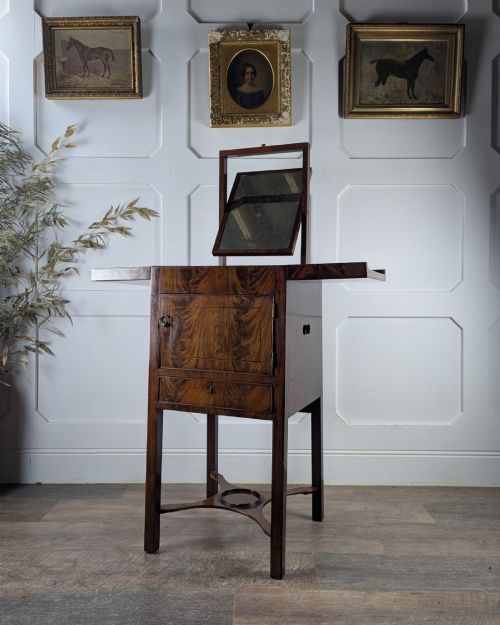
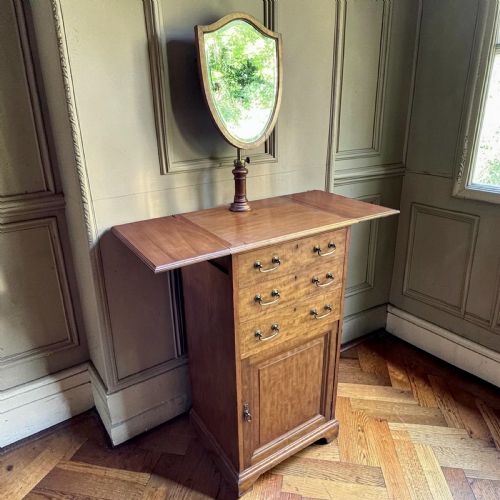
Buyers seeking a mirrored cabinet desk will encounter forms ranging from double dome walnut bookcases to fold-away washstands and inlaid gentleman's vanity tables.
How they were made
Cabinet makers utilised dense hardwoods such as mahogany, oak, and figured or burr walnut, frequently applying veneer and featherbanding to principal surfaces.
Glass panels were integrated into cabinet doors and adjustable shields, paired with brass hardware including handles, escutcheons, and hinges.
One gentleman's vanity table from the early twentieth century offers a glimpse into historic grooming habits.
What varies in quality
Quality rests in the selection of timbers, such as figured walnut or Cuban mahogany, and the precision of decorative techniques like marquetry inlay.
Construction integrity, retention of original mirror glass, and the sophistication of internal drawer arrangements separate standard utilitarian items from finer examples.
Edwards & Roberts
The Mirrored Cabinet Desk Glossary
- Bureau bookcase
- A writing desk with a sloping fall-front combined with a shelving unit above, enclosed by doors. These units often feature interior pigeonholes and small drawers.
- Secretaire cabinet
- A piece of furniture containing a drawer or compartment that drops down to form a writing surface. It conceals a fitted interior for correspondence.
- Burr walnut
- Wood taken from a walnut tree growth containing swirling, knotty grain patterns. It provides highly decorative figured surfaces on cabinet fronts.
- Featherbanding
- A type of inlay using matched veneers cut diagonally to resemble a bird feather. It frames drawer fronts and panel borders on period case furniture.
- Fall-front
- A hinged writing flap that drops into a horizontal position for use. When closed, it conceals the desk interior.
Mirrored Cabinet Desk: Frequently Asked Questions
What is a mirrored cabinet desk?
A mirrored cabinet desk is a piece of furniture that integrates a writing surface or vanity area with mirror glass, usually set into cabinet doors or adjustable frames.
These forms include bureau bookcases, secretaire cabinets, and dressing tables designed for both practical writing or grooming and light reflection.
How do I identify a Georgian bureau bookcase?
Georgian bureau bookcases, dating through the eighteenth century, typically employ solid mahogany or figured walnut with brass hardware and fitted interior compartments.
They often feature panelled doors, sometimes incorporating mirrors, above a sloping fall-front desk section containing drawers and pigeonholes.
What materials were used for these desks?
The listings show primary construction in hardwoods such as mahogany, Cuban mahogany, walnut, burr walnut, oak, and rosewood.
Secondary materials include mirror glass panels and brass for handles, hinges, and escutcheons.
Where were dressing tables used?
Dressing tables and vanity pieces were placed in bedrooms and dressing rooms for personal grooming and storage of small items.
Victorian and Edwardian examples often include adjustable shield mirrors supported by small chests or drawers.