
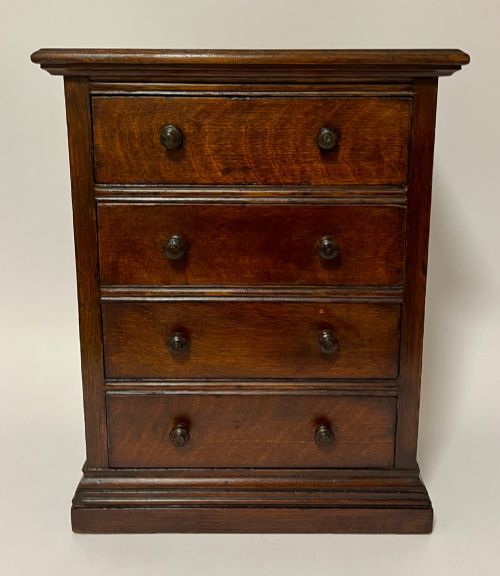
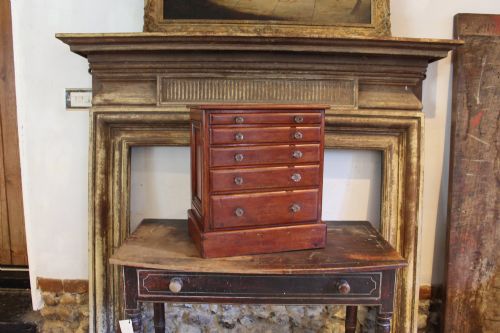
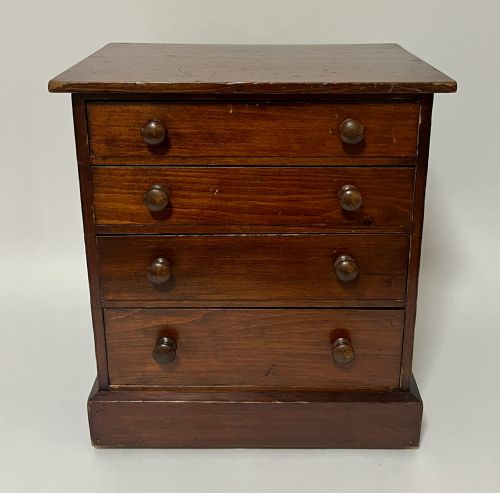
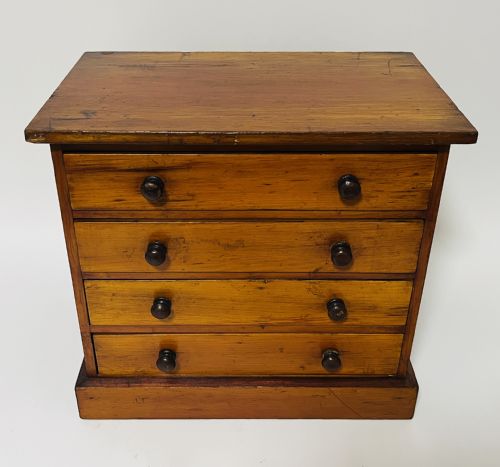



Miniature Specimen Cabinet
A miniature specimen cabinet offers compact housing for natural history items, medals or small curiosities, combining fine cabinetry with practical tabletop storage.
Miniature Specimen Cabinet
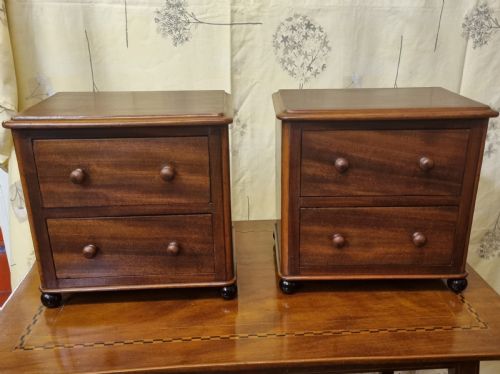
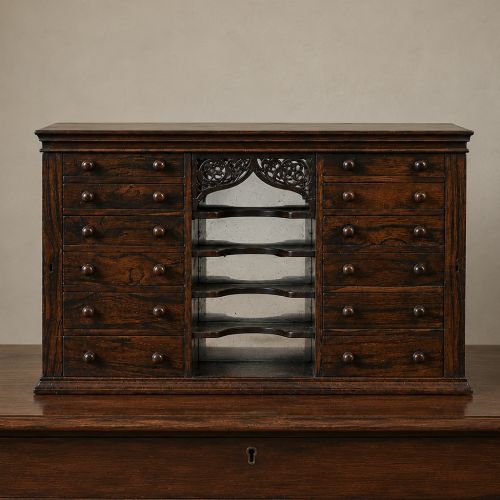
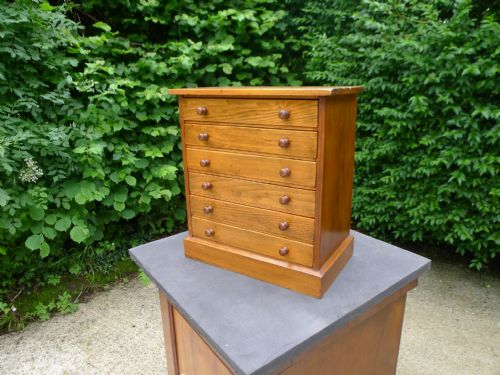
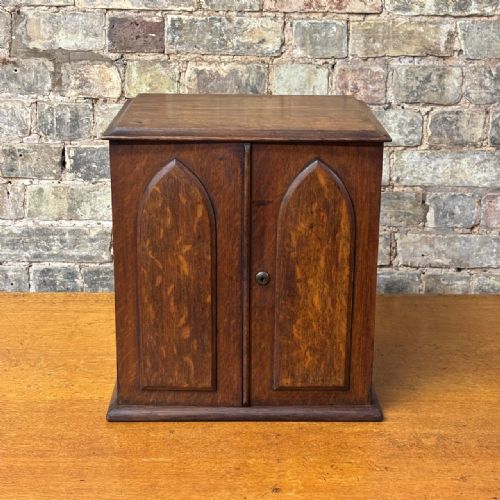
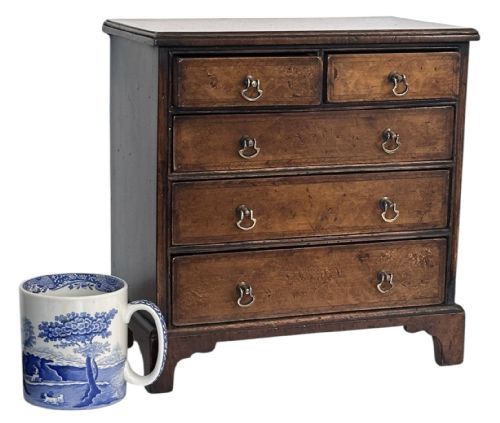
A miniature specimen cabinet is a small tabletop piece designed to hold collections of insects, botanical samples, coins or small antiques. These items appear primarily in forms such as miniature chests of drawers, Wellington chests, and panelled table cabinets.
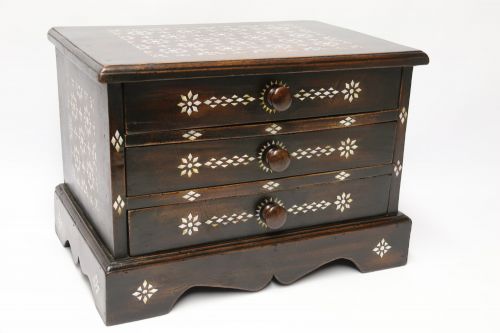
The selection ranges from Georgian and Regency examples to Victorian and Edwardian pieces, alongside specific utilitarian or regional variations like Anglo-Indian hardwood chests. Most pieces sit comfortably upon a desk, table, or sideboard.
Makers constructed these cabinets to replicate the internal arrangements of full-size library or museum furniture, scaled down for domestic study rooms. Drawers often feature secure locking mechanisms or glazed doors to protect fragile contents from dust and handling.
Materials and construction
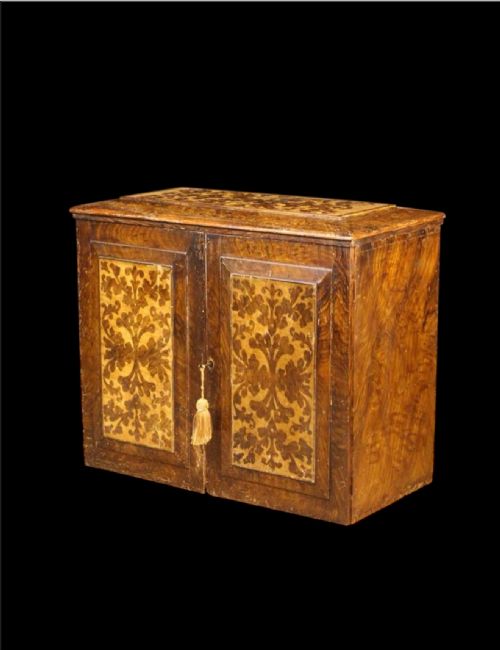
Cabinet makers utilised dense hardwoods such as mahogany, walnut, rosewood, and oak for the primary carcases, frequently employing figural veneers like burr walnut and satinwood on drawer fronts and exterior panels. Pine and deal served for internal framing and secondary drawer linings.
Listings span periods from the 18th century through the Victorian era to the 1920s, constructed in mahogany, oak, walnut, pine, and brass.
Variations in quality
Quality rests upon the selection of timber veneers and the precision of the drawer construction, where fine dovetailing and smooth operation dictate the standard of the piece. Superior examples exhibit tightly figured timbers and integrated locking systems that secure all drawers simultaneously with a single key.
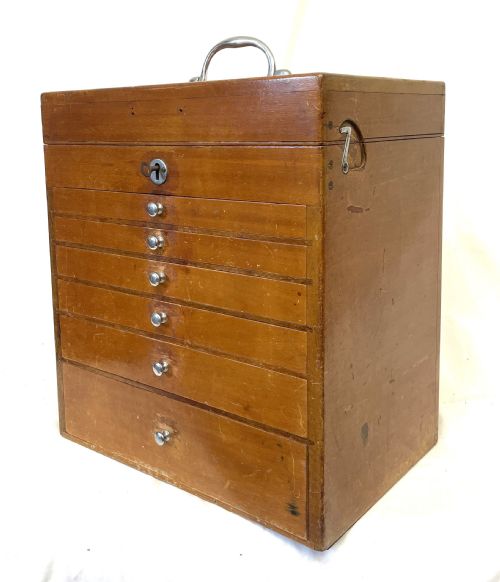
The complexity of the interior arrangement also separates standard storage boxes from master works, particularly in multi-drawer microscope slide cases or fitted specimen chests. Original brass mounts, working locks, and undamaged glass panels preserve the integrity and architectural finish of the cabinet.
The Miniature Specimen Cabinet Glossary
- Wellington chest
- A tall, slender chest of drawers secured by a hinged locking stile that fastens down the right side of the drawer stack. This mechanism provides security for multiple small drawers with a single key.
- Escutcheon
- A protective plate surrounding a keyhole, usually fashioned from brass or bone. It prevents the surrounding wood from wearing down with repeated use.
- Campaign style
- Furniture designed for transport, typically featuring recessed brass carrying handles and flush corner bindings. This style prioritises durability and portability.
- Deal
- A soft timber derived from fir or pine trees, commonly utilised for secondary framing and drawer sides in 19th-century cabinetry.
- Dovetail
- A joint formed by interlocking wedge-shaped fingers, prized for its tensile strength in drawer construction. Fine examples display numerous narrow pins.
Miniature Specimen Cabinet: Frequently Asked Questions
What were miniature specimen cabinets used for originally?
These cabinets housed scientific samples, dried plants, insects, coins, and small geological specimens collected during the 18th and 19th centuries. Naturalists and hobbyists used the shallow drawers to organise and protect delicate items from light and dust.
Over time, owners also repurposed them for jewellery, sewing gear, and personal documents. Their compact scale allowed gentlemen and scholars to study collections at a desk without dedicating space to large library furniture.
How do I date a miniature wooden chest?
Dating relies on observing timber choices, construction techniques, and hardware styles across different periods. Georgian and Regency pieces tend to feature solid mahogany or rosewood with hand-cut dovetails, while later Victorian examples often incorporate machine-cut joints and decorative veneers like burr walnut.
Secondary woods inside the drawers also offer clues, as pine and deal appear more frequently in late 19th-century and 1900s utilitarian pieces. Examining the locks, screws, and hinges helps confirm whether the hardware is original to the era.
Where should I place a table cabinet at home?
A table cabinet fits securely on top of sturdy sideboards, desks, chests of drawers, or dedicated display tables. Because many examples feature heavy hardwood construction and glass doors, they require stable, level surfaces away from direct sunlight and strong heat sources.
Placing the cabinet at eye level allows you to appreciate the grain of the wood and easily access the shallow drawers. Ensure there is enough clearance in front of the piece to fully pull out drawers or swing open hinged doors.
How do I care for antique wood and brass?
Maintain the timber by dusting regularly with a soft, dry cloth and applying natural beeswax polish sparingly to nourish the grain. Avoid silicone-based sprays and keep the cabinet away from radiators and damp environments to prevent the wood from warping.
Clean brass hardware gently with a dry microfiber cloth, avoiding abrasive metal cleaners that strip the aged patina. If drawers stick due to humidity changes, leave the room to stabilise rather than forcing the wood.