


Milk Glass Shade Lamp
A milk glass shade lamp brings a soft, diffused glow to a room through its milky, opaque surface.
Milk Glass Shade Lamp
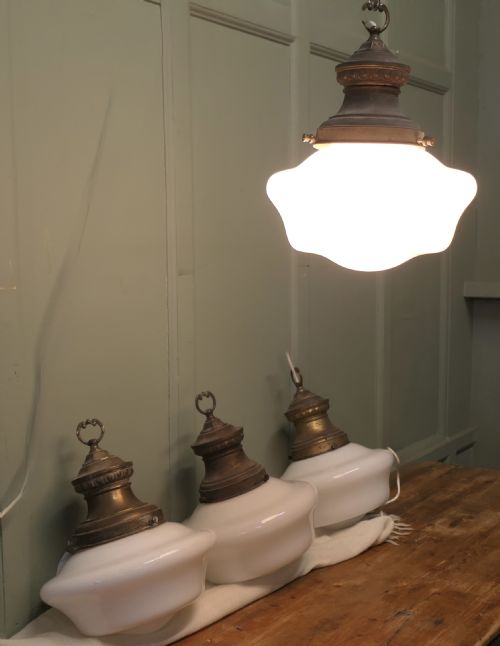
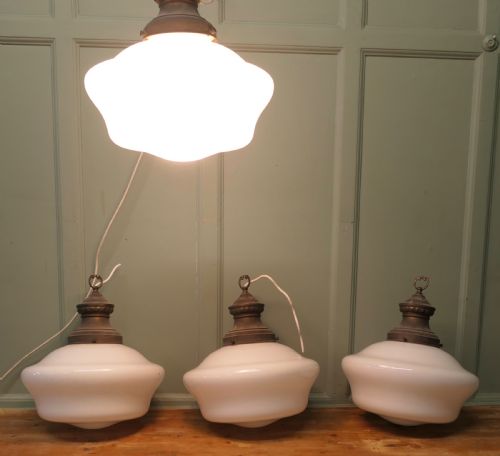
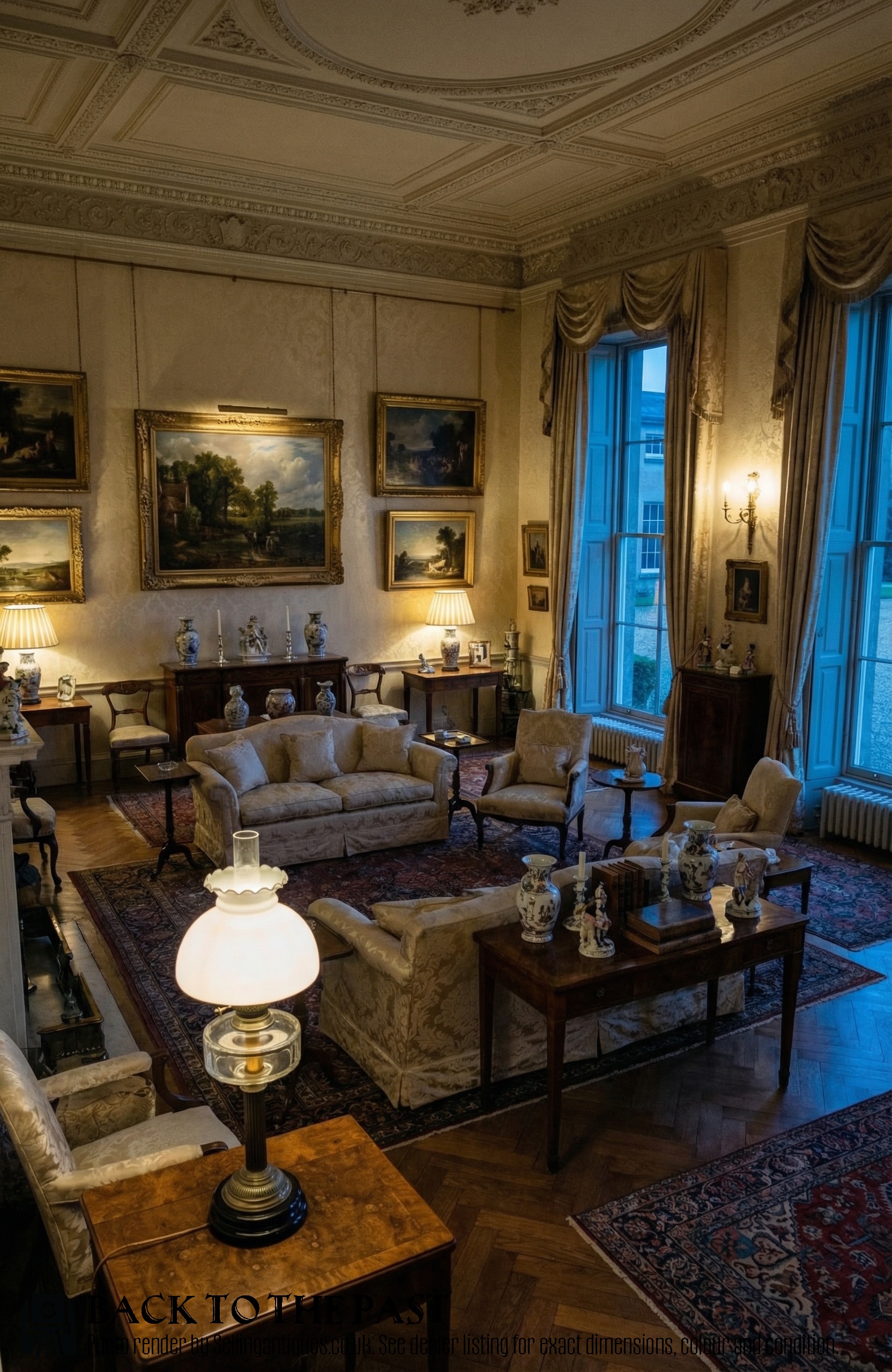
When you search for a milk glass shade lamp, you encounter a variety of lighting forms ranging from Victorian oil lamps to industrial pendants. The selection on this page leans heavily towards hanging ceiling lights, pendant lights, and table-standing oil lamps.
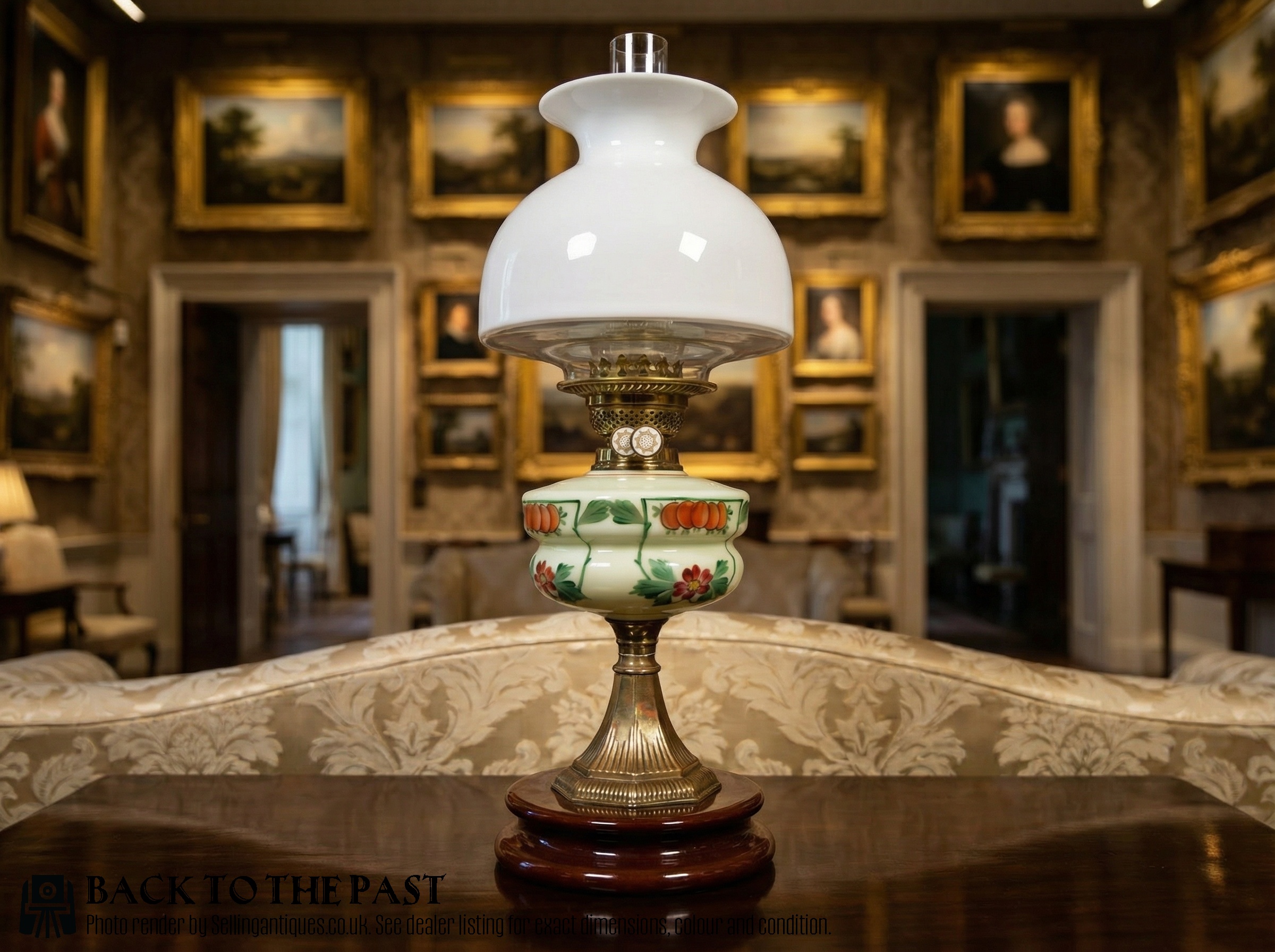
Makers from the Victorian period up to the Art Deco and mid-century eras utilised these white translucent shades to soften harsh light sources. You will find forms spanning from simple conical pendants and pear-shaped opaline shades to ornate oil lamps mounted on brass and ceramic bases.
The materials and styles cross multiple decades, capturing the transition from nineteenth-century paraffin burning lamps to twentieth-century electrical illumination. Each piece relies on the characteristic white or opaline glass shade to define its visual identity.
How they were made
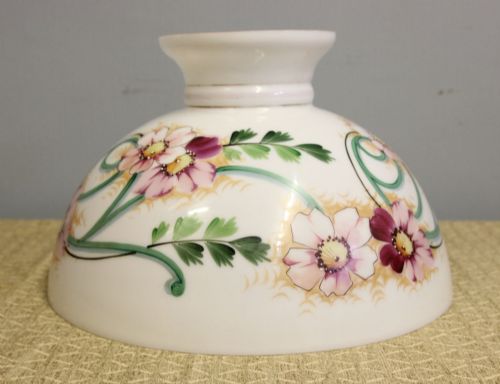
The construction of these lamps relies heavily on combinations of glass and metal, specifically brass and cast iron paired with opal, opaline, or milk glass. Glassblowers formed the shades in moulds or manipulated them by hand, occasionally adding hand-painted enamel details or reeded textures to the surface.
Mountings and bases utilise solid brass, ceramic, and black glass, often incorporating adjustable mechanisms, brass rings, or weighted bases to support the heavier glass globes. The union of metal fitter rings and fragile opaque glass required precise engineering to ensure the shades hung securely without cracking under tension.
Milk Glass Shade Lamp Retail Price Guide 2026
Typical asking prices for milk glass shade lamp among the pieces listed under this phrase on Sellingantiques today, from the lower quarter to the upper quarter. They describe what is for sale here now, not the wider market.
The listings span multiple historical categories, incorporating Victorian oil lamps alongside 1930s industrial pendant lights and Edwardian enameled ceiling fixtures.
What varies in quality
Quality in these lamps rests upon the purity and weight of the glass, the depth of colour in the opaline or milk glass, and the crispness of any moulded or hand-painted decoration. Thicker, heavier glass with even translucency and minimal internal bubbles sits at the higher end of the scale.
Metalwork further distinguishes the tier of a piece, separating standard utility lighting from superior examples featuring chased brass fittings, weighted ceramic or black glass bases, and intact, original hardware.

The Milk Glass Shade Lamp Glossary
- Milk glass
- An opaque or translucent, milky-white or coloured glassware that can be blown or pressed into a wide variety of shapes. It became particularly popular during the nineteenth century for tableware and lighting shades.
- Opaline glass
- A slightly translucent glass type that diffuses light evenly, often displaying a subtle fire or opalescence when held to the light. It frequently appears in shades of white, pink, and pale green on twentieth-century pendants.
- Oil lamp
- A lighting device that burns liquid fuel via a wick, usually housed in a glass or metal reservoir beneath a protective shade or globe. Many surviving examples have since been converted to electricity.
- Pendant light
- A solitary light fixture that hangs from the ceiling by a cord, chain, or metal rod. These often feature large conical or pear-shaped shades to direct illumination downward.
- Reeded
- A decorative surface treatment consisting of parallel, raised rounded mouldings. This texture appears on glass shades to catch and refract light in a controlled manner.
Milk Glass Shade Lamp: Frequently Asked Questions
How do I clean a milk glass shade lamp?
Wash the glass gently in warm soapy water using a soft cloth, avoiding abrasive pads that can scratch the delicate surface. Dry thoroughly before reattaching it to any metal hardware.
Keep brass and metal components polished with appropriate non-abrasive cleaners, taking care not to let harsh chemicals touch the vintage glass.
Are these lamps safe for modern electrical use?
Many older oil lamps and early pendant lights have been successfully rewired for modern electrical standards by professional electricians. You should inspect the internal wiring of any antique purchase before connecting it to a mains power supply.
Consult a qualified professional to test older brass fittings and lamp holders to ensure they comply with current safety regulations.
How do I date a milk glass shade?
Victorian and nineteenth-century examples often feature heavier brass bases, hand-painted floral motifs, or complex oil burner mechanisms. Twentieth-century pieces tend toward cleaner industrial lines, opaline finishes, and simpler pendant fixings. Nail down the period by examining the manufacturing marks on the burner, the thickness of the glass, and the style of the mounting hardware.
Can I replace a broken shade on an antique lamp?
Finding an exact period match for a broken shade requires patience, as antique glass dimensions and fitter sizes vary widely. Measure the fitter rim diameter precisely before searching for a replacement.
Many collectors prefer to source authentic period-appropriate glass shades rather than modern reproductions to maintain the integrity of the piece.