
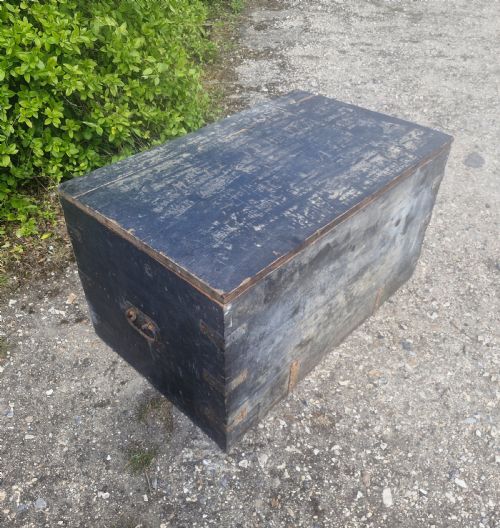


Military Travel Trunk
A military travel trunk delivers rugged portability and fitted interiors designed for officers on the move during the Georgian and Victorian eras.
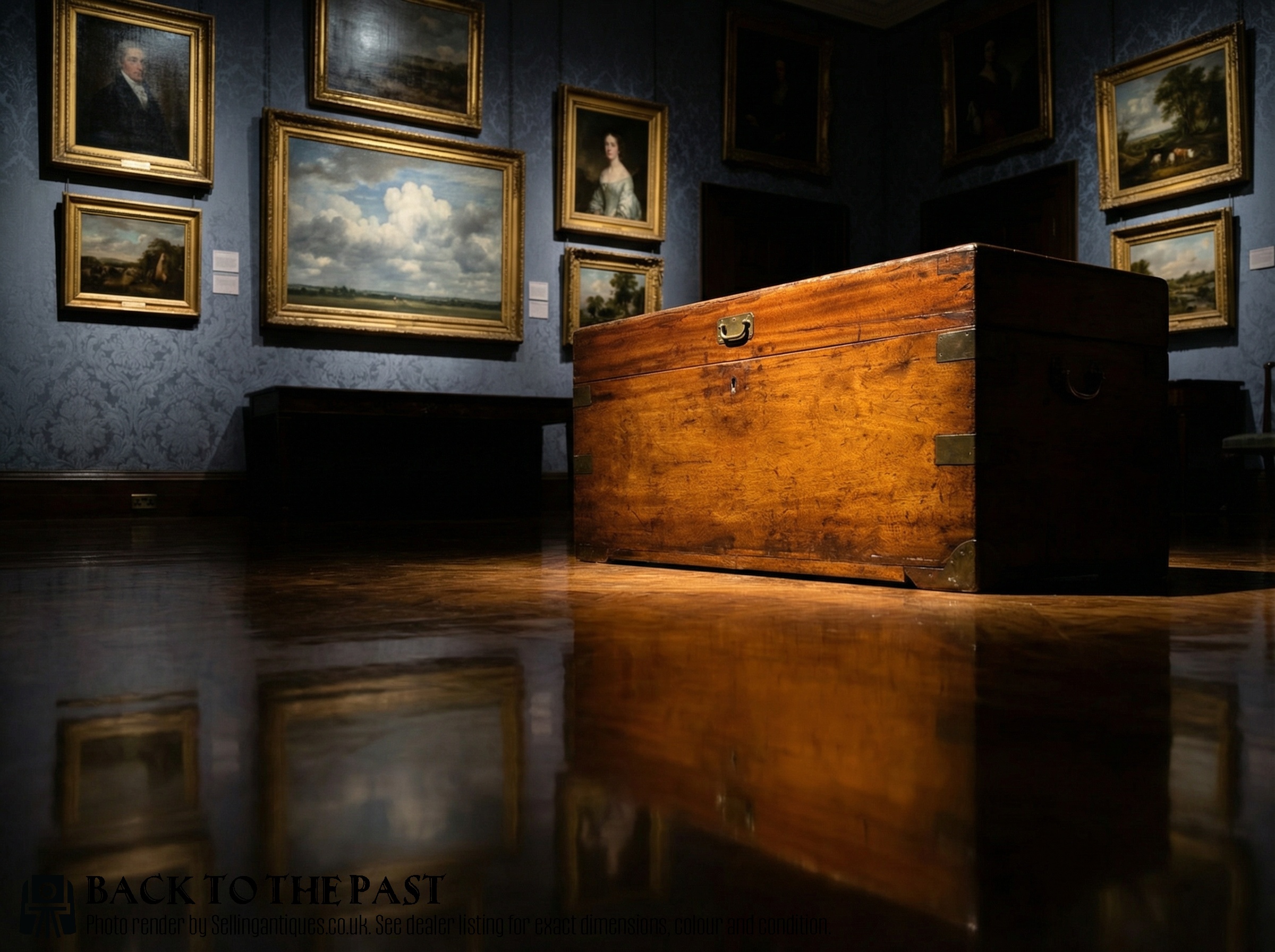
Military Travel Trunk
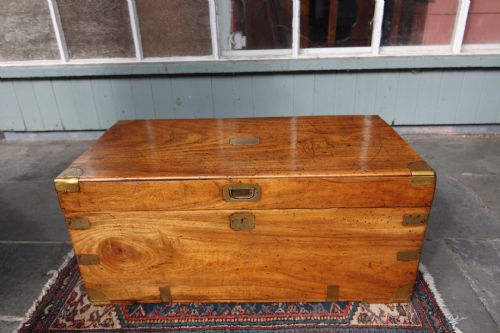
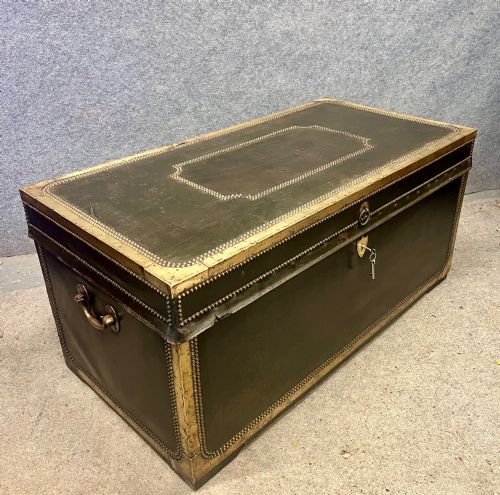
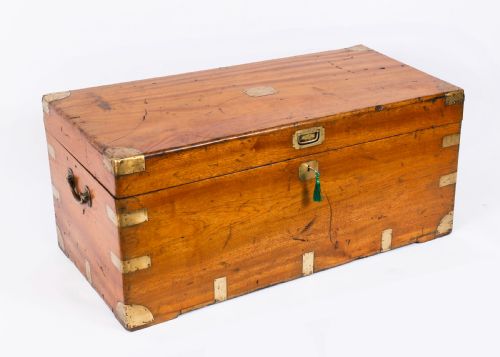
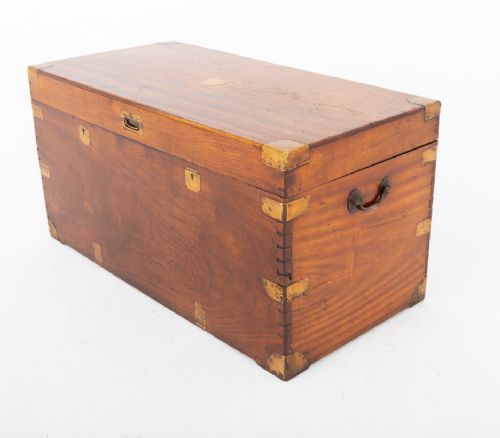
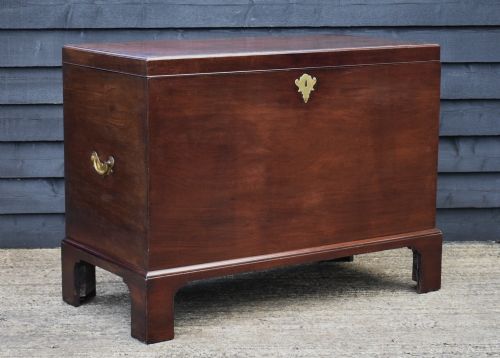
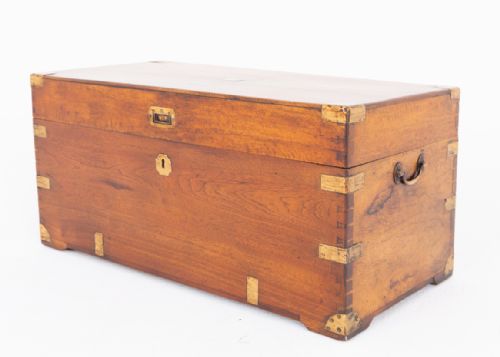
The most common examples on this page are nineteenth-century camphorwood trunks and teak campaign chests featuring recessed brass handles and corner brackets. You also find specialised forms such as silverware trunks, packing cases, and fitted interior chests originating from English workshops and China Trade routes.
Materials and Construction
Cabinetmakers constructed these trunks using dense, durable timbers like camphorwood, teak, mahogany, and oak to resist humidity and heavy handling during transit. Camphorwood served a dual purpose by naturally repelling insects from uniforms and documents stored inside.
Heavy brass binding, corner mounts, and strapwork reinforced the wooden frames against the strains of travel. Recessed brass handles and flush locks allowed pieces to be packed tightly together in cargo holds without catching.
Several camphorwood trunks still retain the faint, distinct scent of spice from nineteenth-century cargo holds.
Evaluating Quality and Detail
The standard of a military travel trunk rests upon the integrity of its brass mounts, the grain of the primary timber, and the sophistication of any internal fittings. Pieces with original brass work, inscribed officer details, and untouched patination sit firmly at the upper end of the scale.
Construction methods also dictate worth, distinguishing standard transport packing cases from finely fitted officer chests with secret drawers and compartmented trays. Solid timber construction and retained working locks with original keys further elevate an example.
Drew and Sons·Allen of London·A W Insall
The Military Travel Trunk Glossary
- Camphorwood
- An aromatic timber native to Asia, prized for its insect-repelling qualities and distinctive grain. Makers utilised it extensively for trunks travelling through tropical climates.
- Campaign chest
- Portable furniture designed to dismantle or pack easily for military service. These pieces typically feature brass corners and inset carrying handles.
- China Trade
- Goods manufactured in China during the eighteenth and nineteenth centuries specifically for Western export and the British market. Many camphor trunks arrived via these maritime trade routes.
- Recessed handle
- A flush-fitting metal handle set into the wood so it does not project beyond the surface. This design prevented snagging during transport and allowed tight stacking.
- Zinc lined
- An internal protective metal lining fitted to guard contents against moisture and damp conditions during long sea voyages.
Military Travel Trunk: Frequently Asked Questions
What is a military travel trunk?
A military travel trunk is a heavy-duty wooden chest reinforced with brass, built for officers on active service during the eighteenth and nineteenth centuries.
These trunks were engineered for frequent transport by ship and pack animal, protecting uniforms, papers, and personal effects against rough handling and moisture.
How were military trunks used?
Officers utilised these trunks to transport personal belongings, mess gear, and documentation during campaigns across the British Empire.
Many featured specialised internal fittings, such as lift-out trays and secret compartments, to keep equipment organised while on the move.
How do I identify a Victorian campaign trunk?
Victorian campaign trunks are typically identified by dense timbers like camphorwood or teak, combined with substantial brass bound corners and flush handles.
Look for nineteenth-century construction traits, maker stamps on the brassware, and evidence of heavy travel wear that confirms period use.
How do I live with a campaign chest?
A campaign chest functions brilliantly as a coffee table, blanket box, or bedroom storage unit while bringing rich maritime and military history into a room.
The aromatic camphorwood naturally freshens linens and clothing stored inside the chest.