




Antique Officer Storage Chest
An antique officer storage chest is a robust travel trunk built for military life, prized for clever compartments and hardy timbers.
Antique Officer Storage Chest
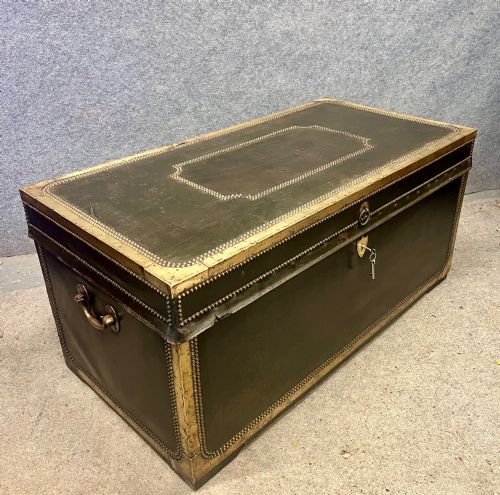
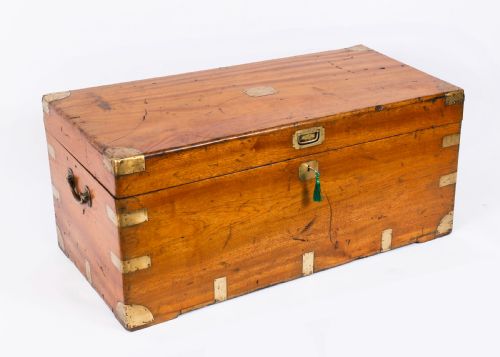
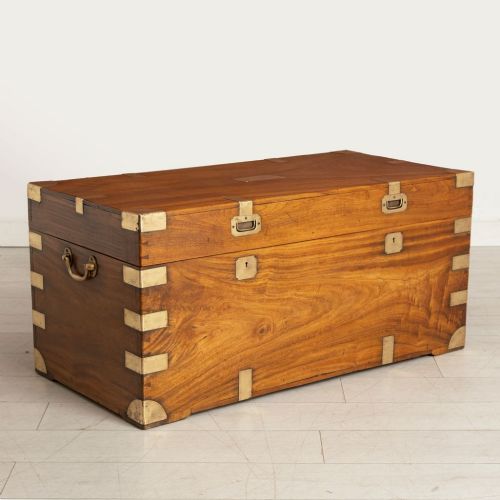
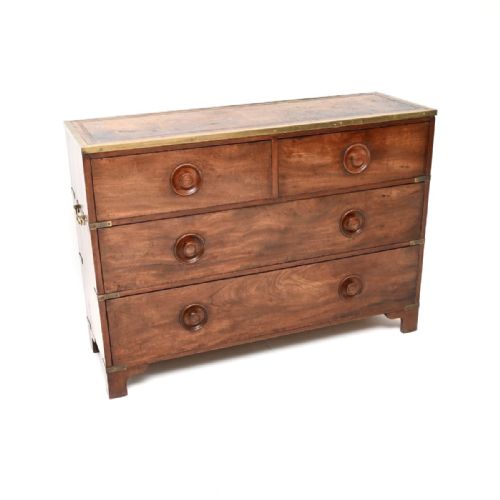
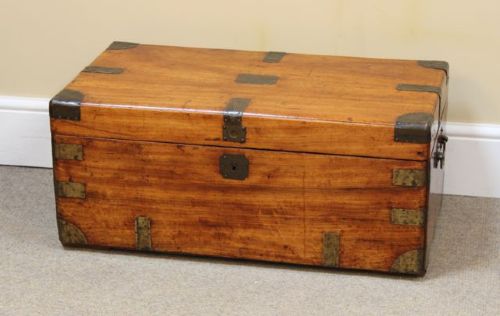
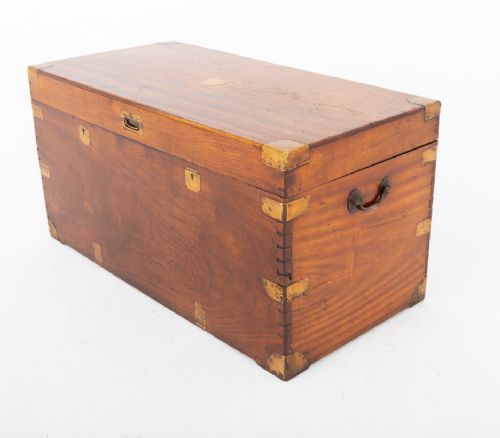
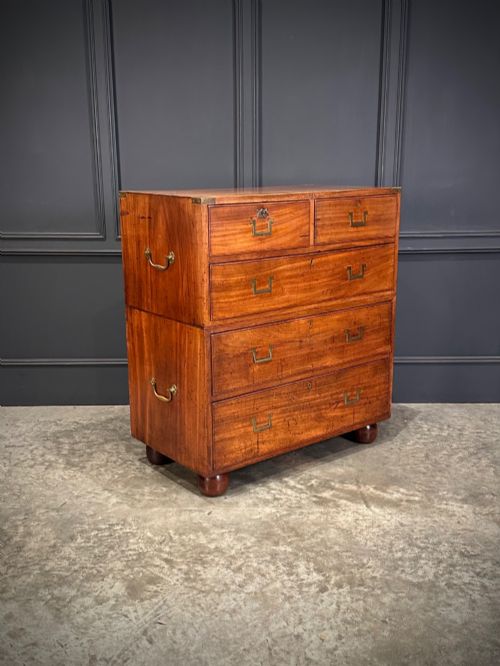
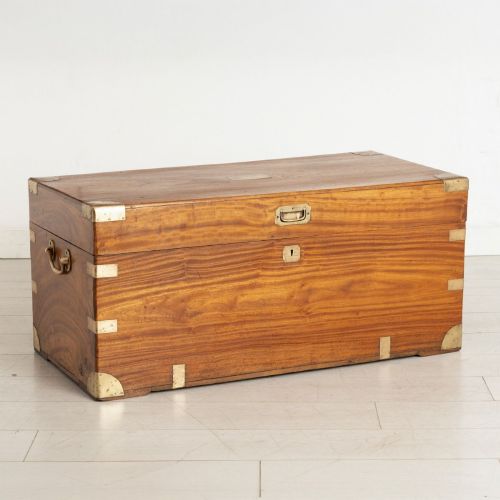
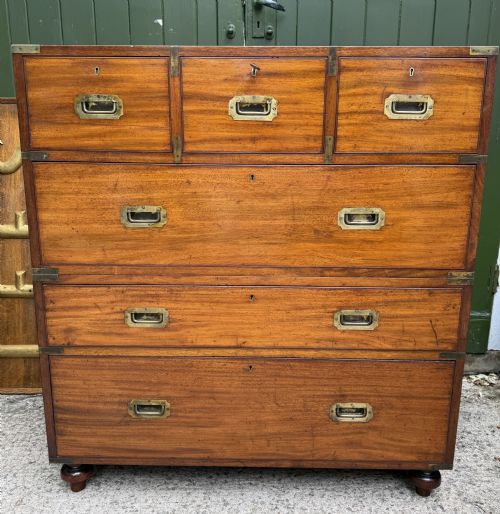
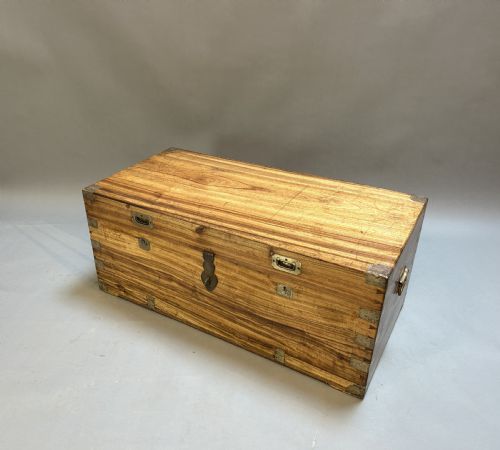
An antique officer storage chest is a heavy-duty portable container built to transport an officer's uniform, papers and personal possessions across the globe during active service. These pieces frequently appear as compartmentalised camphorwood trunks or two-part chests of drawers designed to separate easily for transport on horses, wagons or ships.
The pieces seen here date primarily from the nineteenth century, spanning the Regency era through to the Victorian period and the Edwardian years. Mahogany, teak and camphorwood dominate the selection, often reinforced with brass corners and strapping to withstand the rigours of colonial campaigning.
How they were made
Makers utilised dense, resilient timbers such as teak, mahogany and camphorwood to resist warping in humid climates while protecting contents from insects. Cabinetmakers fitted these chests with flush brass handles, corner brackets and strapwork to prevent damage during transit and to keep profiles smooth for packing.
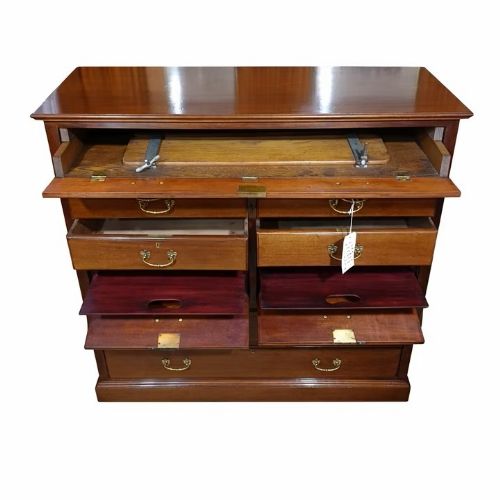
Many examples are constructed in two separate sections that lock together with metal pins or bolts, allowing a large chest of drawers to be carried by two people. Drawers and internal compartments often incorporate secret locking mechanisms, leather surfaces and zinc linings for waterproofing.
Listings feature eighteenth- and nineteenth-century pieces constructed from camphorwood, teak, mahogany, oak and pine, often mounted in brass.
What varies in quality
The standard of an antique officer storage chest rests on the integrity of its brass mounts, the precision of its jointing and the thickness of the timber. Superior pieces retain original recessed hardware, flush drop-handles and well-fitted internal trays rather than later replacements.
Provenance and specific regimental inscriptions elevate certain examples, particularly where named officers or specific military campaigns are documented. The quality of the grain in the mahogany or camphorwood and the retention of original locks and keys also set finer examples apart.
Allen of London
The Antique Officer Storage Chest Glossary
- Campaign chest
- A modular chest of drawers built in two or more stacking sections with recessed handles, designed for military transport.
- Camphorwood
- An aromatic timber native to Asia, traditionally used for trunks because its natural scent deters insects from damaging uniforms.
- Brass bound
- A construction method where corners, edges and seams are reinforced with brass straps and brackets to withstand heavy travel.
- Two-part chest
- A piece of furniture divided horizontally into separate stacking modules to ease the burden of military logistics.
- Flush handle
- A metal handle set into a recess so it does not protrude beyond the wooden surface during packing and transit.
Antique Officer Storage Chest: Frequently Asked Questions
What is an antique officer storage chest?
An antique officer storage chest is a portable wooden trunk or chest of drawers built for military officers on active service during the nineteenth and early twentieth centuries.
These pieces were constructed to endure long journeys by sea and land, featuring robust timbers like teak and camphorwood reinforced with brass hardware.
How were campaign chests used?
Military officers utilised these chests to transport uniforms, maps, books and personal valuables during campaigns in colonies and across Europe.
The modular design allowed large furniture to separate into manageable sections for pack animals and military wagons.
How do I identify a Victorian campaign chest?
Victorian examples typically feature dense hardwoods such as mahogany or camphorwood, solid brass corner brackets and flush-fitting inset handles.
Many of these chests split horizontally into two sections, often bearing maker stamps, regimental marks or brass carrying handles on the sides.
Why is camphorwood used in military trunks?
Camphorwood was selected for its natural insect-repellent properties, which protected woollen uniforms and papers from moths and silverfish in tropical climates.
The timber is also resistant to moisture and possesses a distinct aromatic scent that remains evident in well-preserved trunks.