




Mid Victorian Salon Chairs
Mid victorian salon chairs are elegant nineteenth-century seats crafted for formal entertaining, offering graceful curves and plush upholstery that elevate any drawing room.
Mid Victorian Salon Chairs
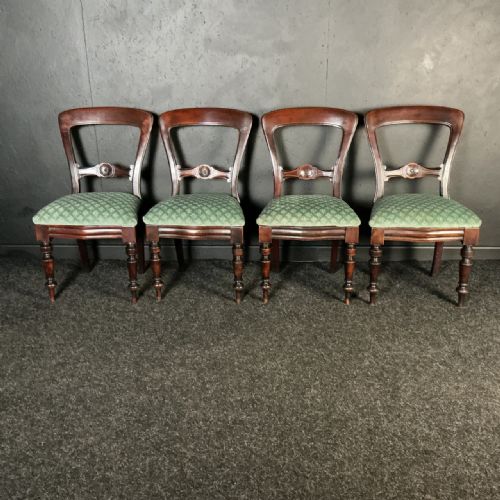
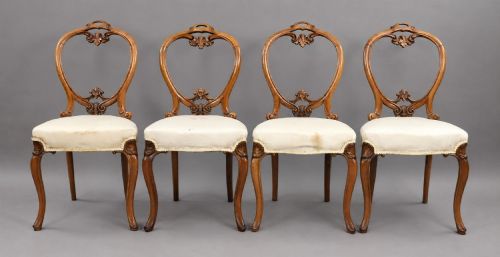
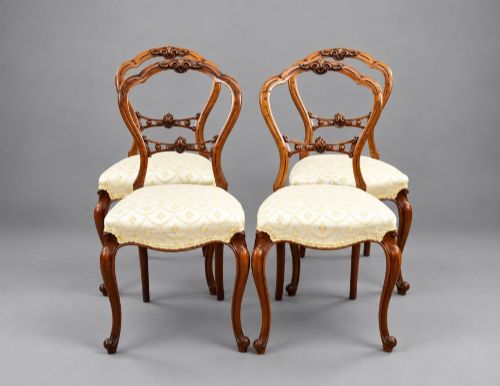
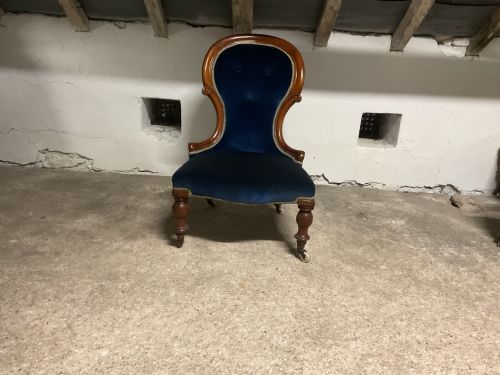
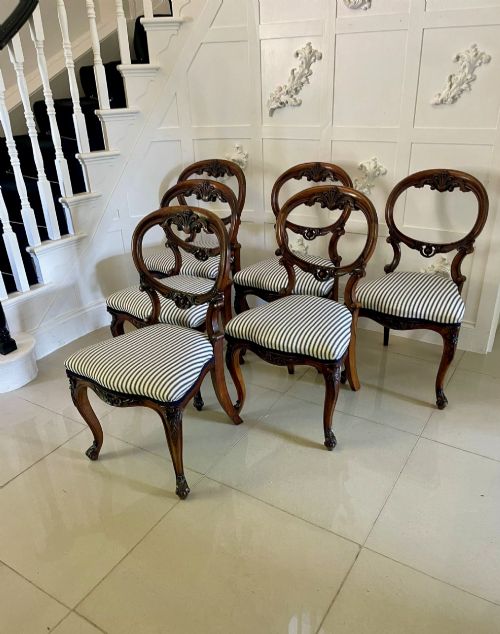
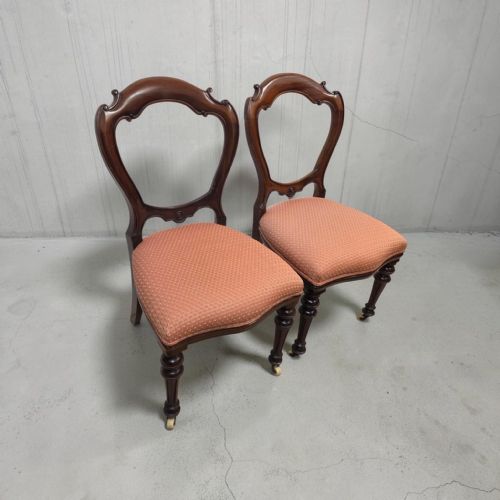
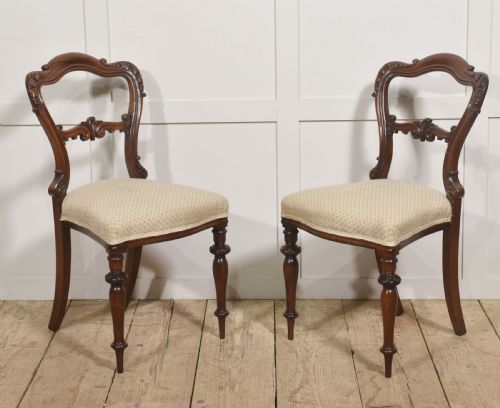
Mid victorian salon chairs appear across this selection in various forms, including intimate nursing seats, open armchairs, and low-seated side chairs designed for nineteenth-century drawing rooms. The pieces originate primarily from the Victorian period, spanning the eighteen-fifties, sixties, and seventies.
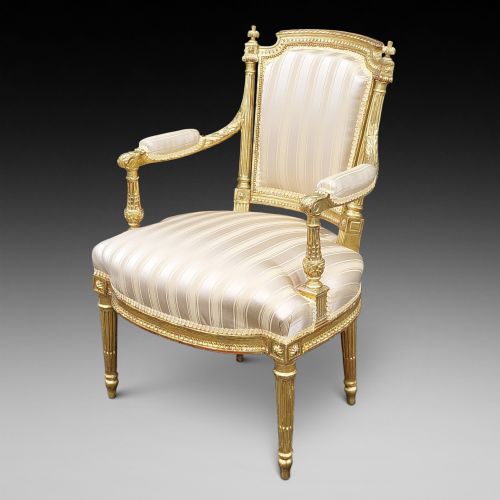
Makers shaped these walnut, mahogany, and rosewood frames into curvilinear silhouettes influenced by rococo and louis revival aesthetics. Buyers frequently encounter balloon-back and spoon-back configurations alongside giltwood fauteuils that reflect the period's diverse stylistic vocabulary.
Materials and Technique
Cabinetmakers utilised dense timbers such as walnut, rosewood, and mahogany to construct these sturdy frames, often employing steam-bending to achieve iconic balloon-back and spoon-back contours. Carved ornamentation adorns the crest rails and cabriole legs, demonstrating meticulous hand-tooling.
Traditional upholstery techniques integrate coil springs and horsehair stuffing beneath textile coverings like velvet and general fabric, secured with brass tacks or piping. Giltwood finishes also appear on specific revival armchairs, adding metallic sheen to the carved wooden structures.
Judging Quality
Superior examples display deep, expressive carving on the timber frame and a harmonious integration of the wood's natural grain with the chosen style. The weight and density of the walnut or rosewood indicate a higher standard of original timber selection.
The refinement of the silhouette distinguishes finer pieces, particularly the fluidity of the curves in balloon-back and open-arm models. Expert joinery ensures the frame remains rigid and balanced over decades of use.
The Mid Victorian Salon Chairs Glossary
- Balloon-back
- A chair back shaped in an open oval resembling a balloon, characteristic of nineteenth-century seating. This profile provided both lumbar support and visual lightness.
- Fauteuil
- An open-armed upholstered armchair with exposed wooden armrests, often carved in revival styles. Originating in France, the form remained popular in British drawing rooms.
- Spoonback
- A padded chair back deeply dished to cradle the human spine, echoing the bowl of a spoon. This ergonomic shape appeared frequently on Victorian parlor and fireside chairs.
- Cabriole leg
- A furniture leg that curves outward at the knee and tapers inward toward the foot, ending in a scroll or plain pad. The design mimics animal limbs and featured prominently on revival pieces.
- Button back
- An upholstery style where buttons are pulled deep into the padding in a diamond pattern. This method secures the internal stuffing while creating a textured surface.
Mid Victorian Salon Chairs: Frequently Asked Questions
What defines mid victorian salon chairs?
These seating pieces date from the mid-nineteenth century, typically featuring carved walnut, mahogany, or rosewood frames with distinct balloon or spoon backs.
They incorporate revival influences such as rococo and louis patterns, complemented by traditional fabric or velvet upholstery.
How were these chairs used originally?
Victorian households placed them in drawing rooms and parlours for formal entertaining, polite conversation, and musical evenings.
Specific variants like nursing chairs offered low seats for sewing or tending infants near the hearth.
How do I care for the wooden frames?
Maintain the polished timber surfaces by applying natural beeswax occasionally and buffing gently with a soft cloth. Avoid placing the furniture in direct sunlight or near heat sources to prevent the wood from drying out.
Can these chairs suit modern interiors?
Their compact proportions and elegant silhouettes allow them to function effectively as accent seating in contemporary living rooms or bedrooms.
They blend easily with varied design schemes when paired with complementary textiles and simple surroundings.