





Mid Victorian Library Table
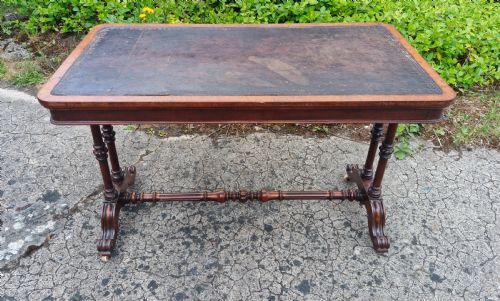
A mid victorian library table gives you a substantial workspace with period presence, built to anchor a serious room.

Mid Victorian Library Table
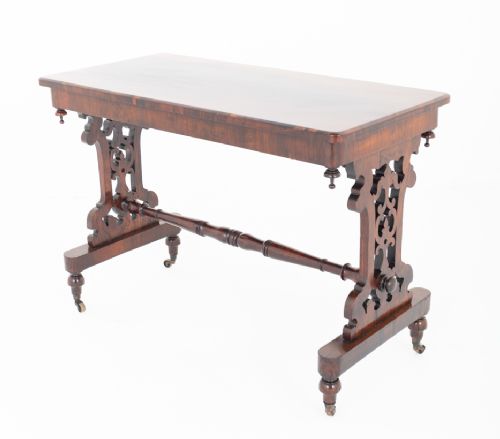
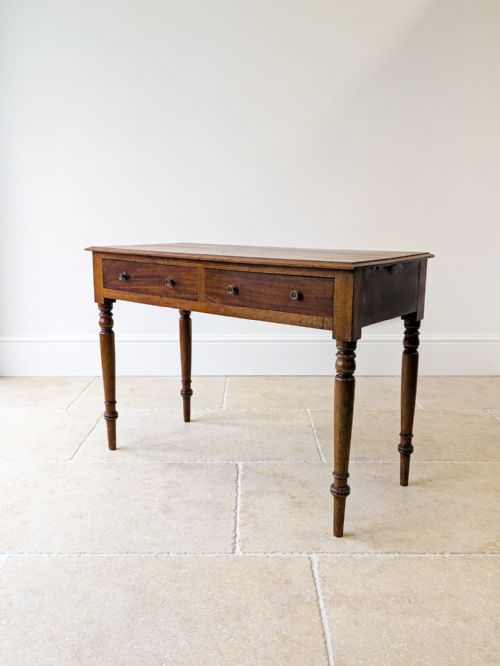
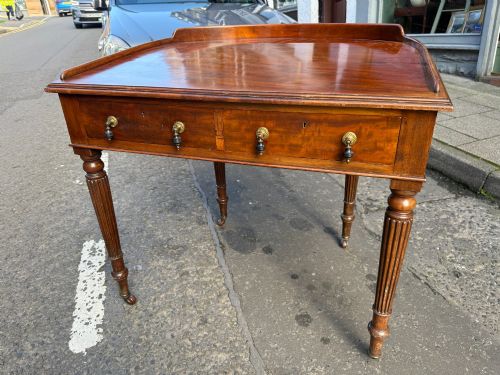
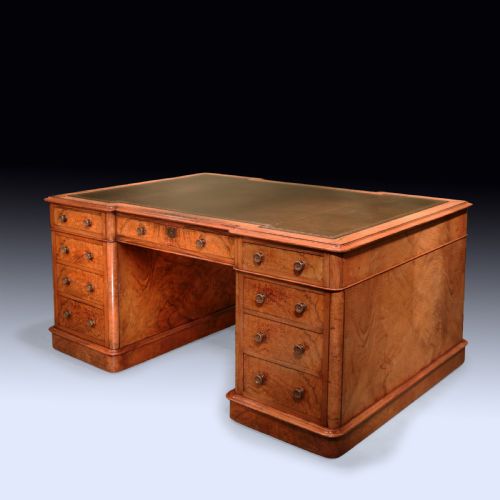
When you search for a mid victorian library table, you encounter freestanding writing surfaces and partners desks designed for nineteenth-century domestic and institutional studies. The pieces span the mid-nineteenth century, predominantly emerging from the eighteen-fifties, eighteen-sixties, and eighteen-seventies under Victorian, revivalist, and French styles.
You are most likely to meet burr walnut, mahogany, and rosewood forms on this page, often fitted with inset leather tops, drawers, or folio stands. These tables function equally well as central room pieces or functional desks, reflecting the diverse domestic requirements of the period.
How they were made
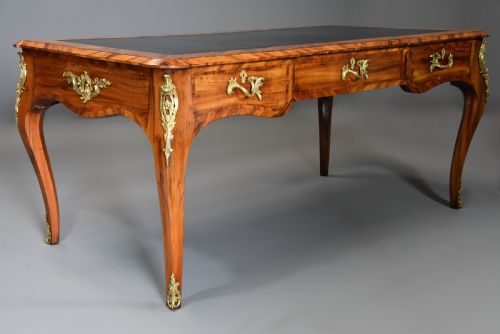
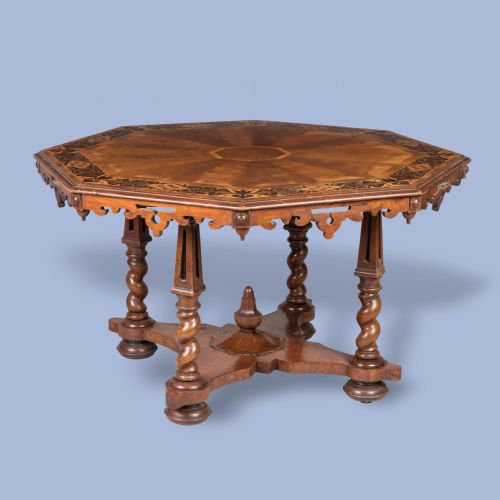
Cabinetmakers utilised rich timber veneers including burr walnut, pollard oak, satinwood, amboyna, and calamander over solid mahogany or walnut foundations. Marquetry inlay, brass mounts, and gilt bronze details frequently enrich the primary surfaces.
Writing surfaces incorporate inset leather panels, while structural elements include pedestals, stretcher bases, and turned legs. Joinery traditions from English and continental workshops ensured these large pieces remained rigid and freestanding.
Mid Victorian Library Table Retail Price Guide 2026
Typical asking prices for mid victorian library table among the pieces listed under this phrase on Sellingantiques today, from the lower quarter to the upper quarter. They describe what is for sale here now, not the wider market.
Some tables double as supper or dining furniture, proving that Victorians loved a desk that could handle a roast.
What varies in quality
The choice of timber veneer dictates the initial distinction between standard workshop output and exhibition quality pieces. Elaborate marquetry, fine brass or gilt bronze mounts, and secondary timbers like satinwood separate ordinary writing tables from exceptional ones.
Proportion and execution of carved details also define the tier of the piece. A balanced form with careful attention to secondary drawer linings and stable pedestal construction indicates superior cabinetmaking.
James Winter and Sons
The Mid Victorian Library Table Glossary
- Partners desk
- A double-sided desk designed for two people to work opposite one another, typically featuring drawers on both longitudinal faces. These large pieces served administrative and domestic functions in substantial libraries.
- Burr walnut
- A highly figured timber veneer harvested from the burl growths of walnut trees. Cabinetmakers prized it for intricate swirling grain patterns on table tops and desk drawers.
- Bureau plat
- A French-style freestanding writing table with a flat top and one or more drawers in the frieze. These tables often display elaborate crossbanding and gilt metal mounts.
- Drum table
- A circular library table containing a rotating or stationary top with alternating drawers and faux drawer fronts around the perimeter. They typically stand on a central pillar and pedestal base.
- Marquetry
- The art of applying decorative veneer pieces in geometric or pictorial patterns to a surface. Master craftsmen used contrasting woods like satinwood, calamander, and mahogany to achieve intricate ornamentation.
Mid Victorian Library Table: Frequently Asked Questions
How do I use a library table today?
These tables adapt well as central room desks, large dining surfaces, or statement console tables in spacious rooms. Their finished backs allow them to stand away from walls.
Ensure chairs fit comfortably beneath the frieze drawers, and protect inset leather surfaces from direct moisture during daily use.
What is the difference between a centre table and a library table?
Library tables generally incorporate drawers for storing papers and writing equipment, whereas centre tables are primarily decorative freestanding pieces for the middle of a room.
Many nineteenth-century examples blur these distinctions by combining decorative timbers with functional writing surfaces.
How do I care for nineteenth-century timber finishes?
Maintain polished wood surfaces with traditional beeswax and soft cloths to preserve the natural lustre of walnut, mahogany, or rosewood. Avoid synthetic chemical sprays that can degrade historic French polish.
Keep tables away from direct heat sources and strong sunlight to prevent timber splitting and leather desiccation.
How do I identify a mid-Victorian date?
Look for construction characteristics typical of the period between eighteen-fifty and eighteen-seventy, such as solid mahogany drawer linings and specific revivalist decorative motifs.
Cabinetmakers of this era frequently combined traditional hand-cut dovetails with early mechanical aids, reflecting transitional workshop practices.