


Mid 19th Century Ottoman
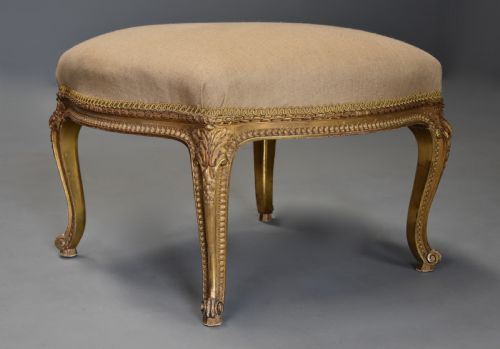
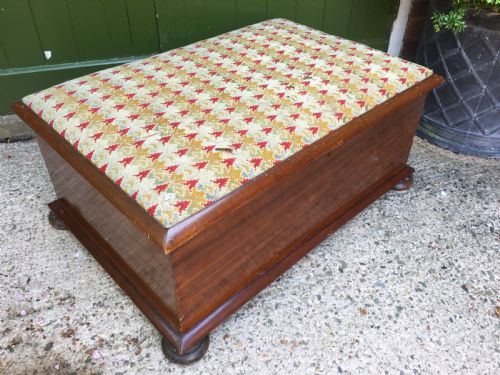
These mid 19th century ottoman and stool pieces combine solid timber frames with rich textiles, offering tactile comfort and period character.
Mid 19th Century Ottoman
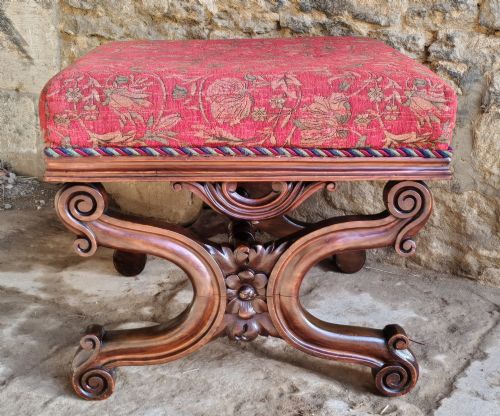
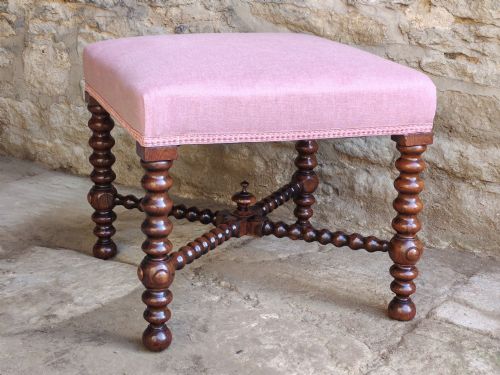
A mid 19th century ottoman search brings up a varied selection of seating forms, ranging from low footstools and gout stools to larger centre stools, window seats, and prayer rugs. The pieces most commonly met on this page are sturdy wooden stools and footstools upholstered in needlepoint, velvet, wool, or general textile fabrics.
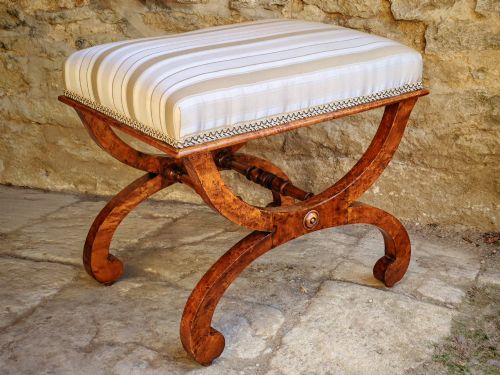
The periods and styles represented span Victorian, Regency, and French Rococo Revival designs alongside Anatolian traditional rug weaving. Makers and craftspeople utilised diverse woods like walnut, mahogany, rosewood, and burr maple to build frames that supported heavy textile upholstery and carpet surfaces.
How they were made
Makers constructed the structural frames of these pieces using dense hardwoods such as mahogany, walnut, rosewood, and burr maple, often shaping them with carved details or bobbin legs. Some larger examples received giltwood finishes or maker stamps.
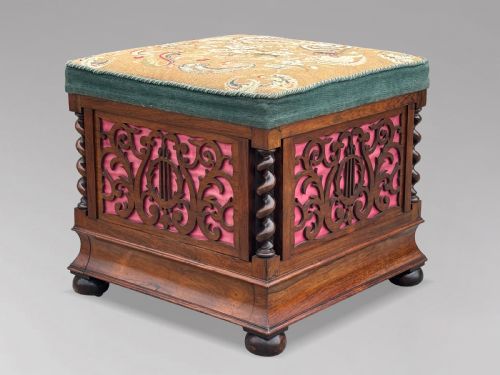
Upholstery and surface decoration formed the visual core of these items, employing wool, velvet, and woven fabric. Needlework techniques like gros-point featured heavily on the padded tops of footstools and box ottomans.
Victorian footstools included specialised gout stools with adjustable tilted platforms, built specifically to pamper aching feet after heavy meals.
What varies in quality
The standard of timber selection and the crispness of frame carving define the upper tiers of these pieces. Dense hardwoods like rosewood and burr maple demonstrate superior construction compared to simpler secondary timbers.
The integrity and execution of the textile work dictate much of the overall quality. Finely worked needlepoint, original gros-point covers, and intact traditional weave structures on rugs separate standard examples from finer ones.
Loidrault Freres Paris
The Mid 19th Century Ottoman Glossary
- Gros-point
- A type of needlepoint embroidery worked on a coarse canvas using wool yarn. It creates a durable, textured surface frequently found on nineteenth century footstool and ottoman tops.
- Gout stool
- A specialised low stool featuring an adjustable inclined top designed to elevate and support the foot or leg. These pieces often appear in walnut or mahogany during the Victorian period.
- X-frame
- A furniture base construction formed by intersecting diagonal timbers resembling the letter X. This structural style supports several mid century stools and seats.
- Prayer rug
- A small textile rug featuring a mihrab design used for Islamic daily prayers. Anatolian examples from villages like Milas and Ladik appear within this period grouping.
Mid 19th Century Ottoman: Frequently Asked Questions
What is a box ottoman?
A box ottoman is a seat constructed with a hinged or lift-off top that conceals an interior storage compartment for textiles or household items. These pieces combine practical storage with upholstered comfort.
Examples from the mid nineteenth century often feature leather or fabric upholstery stretched over walnut frames. They served dual purposes in period drawing rooms and parlours.
How do I identify a prayer rug?
Prayer rugs traditionally display a distinctive niche or arch design known as a mihrab at one end, indicating the direction of prayer. Village rugs from regions like Mudjur and Ladik exhibit specific geometric motifs within these fields.
These woven textiles utilise wool and traditional dyeing methods characteristic of mid nineteenth century Anatolian production. They function well as wall hangings or small floor coverings.
Where were window seats placed?
Window seats were designed to fit neatly into the architectural recess of a bay or large window, providing a comfortable place to sit and read. They usually feature an elongated rectangular shape with low arms or open ends.
Mahogany and walnut frame construction predominated, complemented by upholstered tops in velvet or textile. They matched the surrounding seating furniture of the Victorian parlour.
How do I care for antique needlepoint?
Antique needlepoint and textile surfaces require gentle handling to preserve the wool fibres and canvas foundation. Keep upholstered pieces out of direct sunlight to prevent fading of the original colours.
Vacuuming with a low-suction attachment through a mesh screen helps remove dust without disturbing the stitching. Professional textile cleaning is advised for deeper maintenance.